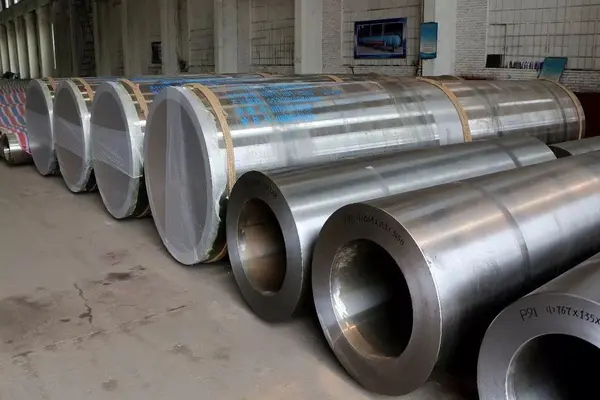
Rolling and Bending
Rolling and Bending Service
Our rolling and bending services provide high-precision steel forming solutions for structural, industrial, and customized fabrication needs. By combining advanced processing equipment, skilled workmanship, and strict quality control procedures, we ensure every component is manufactured with excellent dimensional accuracy, structural consistency, and surface quality. The detailed process, steps, precautions and related specifications are as follows:
Pre-Rolling and Bending Preparation
A full set of preparation work is the premise to ensure the smooth progress of rolling and bending processing and the quality of finished products. We strictly implement the following preparation steps:
1. Raw Material Inspection and Preparation: First, conduct a comprehensive inspection of the steel raw materials (including steel plates, beams, channels, angles, pipes, etc.), verify the material grade, thickness, width, mechanical properties and other parameters to ensure they meet the project drawings and technical specifications. Remove surface rust, oil stains, burrs and other impurities of the raw materials to avoid affecting the forming effect and surface quality.
2. Equipment Debugging and Calibration: Check and debug high-capacity plate-rolling machines, section-rolling equipment, CNC press bending machines and other related equipment to ensure the normal operation of the equipment. Calibrate the equipment parameters (such as rolling pressure, bending angle, forming radius, etc.) to ensure the accuracy of the processing parameters meets the requirements.
3. Parameter Calculation and Scheme Formulation: According to the project drawings and technical requirements, accurately calculate the key processing parameters such as rolling radius, forming angle, material thickness, and mechanical properties. Formulate a scientific rolling and bending scheme, including the number of rolling passes, bending sequence, whether pre-bending is needed, etc., to avoid deformation or cracking of the product during processing.
Workpiece Fixing Preparation: Prepare appropriate fixing tools (such as clamps, vises, positioning blocks, etc.) according to the type and size of the workpiece to ensure that the workpiece can be firmly fixed during processing, preventing displacement and ensuring forming accuracy.
Rolling and Bending Processing Steps
Our rolling and bending processing is carried out in strict accordance with the formulated scheme, and the steps are standardized and precise to ensure the stability and consistency of product quality. The specific steps are as follows:
1. Rolling Processing Steps
- Workpiece Loading: Place the prepared raw materials (steel plates, profiles, etc.) on the rolling equipment, and adjust the position to align with the processing center, ensuring that the stress is uniform during the rolling process.
- Initial Rolling and Pre-Bending (if needed): For heavy-duty or large-diameter workpieces, pre-bending is first performed on the edges of the workpiece to minimize edge flatness and avoid uneven stress during subsequent rolling. For general workpieces, directly start initial rolling, and gradually apply pressure to make the workpiece start to deform.
- Multi-Pass Forming: According to the pre-formulated rolling scheme, perform multi-pass rolling on the workpiece. Each pass adjusts the rolling pressure and angle appropriately, ensuring uniform stress distribution of the workpiece and improving shaping precision. During the rolling process, continuously observe the deformation of the workpiece to avoid over-rolling or insufficient rolling.
- Calibrated Rolling: After the initial forming of the workpiece, perform calibrated rolling to adjust the curvature and dimensional accuracy of the workpiece, ensuring that it fully meets the requirements of the project drawings. During calibration, strictly control the rolling parameters to avoid secondary deformation of the workpiece.
- Rolling Completion and Unloading: After the rolling is completed, stop the equipment, check the surface quality and dimensional accuracy of the workpiece initially, and unload the workpiece gently after confirming that there is no obvious defect, so as to avoid collision and damage to the workpiece.
2. Bending Processing Steps
- Workpiece Positioning: Fix the prepared raw materials on the bending equipment (CNC press bending machine, profile bending machine, etc.) using fixing tools, and accurately position them according to the marked bending position to ensure the bending angle and radius meet the requirements.
- Forming Method Selection: According to the material characteristics (such as hardness, ductility) and project requirements, select cold bending or heat-assisted forming method. Cold bending is suitable for materials with good ductility, which can avoid material performance changes caused by high temperature; heat-assisted forming is suitable for materials with high hardness or complex bending shapes, which can reduce bending difficulty and avoid cracking.
- Bending Execution: Start the bending equipment, execute the bending operation according to the preset parameters (bending angle, radius, speed, etc.). During the bending process, control the bending speed uniformly to avoid sudden stress concentration, which may lead to workpiece deformation or cracking.
- Intermediate Inspection: After the bending is completed, stop the equipment, take down the workpiece, and inspect the bending angle, radius, surface quality and other indicators. If there is any deviation, adjust the equipment parameters in time and re-bend.
- Post-Bending Treatment: For workpieces with burrs or uneven surfaces after bending, perform edge trimming, deburring and other treatments to ensure the surface quality of the workpiece. For workpieces that need subsequent processing (such as welding, hole processing), do a good job in processing preparation.
Rolling and Bending Precautions
To ensure the safety of the processing process and the stability of product quality, the following precautions must be strictly observed during the rolling and bending process:
1)Material Control: It is strictly forbidden to use raw materials that do not meet the technical specifications for processing. For materials with unknown mechanical properties, sampling inspection must be carried out first to avoid processing defects caused by material problems.
2)Equipment Operation: Operators must be trained and certified before taking up the job, and strictly operate the equipment in accordance with the operating procedures. It is forbidden to modify equipment parameters without authorization, and it is necessary to check the equipment regularly during operation to avoid equipment failure.
3)Stress Control: During the rolling and bending process, strictly control the processing parameters (pressure, speed, number of passes, etc.) to avoid excessive stress concentration, which may lead to workpiece deformation, cracking or material performance degradation.
4)Surface Protection: During processing, avoid scratching the surface of the workpiece. For high-precision surface workpieces, protective measures (such as wrapping protective film) should be taken to ensure the surface quality of the finished product.
5)Safety Protection: Operators must wear personal protective equipment (such as gloves, goggles, etc.) during operation. It is forbidden to put hands or other parts of the body into the processing area to avoid safety accidents.
6)Quality Inspection: Conduct full-process quality inspection during processing. For each batch of workpieces, sample inspection must be carried out to ensure that the dimensional accuracy, surface quality and structural performance meet the requirements. Unqualified products are not allowed to enter the next process.
7)Environmental Requirements: The processing site should be clean and tidy, and there should be no obstacles around the equipment to ensure the smooth operation of the processing process. The temperature and humidity of the processing environment should be controlled within a reasonable range to avoid affecting the processing quality.









 English
 Español
 русский язык
 Português