Technical requirements and processing methods of straight seam welded pipes
Date: 2024-04-18
Technical requirements and processing methods of straight seam welded pipes
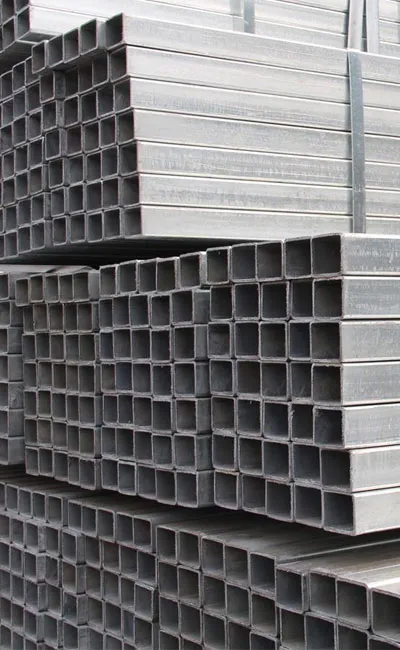
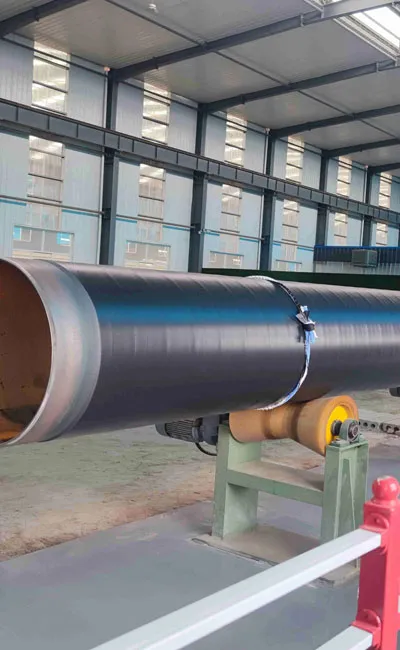
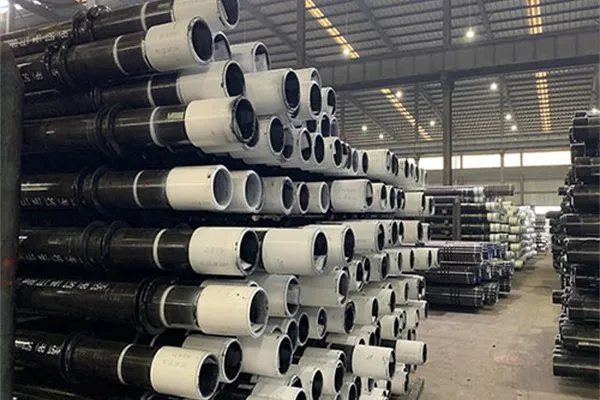
Technical requirements for straight seam welded pipes: The technical requirements and inspection of straight seam welded pipes are based on the GB3092 “Welded Steel Pipes for Low-Pressure Fluid Transport” standard. The nominal diameter of the welded pipe is 6~150mm, the nominal wall thickness is 2.0~6.0mm, and the length of the welded pipe is Usually 4~10 meters, it can be shipped from the factory in fixed length or multiple lengths. The surface of the steel pipe should be smooth, and defects such as folding, cracks, delamination, and lap welding are not allowed. The surface of the steel pipe is allowed to have minor defects such as scratches, scratches, weld dislocations, burns, and scars that do not exceed the negative deviation of the wall thickness. Thickening of the wall thickness at the weld and the presence of internal weld bars are allowed. Welded steel pipes should undergo mechanical performance tests, flattening tests, and expansion tests, and must meet the requirements stipulated in the standard. The steel pipe should be able to withstand the internal pressure of 2.5Mpa and maintain no leakage for one minute. It is allowed to use the eddy current flaw detection method instead of the hydrostatic test. Eddy current flaw detection is carried out by the standard GB7735 “Eddy Current Flaw Detection Inspection Method for Steel Pipes”. The eddy current flaw detection method is to fix the probe on the frame, keep a distance of 3~5mm between the flaw detection and the weld, and rely on the rapid movement of the steel pipe to conduct a comprehensive scan of the weld. The flaw detection signal is automatically processed and automatically sorted by the eddy current flaw detector. To achieve the purpose of flaw detection. After flaw detection, the welded pipe is cut to the specified length with a flying saw and is rolled off the production line via a flip frame. Both ends of the steel pipe should be flat-chamfered and marked, and the finished pipes should be packed in hexagonal bundles before leaving the factory.
Straight seam steel pipe processing method: Straight seam steel pipe is a steel pipe whose weld seam is parallel to the longitudinal direction of the steel pipe. The strength of the steel pipe is generally higher than that of straight seam welded pipe. It can use narrower billets to produce larger-diameter welded pipes, and can also use billets of the same width to produce pipe diameters. Different welded pipes. However, compared with straight seam pipes of the same length, the weld length is increased by 30~100%, and the production speed is lower. So what are its processing methods?
1. Forging steel: A pressure processing method that uses the reciprocating impact of a forging hammer or the pressure of a press to change the blank into the shape and size we require.
2. Extrusion: It is a steel processing method in which metal is placed in a closed extrusion cylinder and pressure is applied on one end to extrude the metal from a prescribed die hole to obtain a finished product of the same shape and size. It is mostly used for the production of non-ferrous metals. Material steel.
3. Rolling: A pressure processing method in which the steel metal blank passes through the gap (of various shapes) between a pair of rotating rollers. Due to the compression of the rollers, the material section is reduced and the length is increased.
4. Drawing steel: It is a processing method that draws the rolled metal blank (shaped, tube, product, etc.) through the die hole to reduce the cross-section and increase the length. Most of them are used for cold processing.
Post time: Apr-18-2024










 English
 Español
 русский язык
 Português