Product News

Hunan Great Steel Pipe Co., Ltd
studded tubes manufacturing,studded tube production process,resistance-welded studded tube,boiler studded tube

How Are Studded Tubes Manufactured? A Step-by-Step Guide to the Production Process

Date: 2026-07-14
Studded tubesare manufactured by automatically resistance welding or arc welding metal studs onto the outer surface of seamless or welded steel tubes. The process combines precision welding, dimensional inspection, and surface quality control to ensure excellent heat transfer performance and long service life in high-temperature applications. Unlikefinned tubes, which use thin continuous fins, studded tubes feature individual studs welded directly to the base tube. This construction makes them particularly suited for boilers, economizers, waste heat recovery systems, and refinery fired heaters where gas streams are dirty, abrasive, or high-temperature. The studs increase the external surface area while creating turbulence that improves gas-side heat transfer — and the thick stud cross-section resists erosion far better than thin fins. This guide walks through each step of the manufacturing process, from raw material selection to final inspection.

What Is a Studded Tube?

A studded tube — also called a nailhead pipe or pin tube — consists of a base tube with metal studs welded onto the external surface in a precise pattern. The studs increase the heat transfer surface area and disrupt the thermal boundary layer, improving thermal efficiency in high-temperature applications. Typical applications include refinery fired heaters, waste heat boilers, circulating fluidized bed (CFB) boilers, and petrochemical process heaters. The welded studs also serve as anchors for refractory castable material in some furnace applications.


How Are Studded Tubes Manufactured?

Step 1. Selecting the Base Tube

The process begins with selecting the right base tube material. Base tubes can be seamless or welded, manufactured from carbon steel, alloy steel, or stainless steel. Common materials include ASTM A106 Gr.B, ASTM A179/A192, ASTM A335 P5/P9/P11/P22/P91, and ASTM A312 TP304/316L. Material selection depends on operating temperature, pressure, corrosion environment, and the fluid being processed. Carbon steel suits general service; alloy steel handles high temperatures; stainless steel resists corrosion. From our experience, the most common material mistake isn't choosing the wrong grade — it's not verifying that the supplied material matches the specification before fabrication begins.

Step 2. Preparing the Tube Surface

Before welding, the base tube surface must be cleaned and prepared. This includes removing oil, rust, and any surface contamination that could affect weld quality. Dimensional inspection confirms that the tube meets required outside diameter, wall thickness, and straightness tolerances. Proper surface preparation ensures consistent electrical contact during resistance welding — poor contact means inconsistent welds.

Step 3. Automatic Stud Welding

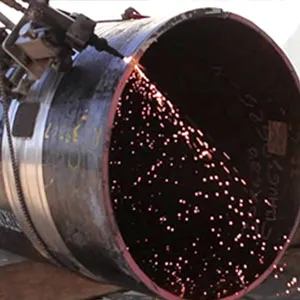
This is the core of the manufacturing process. Studs are fully automatically welded onto the tube using resistance welding machines. An electric current passes through the contact point between stud and tube, generating resistance heat that forges the stud to the tube. The process creates a high-quality forge weld — a strong metallurgical bond — while minimizing the heat-affected zone in the base tube. Key parameters controlled during welding:

Parameter

Typical Range

Stud diameter

6–12.5 mm

Stud height

10–35 mm

Stud spacing (pitch)

8–30 mm

Pattern arrangement

Square or staggered

Automatic studding machines can handle tube diameters from 60 mm OD to 219 mm OD. The welding process is PLC-controlled, ensuring consistent weld quality across the entire tube length and eliminating the instability of manual operation.

Step 4. Welding Inspection

After welding, every tube undergoes inspection to verify weld integrity. Visual inspection checks for weld appearance, surface defects, and stud alignment. Dimensional inspection verifies stud height, pitch, pattern, and overall tube dimensions. Stud pull tests or bend tests may be performed to confirm the strength of the stud-to-tube bond. In our experience, the most common quality issue with studded tubes isn't the weld itself — it's inconsistent stud spacing that creates hot spots. Dimensional inspection during production catches this before the tubes leave the shop.

Step 5. Surface Treatment and Packaging

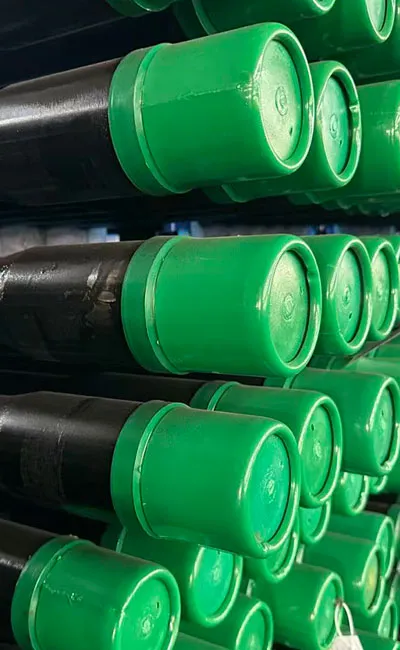
The final step protects the finished product for shipping and service. Surface treatment options include shot blasting, anti-rust oil, painting, or specialized coatings depending on project requirements. Proper packaging — end caps, secure bundling, and corrosion protection — ensures the tubes arrive at the project site in the same condition they left the factory. Manufacturing Process Summary:

Base Tube Selection → Surface Preparation → Stud Positioning → Automatic Resistance Welding → Weld Inspection → Dimensional Check → Surface Treatment → Packaging
Why Welding Quality Is Critical

In industrial boiler and refinery projects, inconsistent stud welding can reduce heat transfer efficiency and increase the risk of stud detachment during thermal cycling. Stable welding parameters and continuous quality inspection are therefore essential throughout production. A stud that isn't fully welded won't transfer heat effectively. A stud that's welded with excessive heat input can damage the base tube metallurgy. A stud that's misaligned creates uneven heat distribution. Each of these problems is preventable with proper process control. From our experience, the projects that engage us early in the design phase — before tube specifications are finalized — consistently achieve better outcomes than those that wait until procurement.

Quality Control During Studded Tube Manufacturing

Quality control isn't a single inspection at the end of production. It's a system that runs from material receiving through final packaging.
  • Material inspection — verifies base tube and stud material certificates with heat number traceability
  • Stud welding monitoring — ensures welding parameters stay within specified limits
  • Dimension measurement — confirms stud height, pitch, pattern, and tube dimensions
  • Hydrostatic testing — performed when required by project specifications
  • NDT — ultrasonic or magnetic particle inspection as specified
  • Packing inspection — confirms proper packaging for international shipment
Third-party inspection from SGS, BV, or TÜV provides an additional layer of verification for critical projects. A supplier that can't produce complete inspection documentation can't prove quality.

Applications of Studded Tubes

Studded tubes are widely used across industries where high-temperature gas-side heat transfer is critical:
  • Refinery fired heaters — convection sections and crude heaters
  • Waste heat boilers — heat recovery from industrial furnaces and gas turbines
  • CFB boilers — circulating fluidized bed combustion systems
  • Petrochemical plants — process heaters and cracking furnaces
  • Power generation — economizers and superheaters
  • Incinerators — waste-to-energy facilities
In each application, studded tubes provide the durability that finned tubes can't match in dirty, high-temperature gas streams.

FAQ

Q1: How are studs attached to steel tubes?
A1: Studs are attached using automatic resistance welding. An electric current passes through the contact point between stud and tube, generating resistance heat that forges the stud to the tube, creating a strong metallurgical bond.
Q2: Are studded tubes welded or cast?
A2: Studded tubes are welded — the studs are resistance-welded onto the base tube. The base tube itself may be seamless or welded.
Q3: Which materials are used for studded tubes?
A3: Base tube materials include carbon steel (A106 Gr.B, A179), alloy steel (P5, P9, P11, P22, P91), and stainless steel (304, 316L). Studs can be manufactured from matching or more corrosion-resistant materials.
Q4: Can studded tubes be customized?
A4: Yes. Stud diameter, height, spacing, pattern, tube length, and material can all be customized to meet project specifications.
Q5: What standards apply to studded tubes?
A5: Common standards include ASTM A179, ASTM A192, ASTM A210, ASTM A213, ASME SA179, and ASME SA213. Specific project requirements may also apply.

Conclusion

Choosing an experienced manufacturer is just as important as selecting the correct tube material. Consistent stud welding, dimensional accuracy, and comprehensive quality inspection directly influence the thermal performance and service life of studded tubes in demanding industrial applications. From material selection and surface preparation to automatic resistance welding, inspection, and surface treatment — each step of the manufacturing process matters. A studded tube that passes every quality check is a tube you can trust under pressure. Hunan Great Steel Pipe Co., Ltd. manufactures studded tubes for refinery, petrochemical, power generation, and waste heat recovery projects worldwide. From material selection and custom fabrication to inspection, documentation, and international delivery — we deliver studded tubes that perform in the toughest conditions.

Latest news list

  • Studded Tube vs Finned Tube,Studded Tube,Finned Tube,Heat Transfer Tube,Extended Surface Tube
    Studded tubes and finned tubes are both designed to improve heat transfer by increasing the external surface area of a tube,While they share the same objective,they are engineered for very different operating environments,
  • studded tube,studded pipe,pin tube,studded tube vs finned tube,furnace studded tube,waste heat boiler
    A studded tube is a heat transfer tube with metal studs welded onto the outer surface of a steel pipe,The studs increase the external heat transfer area while maintaining excellent mechanical strength,making studded tubes widely used in high-temperature industrial heat exchange applications,
  • pre-fabricated piping delivery,API 5L Gr,B pipe,pipe spool fabrication,industrial piping shipment,ASME B31,3 piping
    A Southeast Asian EPC contractor needed API 5L Gr,B carbon steel pipes for a refinery expansion,The project required 12-inch OD pipes with Schedule 40 wall thickness — not exotic materials,but they had to be right,The client had been burned before by a previous supplier who delivered pipes with inconsistent wall thickness that wouldn't fit flange connections,
  • pre-fabricated piping,pipe spool fabrication,industrial piping installation,ASME B31,3 piping,piping quality control
    Pre-fabricated piping is widely used in oil and gas,petrochemical,power generation,and chemical processing projects,By moving cutting,welding,and inspection from the construction site to a controlled fabrication facility,it reduces field workload and improves quality consistency,However,prefabrication alone doesn't guarantee success,Engineering coordination,fabrication accuracy,transportation planning,and installation control are equally important,Poor management between these stages results in spool mismatch,welding rework,installation delays,and increased costs,A reliable pre-fabricated piping system requires strict control from engineering design to final commissioning,
  • prefabricated piping,prefabricated piping inspection,industrial piping inspection,pipe fabrication inspection,fabrication quality control
    Quality inspection is one of the most important steps in pre-fabricated piping manufacturing,Even when materials meet the project specification and fabrication follows approved procedures,incomplete inspection or missing documentation can result in installation delays,costly rework,or non-conformance during site acceptance,

Find what you need ?

close
We use cookies and other tracking technologies to improve your browsing experience on our website, to show you personalized content and targeted ads, to analyze our website traffic, and to understand where our visitors are coming from.