Product News

Hunan Great Steel Pipe Co., Ltd
studded tube,studded pipe,pin tube,studded tube vs finned tube,furnace studded tube,waste heat boiler

What Is a Studded Tube

Date: 2026-07-13
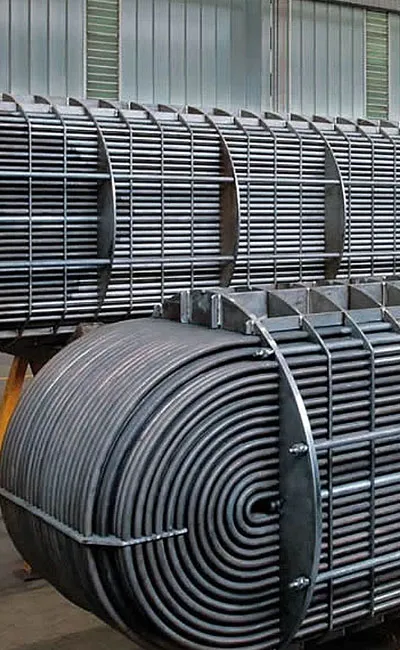
A studded tube is a heat transfer tube with metal studs welded onto the outer surface of a steel pipe. The studs increase the external heat transfer area while maintaining excellent mechanical strength, making studded tubes widely used in high-temperature industrial heat exchange applications. Refineries, fired heaters, waste heat boilers, and petrochemical plants are increasingly adopting studded tubes. Conventional bare tubes struggle with gas-side heat transfer limitations. Studded tubes solve this by creating turbulent flow patterns that disrupt the boundary layer, delivering significantly higher heat exchange capacity. They also handle dirty gas streams, mechanical stress, and high temperatures better than most alternatives. This guide covers what studded tubes are, how they work, their structural features, applications, and how to choose the right one.

What Is a Studded Tube?

A studded tube — also called a nailhead pipe or pin tube — consists of a base tube with metal studs welded onto the external surface in a precise pattern. The base tube is typically seamless or welded carbon steel, alloy steel, or stainless steel. Common materials include ASTM A106 Gr.B, ASTM A179/A192, ASTM A335 P5/P9/P11/P22/P91, and ASTM A312 TP304/316L. The metal studs (pins) are welded using automatic resistance welding. An electric current passes at the contact point, generating resistance heat that forges the stud to the tube — no external heat source required. This creates a strong metallurgical bond capable of withstanding high temperatures and mechanical loads. Studs are arranged in square or hexagonal patterns. Typical stud diameter ranges from 6 to 12.5 mm; stud height from 10 to 35 mm; longitudinal pitch from 8 to 30 mm. Stud density typically ranges from 120 to 400 studs per square meter.


How Does a Studded Tube Work?

The working principle is straightforward. In a conventional bare tube, hot flue gas flows across the surface. The gas forms a stationary boundary layer that acts as insulation, limiting heat transfer. The studs disrupt this boundary layer, creating turbulence that brings hotter gas closer to the tube wall. At the same time, the studs increase the external surface area — typically by 200–400% depending on stud density and configuration. More surface area means more heat transfer. The result is heat exchange efficiency equivalent to 2–3 times that of a bare tube. The studs also serve another critical function: they act as anchors for refractory castable material, protecting the base tube from extreme heat and corrosive combustion byproducts. In our experience supplying studded tubes for refinery and boiler projects, they perform particularly well in applications involving high flue gas temperatures and abrasive operating conditions. The mechanical strength of the welded studs means they hold up where finned tubes would bend, erode, or foul.


Main Structural Features

High Heat Transfer Surface

The studs multiply the external surface area by 2–3 times compared to a bare tube. This directly translates to higher thermal efficiency without increasing equipment footprint.

Strong Welded Structure

Resistance welding creates a forge weld at each stud-to-tube interface. This metallurgical bond handles thermal cycling without loosening. Studded tubes are among the mechanically strongest extended-surface designs available.

Excellent Wear Resistance

Unlike thin finned tubes that erode in high-velocity, particle-laden gas streams, studded tubes have thick cross-sections that resist abrasion. This makes them suitable for dirty flue gas environments where fins would wear through quickly.

High-Temperature Capability

Base tube materials like ASTM A335 P91 and stainless steel grades handle service temperatures up to 650°C and beyond. The studs themselves can be manufactured from matching alloys or corrosion-resistant materials.

Typical Applications

Industry

Application

Refinery

Crude heaters, fired heaters, reheaters

Petrochemical

Process heaters, convection chambers, cracking furnaces

Waste Heat Boiler

Heat recovery from industrial furnaces and gas turbines

Power Plant

Economizers, superheaters, CFB boilers

Incinerator

Waste-to-energy plants, water walls

Cement Plant

Waste gas heat recovery

Studded Tube vs Finned Tube

Feature

Studded Tube

Finned Tube

Heat transfer

2–3× bare tube

Higher surface area ratio

Mechanical strength

Excellent

Moderate — fins bend easily

Temperature limit

Up to 650°C+

Limited by fin attachment

Abrasion resistance

Excellent

Poor — fins erode

Cleaning

Withstands aggressive cleaning

Fragile — damage risk

Best for

Dirty gas, high temp, corrosive

Clean gas, moderate temp

The rule: If the gas stream is clean, finned tubes offer higher efficiency. If the gas is dirty, hot, or corrosive — choose studded tubes.

How to Choose the Right Studded Tube

Selection depends on operating conditions:
  • Base tube material — carbon steel for general service; alloy steel (P5, P9, P11, P22, P91) for high temperature; stainless steel (304, 316, 321) for corrosion
  • Tube size — OD typically 38–219 mm, wall thickness 4–20 mm
  • Stud material — Q235B carbon steel, 410 stainless, or alloy matching the base tube
  • Stud density and pattern — higher density = more heat transfer, but also higher pressure drop
  • Temperature and pressure — match materials to service limits
  • Corrosion environment — use 316L or Alloy 625 studs for sulfur or chloride exposure
Applicable standards include ASTM A179, ASTM A192, ASTM A210, ASTM A213, ASME SA179, and ASME SA213.

Quality Control During Manufacturing

Every studded tube should undergo rigorous quality checks:
  • Material inspection — verify base tube and stud material certificates with heat numbers
  • Stud welding inspection — PLC-controlled resistance welding ensures consistent weld quality
  • Dimensional inspection — verify stud height, pitch, pattern, and tube dimensions
  • NDT — non-destructive testing as specified
  • Hydrostatic test — pressure test per applicable code
  • PMI — Positive Material Identification for alloy verification
  • MTC — Mill Test Certificate with full traceability
From our manufacturing experience, the most common quality issue with studded tubes isn't the weld — it's inconsistent stud spacing that creates hot spots. Dimensional inspection during production catches this before the tubes leave the shop.

Why Work with an Experienced Manufacturer?

An experienced manufacturer provides engineering support for material selection and stud configuration optimization, OEM capabilities for custom patterns, project supply for large orders, full inspection documentation, and export logistics with proper packaging. Hunan Great Steel Pipe Co., Ltd. supplies studded tubes for refinery, petrochemical, power generation, and waste heat recovery projects worldwide. From material selection and custom fabrication to inspection, documentation, and international delivery — we deliver studded tubes that perform in the toughest conditions.

FAQ

Q1: What is the purpose of a studded tube?
A1: To increase heat transfer surface area and create turbulence in flue gas flow, improving thermal efficiency in high-temperature industrial applications.
Q2: What is the difference between a studded tube and a finned tube?
A2: Studded tubes have thick, welded studs that resist abrasion and mechanical damage. Finned tubes have thin, attached fins that offer higher surface area but are fragile in dirty gas streams.
Q3: Where are studded tubes used?
A3: Refineries, petrochemical plants, waste heat boilers, power plant economizers, incinerators, and CFB boilers.
Q4: Which materials are available for studded tubes?
A4: Base tube: carbon steel (A106 Gr.B, A179, A192), alloy steel (P5, P9, P11, P22, P91), stainless steel (304, 316, 321, 347). Studs: carbon steel, 410 stainless, 304, 316, 321, Alloy 625.

Latest news list

  • pre-fabricated piping delivery,API 5L Gr,B pipe,pipe spool fabrication,industrial piping shipment,ASME B31,3 piping
    A Southeast Asian EPC contractor needed API 5L Gr,B carbon steel pipes for a refinery expansion,The project required 12-inch OD pipes with Schedule 40 wall thickness — not exotic materials,but they had to be right,The client had been burned before by a previous supplier who delivered pipes with inconsistent wall thickness that wouldn't fit flange connections,
  • pre-fabricated piping,pipe spool fabrication,industrial piping installation,ASME B31,3 piping,piping quality control
    Pre-fabricated piping is widely used in oil and gas,petrochemical,power generation,and chemical processing projects,By moving cutting,welding,and inspection from the construction site to a controlled fabrication facility,it reduces field workload and improves quality consistency,However,prefabrication alone doesn't guarantee success,Engineering coordination,fabrication accuracy,transportation planning,and installation control are equally important,Poor management between these stages results in spool mismatch,welding rework,installation delays,and increased costs,A reliable pre-fabricated piping system requires strict control from engineering design to final commissioning,
  • prefabricated piping,prefabricated piping inspection,industrial piping inspection,pipe fabrication inspection,fabrication quality control
    Quality inspection is one of the most important steps in pre-fabricated piping manufacturing,Even when materials meet the project specification and fabrication follows approved procedures,incomplete inspection or missing documentation can result in installation delays,costly rework,or non-conformance during site acceptance,
  • prefabricated piping,industrial piping,pipe spool fabrication,prefabricated pipe spool,process piping,pipe fabrication
    Pre-fabricated piping plays an important role in modern industrial construction by reducing on-site work,improving fabrication consistency,and helping projects stay on schedule,However,selecting the right supplier involves far more than comparing prices,Material selection,manufacturing capability,quality control,and documentation all influence the long-term reliability of a piping system,
  • pre-fabricated piping,prefabricated piping system,pipe spool fabrication,industrial piping solutions,pipe fabrication services
    Pipeline fabrication is one of the most labor-intensive and quality-sensitive activities in large-scale industrial projects,Traditional field fabrication often faces challenges such as limited working space,weather interruptions,welding control difficulties,and extended installation schedules,

Find what you need ?

close
We use cookies and other tracking technologies to improve your browsing experience on our website, to show you personalized content and targeted ads, to analyze our website traffic, and to understand where our visitors are coming from.