Industry News

Hunan Great Steel Pipe Co., Ltd
pre-fabricated piping delivery,API 5L Gr,B pipe,pipe spool fabrication,industrial piping shipment,ASME B31,3 piping

Pre-Fabricated Piping Delivered for Industrial Projects: Manufacturing, Quality Control, and Shipment Case Study

Date: 2026-07-10

Project Background

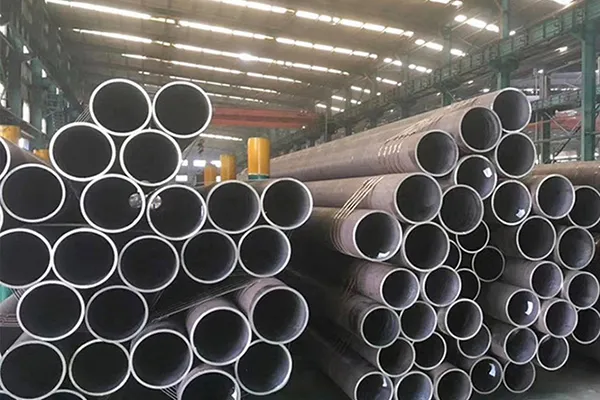
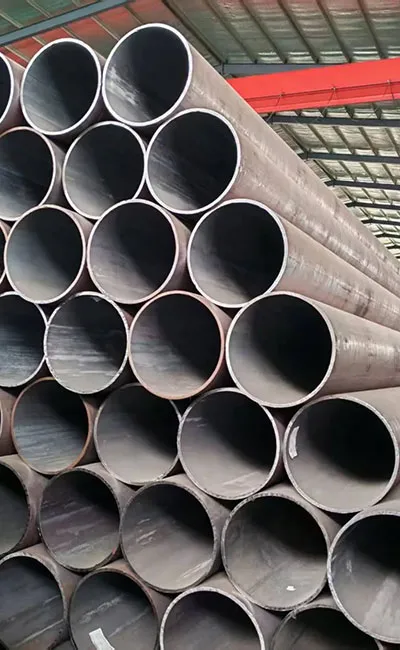
A Southeast Asian EPC contractor needed API 5L Gr.B carbon steel pipes for a refinery expansion. The project required 12-inch OD pipes with Schedule 40 wall thickness — not exotic materials, but they had to be right. The client had been burned before by a previous supplier who delivered pipes with inconsistent wall thickness that wouldn't fit flange connections. The deadline was tight. The fabrication shop was waiting on materials. Any delay in pipe delivery would push back spool fabrication and ripple through the entire installation schedule. This is the reality of pre-fabricated piping projects. Success depends on material verification, dimensional control, inspection, and shipment planning — not just taking an order and shipping pipe. 


Project Requirements

Before production started, the engineering team reviewed:
  • Applicable standard: API 5L
  • Material grade: Gr.B carbon steel
  • Pipe size: 12 inches OD
  • Wall thickness: Schedule 40 (SCH40)
  • Application: Refinery process piping fabrication
  • Documentation requirement: Full traceability with EN 10204 3.1
For pre-fabricated piping, dimensional accuracy is critical. Even small deviations in OD or wall thickness affect spool assembly, welding alignment, and installation efficiency. The client required complete quality documentation to verify material compliance throughout the supply chain.


Material Verification and Dimensional Inspection

Material Traceability

Before manufacturing began, all raw materials were verified against project requirements:
  • Material certificate review against PO specifications
  • Heat number traceability from mill to finished pipe
  • Chemical composition verification
  • Mechanical property confirmation
Traceability from steel production to final shipment helps EPC contractors verify material performance and simplifies project documentation. Every pipe in this order was traceable to its mill certificate.


Dimensional Inspection

Each pipe was inspected to confirm compliance:
  • Outside diameter measurement
  • Wall thickness verification (Schedule 40)
  • Length inspection
  • Surface condition evaluation
From our experience, the most common cause of field fit-up issues isn't material grade — it's dimensional deviation that wasn't caught before shipment. Dimensional inspection before packaging prevents field modifications and installation delays.

Quality Documentation

Every shipment included complete quality records:
  • Mill Test Certificate (MTC / EN 10204 3.1)
  • Material specifications and heat numbers
  • Dimensional inspection records
  • Packing list with spool identification
  • Shipping documentation
Complete documentation allows EPC contractors, fabricators, and project owners to maintain quality control from procurement through installation and future maintenance.

Packaging and Shipment Control

Pipe transportation requires careful planning to prevent damage during handling and delivery. For this project:
  • Pipes were bundled and secured with proper supports
  • Surface protection was applied to prevent corrosion during transit
  • Clear product identification and heat number labels were attached to each bundle
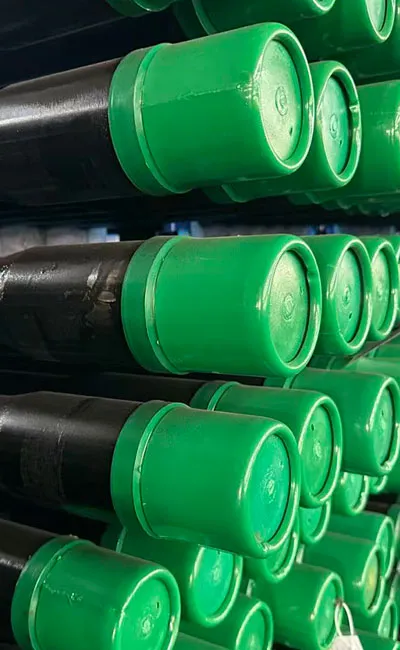
  • Protective end caps were installed to prevent thread or bevel damage
Each bundle was marked according to customer requirements to simplify receiving inspection and warehouse management after arrival. Proper packaging isn't a logistics detail — it's the final quality control step before products leave the facility. A pipe that arrives with damaged ends or corroded surfaces can't be used for fabrication. That means rework, replacement, and schedule delays.

Why Pre-Fabricated Piping Projects Need Reliable Suppliers

Pre-fabricated piping improves construction efficiency by moving work into controlled manufacturing environments. But project success depends on coordination between suppliers, fabricators, EPC contractors, and installation teams. A reliable supplier should provide:
  • Correct material selection
  • Consistent manufacturing quality
  • Full traceability from mill to shipment
  • Professional inspection support
  • Reliable international delivery with proper packaging
From our experience supporting overseas projects, the most common cause of shipment delays isn't manufacturing capacity — it's incomplete documentation or incorrect packaging. These are preventable issues that require attention before the pipe leaves the shop.

FAQ

Q1: What documentation should be included with pipe shipments for pre-fabricated piping projects?
Mill Test Certificates (EN 10204 3.1), heat number traceability records, dimensional inspection reports, and packing lists with product identification.
Q2: Why is dimensional inspection important before pipe spool fabrication?
Even small deviations in OD or wall thickness affect welding alignment and spool fit-up. Dimensional inspection prevents field modifications and installation delays.
Q3: What packaging is recommended for international pipe shipments?
Secure bundling, surface protection, end caps to protect bevels, clear product labeling, and reinforced steel crating for handling.
Q4: How does traceability support pre-fabricated piping projects?
Traceability links every pipe to its mill certificate, allowing EPC contractors to verify material compliance and maintain quality records for future maintenance.

Conclusion

Successful pre-fabricated piping delivery depends on more than meeting product specifications. Material verification, dimensional inspection, complete documentation, and professional shipment management are essential for reducing installation risks. Hunan Great Steel Pipe Co., Ltd. supplies API 5L Gr.B carbon steel pipes, stainless steel pipes, and alloy steel pipes for industrial projects worldwide. From material selection and engineering review to dimensional inspection, documentation, packaging, and international delivery — we deliver pipes that arrive on spec and ready for fabrication.

Latest news list

  • carbon seamless steel pipe maintenance,carbon steel pipe maintenance,seamless pipe inspection
    Carbon seamless steel pipe can provide long service in industrial piping systems,but its condition changes after installation,Corrosion,wall thinning,vibration,leaking connections,damaged coatings,and changes in operating conditions can gradually reduce piping integrity,Good maintenance is therefore not simply a matter of repairing a pipe after a leak occurs,It is a planned process of inspection,thickness monitoring,corrosion control,operating-condition review,and documented follow-up,API 570,for example,addresses the in-service inspection,rating,repair,and alteration of metallic piping systems,
  • carbon seamless steel pipe quality control,carbon seamless steel pipe inspection,steel pipe quality control
    Quality control for carbon seamless steel pipe does not begin with the final inspection,It starts with the steel billet and continues through chemical analysis,manufacturing control,dimensional inspection,nondestructive testing,mechanical testing,hydrostatic testing,and final documentation,
  • carbon seamless steel pipe corrosion protection,carbon steel pipe corrosion,carbon steel pipe coating
    Carbon seamless steel pipe is widely used in energy,water,process,and industrial piping,but carbon steel can corrode when exposed to moisture,oxygen,salts,chemicals,or aggressive process fluids,The right protection method should therefore not be selected from a list of coatings alone,A more practical engineering approach is: Environment → Corrosion Risk → Protection Method → Inspection and Maintenance,For example,a buried pipeline may require external coating and cathodic protection,while a pipe carrying an aggressive process fluid may need internal protection,The current ASTM A106,A106M-26 specification,for instance,covers seamless carbon steel pipe for high-temperature service,but corrosion protection remains an application-specific engineering decision,
  • carbon seamless steel pipe,carbon seamless steel pipe manufacturing,carbon steel pipe quality control
    Carbon seamless steel pipe is manufactured from solid steel billet through a controlled series of heating,piercing,rolling,sizing,heat treatment,and inspection processes,Unlike welded pipe,there is no longitudinal weld seam joining the pipe body,For buyers,understanding this process helps explain why manufacturing control matters to the pipe's wall thickness,dimensional accuracy,mechanical properties,surface quality,and service performance,The exact production route may vary according to pipe size,steel grade,applicable standard,and mill configuration,
  • 3PE anti-corrosion steel pipe,3PE coating selection,FBE coating,3LPE coating,3LPP coating
    When purchasing 3PE anti-corrosion steel pipe,buyers often focus on pipe diameter,wall thickness,steel grade,and price,However,the coating materials are equally important,A 3PE system is not simply “plastic around a steel pipe,” It is a multi-layer protection system in which each material performs a different function,

Find what you need ?

close
We use cookies and other tracking technologies to improve your browsing experience on our website, to show you personalized content and targeted ads, to analyze our website traffic, and to understand where our visitors are coming from.