5. Evaluate the Service Environment
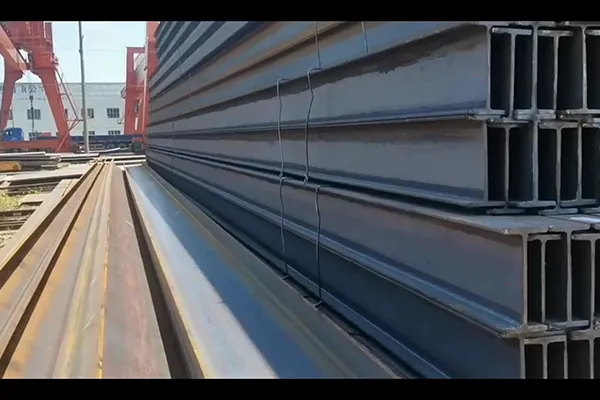
The operating environment affects the choice of corrosion protection and future maintenance requirements. Outdoor structures, coastal facilities and industrial plants may face rain, condensation, salt spray, chemicals or elevated temperatures. Depending on the exposure conditions and project specification, protection may involve hot-dip galvanizing, a suitable protective paint system or shop-applied primer. Surface preparation, coating requirements, handling and repair arrangements should be considered together. There is no single protective system suitable for every application. The selection should account for the expected exposure, design life, maintenance access and project requirements.
6. Prepare a Complete RFQ for International Procurement
A clear request for quotation (RFQ) helps suppliers offer comparable products and reduces clarification during order processing. Overseas buyers should provide:
-
Profile type and section designation
-
Steel grade and governing standard
-
Dimensions and required lengths
-
Quantity by profile and size
-
Surface treatment and delivery condition
-
Inspection and certification requirements
-
Packing, marking and destination port
-
Required delivery schedule and trade terms
For stock-based procurement, verify actual availability, profile designation, material grade, quantity and supporting documentation before confirming an order. For project-based supply, production schedules and inspection arrangements should also be considered. Compare quotations on a like-for-like basis. A lower unit price may not include the same material grade, tolerances, certification, processing, packing or logistics scope.
7. Assess the Supplier's Project Coordination Capability
For mixed-profile and project-based orders, supply coordination is an important part of procurement. Buyers should understand how a supplier handles specification review, sourcing, production follow-up, inspection arrangements, material identification, documentation and shipment planning.
Hunan Great Steel Pipe Co., Ltd. supports international structural steel supply through specification review, sourcing and production coordination, factory inspection arrangements, material documentation review and export delivery coordination. For each order, the actual supply scope is confirmed against the customer's drawings, material requirements and delivery schedule.
FAQ
Q1. Which structural steel profile is suitable for a column?
A1: H beams are commonly used for structural columns, but the suitable section depends on the design loads, column height, restraint conditions and applicable design code. The final selection should be approved by the project engineer.
Q2. Are H beams and I beams interchangeable?
A2: No, not automatically. Their flange dimensions, web thickness and cross-sectional properties can differ. Any substitution should be reviewed and approved by the project engineer.
Q3. What information should I provide when requesting a steel profile quotation?
A3: Provide the profile type, section designation, steel grade, applicable standards, dimensions, lengths, quantities, surface requirements, inspection scope and delivery destination.
Q4. Should structural steel profiles be galvanized or painted?
A4: The choice depends on the service environment, corrosion exposure, design life, maintenance requirements and project specification. The protective system and surface preparation requirements should be agreed before processing.
Q5. What should I check when comparing structural steel suppliers?
A5: Compare material compliance, section dimensions, tolerances, inspection arrangements, documentation, processing scope, packing and delivery arrangements—not just the quoted unit price.











 English
 Español
 русский язык
 Português