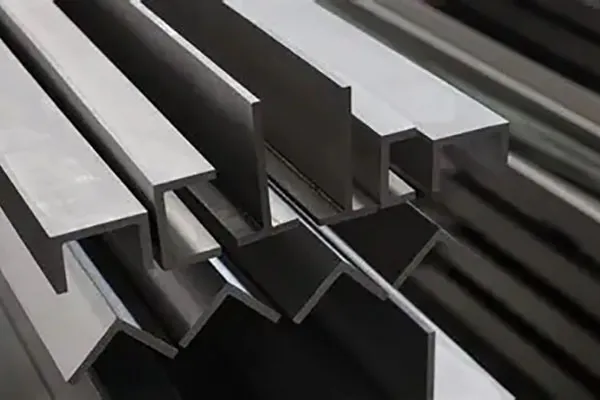
5. Confirm Length, Straightness and Quantity
Check the actual length of the profiles against the specified delivery length and permitted tolerance. Straightness and other relevant shape characteristics should also be assessed where required. Before packing, reconcile the inspected quantity with the purchase order and packing list. For mixed orders, keep different section sizes and steel grades clearly separated and identified. This reduces the risk of loading errors and makes receiving inspection easier for the customer.
6. Review Inspection Documents Before Dispatch
Documentation should be checked alongside the physical inspection, not left until the shipment is ready to leave. Depending on the order, the document package may include:
-
Mill Test Certificates
-
Dimensional inspection records
-
Third-party inspection reports, if specified
-
Packing list and commercial invoice
-
Other agreed export or project documents
Check that product descriptions, grades, quantities and heat numbers are consistent across the relevant records. If the project requires specific certificate types or inspection reports, confirm these requirements before order execution.
7. Why an Inspection and Test Plan (ITP) Matters
An Inspection and Test Plan (ITP) sets out what needs to be checked, when inspection takes place, who is responsible, and which records must be provided. It also defines sampling frequency and acceptance criteria in accordance with the applicable product standard and project requirements. For orders involving different profile types, grades or delivery conditions, a clear ITP helps keep inspection activities consistent and avoids relying on assumptions about testing scope. At Hunan Great Steel Pipe Co., Ltd., we can coordinate specification reviews, source inspection, documentation checks and delivery arrangements according to the agreed project scope. The inspection requirements and acceptance criteria are confirmed with the customer before execution.
FAQ
Q1. What are the most important inspection points for H beams?
A1: Check the overall height, flange width, web and flange thickness, flange alignment, straightness, steel grade and material traceability. Acceptance should be based on the specified product standard and purchase order.
Q2. Does an MTC confirm that all dimensions are correct?
A2: No. An MTC provides material information and test results. Actual dimensions, shape and length must be verified through dimensional inspection.
Q3. Do all structural steel profiles require ultrasonic testing?
A3: No. Ultrasonic testing is not a universal requirement for every H beam, I beam, channel or angle. It depends on the product specification, project requirements and agreed inspection plan.
Q4. What should buyers check on a structural steel material certificate?
A4: Verify the steel grade, applicable standard, heat number, chemical composition, mechanical properties and required certificate type. The certificate details should match the material markings and order documents.
Q5. Can third-party inspection be arranged before shipment?
A5: Yes, third-party inspection can be included when agreed by the buyer and supplier. The inspection scope, timing, sampling requirements and acceptance criteria should be confirmed before the inspection takes place.










 English
 Español
 русский язык
 Português