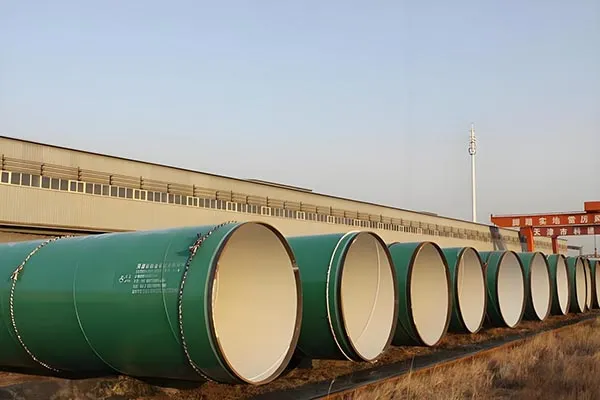
The inspection method depends on pipeline accessibility and the information required.
|
Method
|
Main purpose
|
|
Visual inspection
|
Identify visible coating damage on accessible sections
|
|
CIPS
|
Assess cathodic protection performance along buried pipelines
|
|
DCVG / ACVG
|
Identify areas that may have coating defects
|
|
Direct examination
|
Confirm coating condition at selected excavation locations
|
|
Wall thickness measurement
|
Assess possible steel metal loss
|
Close Interval Potential Surveys (CIPS) provide closely spaced pipe-to-soil potential measurements. Direct Current Voltage Gradient (DCVG) and Alternating Current Voltage Gradient (ACVG) surveys can help identify and locate possible coating defects. These are indirect assessment methods. They do not directly measure FBE coating thickness, adhesion or the full extent of a defect. Where findings indicate a concern, excavation and direct examination may be needed to confirm the coating condition, check for exposed steel and assess possible corrosion or metal loss. No single inspection method provides a complete assessment of every buried pipeline.
6. Repair Defects and Maintain Inspection Records
Confirmed coating defects should be repaired using an approved procedure and materials compatible with the existing coating system and service environment. The repair plan should consider defect size, surface preparation, repair material, operating conditions and required inspection or retesting. The original FBE coating system does not mean every repair must use an identical application method; the selected repair system must be suitable for the specific condition. Repair records should identify the pipeline location, defect type, preparation method, repair material, inspection results and any required retesting. If metal loss is found, its significance must be assessed separately from the coating defect.
7. How Can Operators Improve Long-Term Pipeline Protection?
Long-term protection depends on more than the original coating quality. Accurate construction records, suitable cathodic protection, controlled excavation activities and timely investigation of unusual findings all contribute to pipeline integrity. Operators should use inspection results to identify recurring damage patterns and review maintenance priorities. The objective is to detect developing problems early and prevent avoidable deterioration, rather than relying only on repairs after visible damage occurs.
FAQ
Q1: Does FBE coated steel pipe require regular inspection?
A1: Yes. Inspection requirements depend on the pipeline integrity plan, operating conditions, applicable regulations and risk assessment. Both accessible sections and buried pipeline sections may require appropriate monitoring.
Q2: How can operators inspect FBE coating on buried pipelines?
A2: Operators may use indirect methods such as CIPS, DCVG and ACVG surveys to identify areas of concern. Suspected defects may require excavation and direct examination for confirmation.
Q3: What is the difference between CIPS and DCVG?
A3: CIPS measures pipe-to-soil potentials at closely spaced intervals to assess cathodic protection performance. DCVG uses voltage gradients to help locate possible coating defects. They provide different types of information and may be used together.
Q4: Can cathodic protection detect all FBE coating damage?
A4: No. CP monitoring provides information about corrosion protection performance but cannot identify every coating defect or determine its physical condition. Other survey methods and direct examination may be necessary.
Q5: Can damaged FBE coating be repaired after installation?
A5: Yes, if the affected area is accessible and a suitable repair system is available. Repair work should follow an approved procedure, with inspection and documentation as required.
Hunan Great Steel Pipe Co., Ltd. supports project-based steel pipe supply through material sourcing, production coordination, factory inspection arrangements, documentation review and export delivery coordination. Pipe specifications, coating requirements and inspection documentation are reviewed against the relevant purchase and project requirements.










 English
 Español
 русский язык
 Português