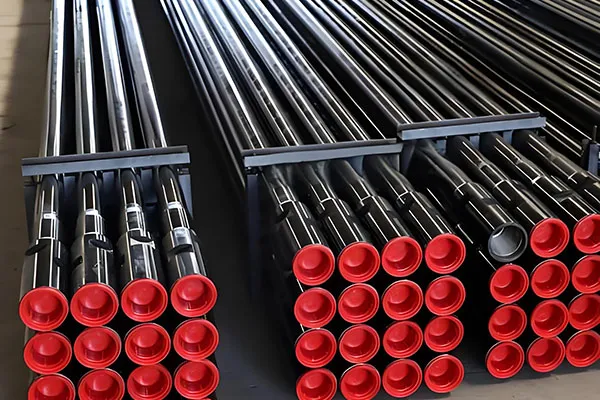
Product News

Hunan Great Steel Pipe Co., Ltd
how to choose drill pipe,drill pipe selection guide,drill pipe size,drill pipe grades,drilling pipe procurement,drill pipe connection types

How to Choose the Right Drill Pipe for Drilling Operations

Date: 2026-11-06
Selecting the right drill pipe involves more than choosing a diameter and steel grade. Each specification must match the drilling program, drill string design, operating loads and connection requirements. An unsuitable selection can create compatibility problems, increase operating costs and shorten equipment service life. For drilling contractors, engineers and procurement teams, a structured selection process helps ensure that the supplied drill pipe meets both technical and project requirements.

1. Define the Drilling Application and Operating Conditions

Start by identifying the intended drilling application and expected service conditions. Important factors include well depth, drilling method, planned trajectory, drilling fluid, operating temperature and anticipated mechanical loads. These conditions influence the required pipe dimensions, material grade and connection design. For example, a deep drilling operation may require careful evaluation of tensile and torsional loading, while corrosive service conditions may introduce additional material and inspection considerations. Specifications from a previous project should not be reused without confirming their suitability for the new drilling program.

2. Confirm Drill Pipe Dimensions and Length

Drill pipe dimensions directly affect mechanical performance, fluid circulation and compatibility with the drill string. Key parameters include:

Parameter

Selection Consideration

Outside Diameter (OD)

Compatibility with the drill string and wellbore configuration

Wall Thickness (WT)

Pipe body strength and internal flow capacity

Nominal Weight

Dimensional and mass designation

Internal Diameter (ID)

Drilling fluid flow and hydraulic performance

Pipe Length Range

Compatibility with the planned drill string

Tool Joint OD

Clearance and connection compatibility

OD and WT should be confirmed together rather than evaluated independently. Internal diameter also matters because it determines the available flow passage for drilling fluid. For used drill pipe, original nominal wall thickness is not sufficient for selection. Actual remaining wall thickness and inspection classification must be reviewed before purchase.


3. Select the Appropriate Steel Grade

Common drill pipe grades include E75, X95, G105 and S135. Each grade has specified mechanical property requirements and different strength characteristics. Grade selection should consider the required tensile capacity, torsional loading, fatigue conditions and drill string design. Higher-strength grades may be appropriate for demanding loading conditions, but higher yield strength alone does not guarantee better overall performance. Connection strength, material toughness, operating environment and compatibility with existing drill string components must also be considered. For sour service or other corrosive conditions, confirm the applicable material and service requirements rather than relying on the grade designation alone.

4. Verify Tool Joint and Connection Compatibility

The connection must match the existing drill string and associated equipment. Before ordering, confirm the connection designation, pin and box configuration, thread form, shoulder design and tool joint outside diameter. Where applicable, verify thread dimensions and gauging requirements against the relevant connection specification. Matching pipe body outside diameters does not mean two drill pipes can necessarily be connected. Different connection designs may have incompatible thread geometry or shoulder configurations. For special or proprietary connections, request the manufacturer's technical drawings and connection requirements before confirming the order.

5. Define Inspection and Documentation Requirements

Inspection requirements depend on whether the drill pipe is new or used. For new drill pipe, the purchase specification may include material verification, mechanical testing, dimensional inspection, connection gauging, applicable non-destructive testing and material traceability. For used drill pipe, buyers should review inspection classification reports, actual dimensional measurements, connection condition, repair history and identification records. Two important API references serve different purposes:
  • API Spec 5DP: Defines technical delivery conditions for new steel drill pipe with upset pipe body ends and weld-on tool joints.
  • API RP 7G-2: Covers inspection and classification of used drill stem elements.
The applicable edition, addenda, errata and inspection scope should be confirmed in the purchase order.

6. Evaluate Overseas Stock and International Procurement

For international buyers, quoted price and delivery time are only part of the purchasing decision. Stock availability, inspection status, traceability and export arrangements should also be verified.

Verification Item

What Buyers Should Confirm

Stock Availability

Actual warehouse location and available quantity

Product Identification

Grade, OD, WT, length and connection

Traceability

Heat numbers and identification records

Inspection

Reports and acceptance status

Logistics

Packaging, dispatch and local delivery arrangements

Available stock does not necessarily mean ready-to-use stock. A warehouse listing should not be treated as confirmation that the required specification is physically available or has passed the necessary inspection. For urgent projects, verify the actual stock condition and dispatch arrangements before making a purchasing decision.

7. Prepare a Complete Drill Pipe RFQ

A clear request for quotation helps suppliers assess technical requirements and prepare comparable offers. A typical drill pipe RFQ should include:
  • Outside diameter and nominal weight or wall thickness
  • Steel grade and pipe length range
  • Tool joint connection designation and OD
  • Applicable API standard
  • New or used product condition
  • Quantity and inspection requirements
  • Documentation requirements and delivery destination
Where special service conditions or proprietary connections apply, provide the relevant technical specifications or drawings.

FAQ

Q1: What information is needed to select drill pipe?
A1: Buyers should provide OD, WT or nominal weight, grade, length range, connection type, operating conditions and applicable inspection requirements.
Q2: Which drill pipe grade should I choose?
A2: The grade should match the drilling program's design loads, material requirements and operating environment. Higher strength alone is not sufficient to determine suitability.
Q3: Why is tool joint connection compatibility important?
A3: The connection must match the existing drill string. Differences in thread geometry, shoulder configuration or tool joint dimensions can prevent proper engagement.
Q4: Is overseas warehouse stock always faster?
A4: Not necessarily. Physical availability, inspection status, warehouse location, customs procedures and local delivery arrangements all affect the actual delivery time.
Q5: What should a drill pipe RFQ include?
A5: Include dimensions, steel grade, length, connection designation, quantity, applicable standard, inspection scope and delivery destination.

Project-Oriented Drill Pipe Supply

Reliable drill pipe procurement requires coordination between technical specifications, product sourcing, inspection and export delivery. Hunan Great Steel Pipe Co., Ltd. supports project-oriented steel pipe supply through material sourcing, production coordination, factory inspection, documentation review and logistics coordination. Supply arrangements can be discussed according to individual project specifications and delivery requirements.


Latest news list

  • drill pipe fatigue,drill pipe failure,drill string,drill pipe inspection,drill pipe cracks,rotating bending fatigue
    Drill pipe operates under repeated tensile,torsional,bending and dynamic loads throughout drilling operations,Over time,these cyclic stresses can cause fatigue damage,particularly in areas exposed to high stress or local surface defects,Unlike sudden overload failure,fatigue develops progressively,Small cracks may initiate at stress concentration points and grow with repeated loading,If the damage is not identified in time,it can eventually lead to pipe failure,drilling fluid leakage and unplanned downtime,Understanding how drill pipe fatigue develops,where damage may occur and how to inspect for potential defects helps drilling teams manage equipment reliability,
  • drill pipe thread protection,drill pipe connection damage,tool joint threads,drill pipe make-up,thread protectors
    Drill pipe connections are exposed to repeated make-up and break-out cycles,handling impacts and demanding drilling loads,Damage to pin and box threads can affect connection reliability,increase maintenance costs and cause unplanned rig downtime,Preventing connection damage requires more than installing thread protectors,Proper handling,cleaning,thread compound application,alignment,torque control and regular inspection all contribute to longer connection service life,
  • drill pipe structure and materials,API 5DP drill pipe,drill pipe grades,E75 drill pipe,X95 drill pipe,drill pipe tool joints
    Drill pipe is a critical part of the drill string,transmitting torque,circulating drilling fluid and supporting drilling operations under demanding mechanical conditions,Its service performance depends not only on steel grade,but also on pipe body dimensions,upset geometry,tool joint design,welding quality and connection integrity,For drilling contractors,engineers and procurement teams,understanding drill pipe structure and material requirements is essential when specifying products for different well conditions,This guide explains the main components,common steel grades and relevant API requirements,
  • drill pipe inspection,drill pipe wear,drill pipe wall thickness,tool joint inspection,drill pipe condition assessment
    Drill pipe is exposed to repeated tension,compression,torque,bending and internal pressure during drilling operations,Contact with casing,abrasive drilling fluids and formation materials can gradually cause pipe body wear,wall loss and connection damage,Using worn or damaged drill pipe without proper assessment may increase the risk of connection failure,fluid leakage and unplanned downtime,A systematic drill pipe inspection helps drilling contractors identify potential defects and determine whether used pipe remains suitable for its intended service,
  • drill pipe manufacturing process,drill pipe friction welding,drill pipe heat treatment,drill pipe quality control,API 5DP drill pipe
    Drill pipe is an essential component of the drill string used in oil and gas drilling operations,It transmits rotary torque,carries drilling fluid and withstands the combined mechanical loads generated during drilling,Its performance depends on several factors,including pipe body material,upset geometry,tool joint connections,welding quality and dimensional accuracy,Understanding the drill pipe manufacturing process helps drilling contractors,engineers and procurement teams evaluate product quality and identify the manufacturing controls required for reliable operation,

Find what you need ?

close
We use cookies and other tracking technologies to improve your browsing experience on our website, to show you personalized content and targeted ads, to analyze our website traffic, and to understand where our visitors are coming from.