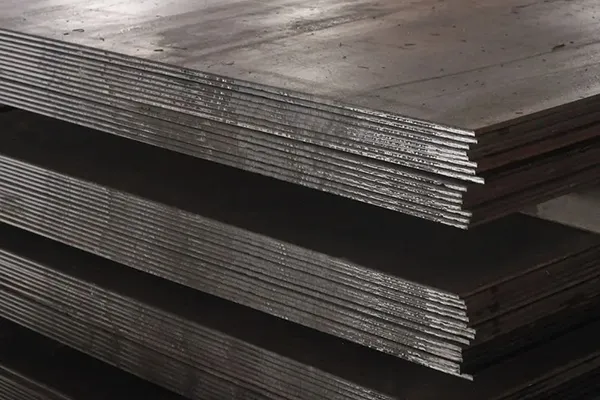
Steel plate quality depends on more than grade and thickness. Steelmaking, rolling conditions, heat treatment when specified, and inspection all influence the properties delivered to a project. For engineers, fabricators and procurement teams, understanding these stages helps establish clear purchasing requirements and verify product compliance before shipment. The manufacturing route varies with steel grade, thickness, applicable standard and intended service. Knowing which production controls and inspection records matter is essential when sourcing steel plate for industrial and construction projects.
Steelmaking establishes the chemical composition that determines many of a plate's properties. Carbon, manganese and silicon influence strength, hardenability or deoxidation, while alloying elements such as chromium and nickel contribute to specific properties when required by the grade. The permitted composition is defined by the applicable material specification. Buyers should therefore identify the required grade and standard rather than rely on descriptions such as “high-strength steel plate.” Material traceability is equally important. The heat number marked on the plate should correspond to the material test certificate (MTC), allowing the supplied material to be linked to its recorded chemical analysis and applicable test results.
Steel plate is commonly produced by hot rolling a steel slab through a series of rolling stands to achieve the required thickness and dimensions. Slab reheating, rolling temperature, reduction and cooling conditions depend on the production route and material grade. For some grades, controlled rolling or thermomechanical processing helps achieve specified strength and toughness. These processes must be matched to the material requirements; achieving the target thickness alone does not establish that the plate meets its mechanical properties. After rolling, plates may undergo leveling, cutting, cooling and surface conditioning. Dimensional tolerances and surface acceptance criteria should follow the applicable product standard and purchase specification.
Steel plate may be supplied as-rolled, normalized, normalized and tempered, or quenched and tempered, depending on the grade and specification. These delivery conditions are not interchangeable. Heat treatment can influence strength, toughness and microstructure. For applications involving low temperatures or demanding mechanical loads, the specified delivery condition and test requirements deserve particular attention. Not every carbon steel plate requires additional heat treatment. Buyers should confirm the required condition in the purchase order and check that the MTC and inspection records support the specified requirements.
Depending on the grade and specification, inspection may include tensile testing, impact testing, hardness testing and chemical analysis. Impact testing is particularly relevant when a project specifies toughness requirements at a defined test temperature. Before dispatch, buyers should verify that the material markings, dimensions, quantity and MTC correspond to the purchase order. Any required third-party inspection should have an agreed scope, schedule and acceptance criteria. For structural steel plates covered by ASTM A6/A6M, applicable dimensional tolerances, testing provisions and marking requirements should be checked against the relevant product specification and standard edition. Other plate grades may require different governing standards.
Clarifying these points before ordering reduces the risk of receiving material that does not meet project requirements. It also gives the supply team a clear basis for coordinating sourcing, inspection and export documentation.
For project-based procurement, quality control extends beyond the plate itself. Technical requirements must be communicated consistently to the production source, inspection personnel and documentation team. Hunan Great Steel Pipe Co., Ltd. supports project-oriented steel supply through sourcing and production coordination, factory inspection arrangements, documentation review and export delivery coordination. The available supply scope and inspection arrangements should be confirmed against each inquiry.
A4: Provide the grade, standard, thickness, width, length, delivery condition, quantity, destination and required testing. Also identify any special toughness, surface or traceability requirements.










 English
 Español
 русский язык
 Português