Rust Prevention, Maintenance, and Inspection Methods for Straight Seam Welded Steel Pipes
Date: 2025-12-25
Rust Prevention, Maintenance, and Inspection Methods for Straight Seam Welded Steel Pipes
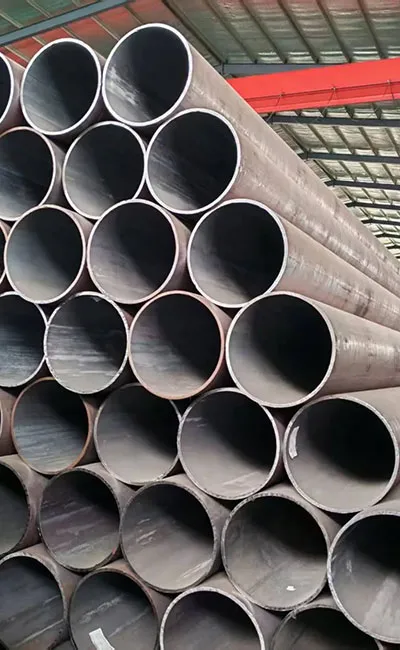
Straight seam welded steel pipes have a simple production process, high production efficiency, low cost, and rapid development. Spiral welded steel pipes generally have higher strength than straight seam welded steel pipes, and can produce larger-diameter welded steel pipes from narrower blanks, and can also produce welded steel pipes of different diameters from blanks of the same width. However, compared with straight seam pipes of the same length, the weld length increases by 30-100%, and the production speed is lower. Therefore, smaller diameter welded steel pipes mostly use straight seam welding, while larger diameter welded steel pipes mostly use spiral welding.
Rust Removal and Maintenance Methods for Straight Seam Welded Steel Pipes:
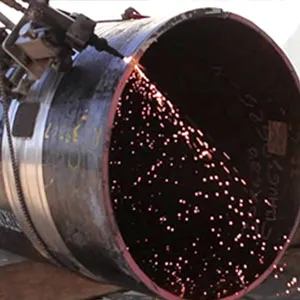
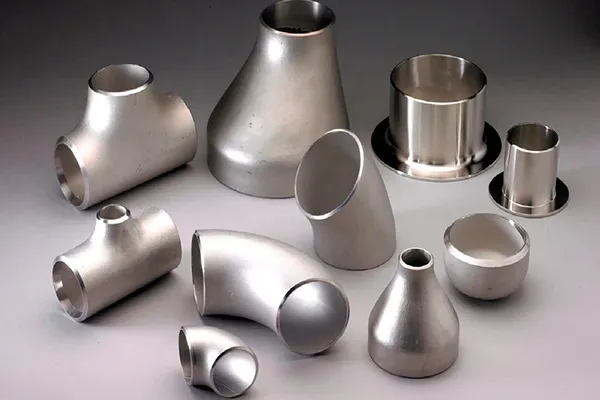
However, the maintenance of straight seam welded steel pipe equipment has become a headache. Straight seam welded steel pipe equipment plays a significant role in daily life and work. Generally, the surface of straight seam welded steel pipe fittings is required to reach a near-white grade (Sa2.5). Practice has proven that this is suitable for the application of commonly used epoxy, ethylene, and phenolic anti-corrosion coatings on straight seam welded steel pipe fittings. This rust removal grade can remove almost all oxide scale, rust, and other contaminants, and the anchor pattern depth reaches 40~100μm, fully meeting the adhesion requirements between the anti-corrosion layer and the steel pipe. Furthermore, shot blasting (polishing) rust removal technology can achieve near-white grade (Sa2.5) technical conditions with lower operating costs and stable reliability. When straight seam welded… When rust appears on steel pipes, it should be treated according to the prescribed rust removal methods to ensure the integrity and performance of the straight seam welded steel pipes, enabling their use in various industries and fields and making significant contributions to the construction industry.
Straight seam welded steel pipe blasting (polishing) abrasives: To achieve the ideal rust removal effect, the abrasive should be selected based on the surface hardness, original rust level, required surface roughness, and coating type of the straight seam welded steel pipe. For single-layer epoxy, two-layer, or three-layer polyethylene coatings, a mixture of steel grit and steel shot is suitable. Achieving ideal rust removal results. Steel shot strengthens the steel surface, while steel grit erodes it. A mixture of steel shot and steel grit (typically with steel shot hardness of 40-50 HRC and steel grit hardness of 50-60 HRC) can be used on various steel surfaces, even those with C-grade and D-grade rust, with excellent rust removal results.
Rust removal speed of straight seam welded steel pipes: This refers to the total kinetic energy E applied to the steel pipe by the abrasive per unit time and the kinetic energy E1 of a single abrasive particle. The rust removal speed of the steel pipe depends on the type of abrasive. And the abrasive discharge rate. Where: m is the abrasive spray (polishing) rate; V is the abrasive running speed; m1 is the abrasive particle size. The size of m is related to the abrasive breakage rate, which directly affects the efficiency of surface treatment operations and the cost of rust removal equipment. When the equipment is fixed, m is a constant, y is a constant, so E is also a constant. However, due to abrasive breakage, m1 changes. Therefore, abrasives with lower loss rates should generally be selected, which is beneficial for improving cleaning speed and extending the life of long blades.
The particle size of the abrasive for straight seam welded steel pipes. Abrasive Particle Size and Ratio: To achieve good uniformity of cleanliness and roughness distribution, the particle size and ratio design of the abrasive are crucial. Excessive roughness can cause the anti-corrosion layer to thin at the anchor pattern peaks; simultaneously, due to excessively deep anchor patterns, air bubbles are easily formed in the anti-corrosion layer during the process, severely affecting its performance.
High-intensity impact from large abrasive particles alone is insufficient; insufficient roughness will reduce the adhesion and impact resistance of the anti-corrosion layer. For severe internal pitting corrosion, it is also necessary to use small particles to grind away corrosion products to achieve a cleaning effect, while simultaneously… A well-designed abrasive mix not only reduces wear on pipes and nozzles (blades) but also significantly improves abrasive utilization. Typically, steel shot has a particle size of 0.8-1.3 mm, and steel grit has a particle size of 0.4-1.0 mm, with 0.5-1.0 mm being the main component. The shot-to-grit ratio is generally 5:8. It should be noted that in actual operation, achieving the ideal ratio of steel grit to steel shot in the abrasive mix is difficult because the hard and brittle steel grit has a higher breakage rate than steel shot. Therefore, during operation, the mixed abrasive should be sampled and tested periodically, and the particle size distribution should be monitored. Furthermore, a new abrasive should be added to the rust removal machine, and steel shot should constitute the majority of this new abrasive.
Various inspection methods for straight seam welded steel pipes: Currently, the most widely used method is magnetic particle testing. Magnetic testing generally only detects surface defects, and many problems cannot be accurately identified, usually relying on experience for judgment. Therefore, a combination of wave and X-ray testing is used. This method can sensitively detect defects in the welded steel pipe, but it also has limitations; it cannot determine the material, shape, size, etc. of the welded steel pipe.
Current inspection methods are all physical methods, which not only reduce damage to the material but also accurately reflect material defects and obtain better information. However, everything has two sides; this method is not entirely reliable. Customers should rely on their own experience during long-term use and purchasing to determine the best approach. It is also recommended to choose reputable and well-regarded straight seam welded steel pipes during the procurement process to minimize losses.
Post time: Dec-25-2025










 English
 Español
 русский язык
 Português