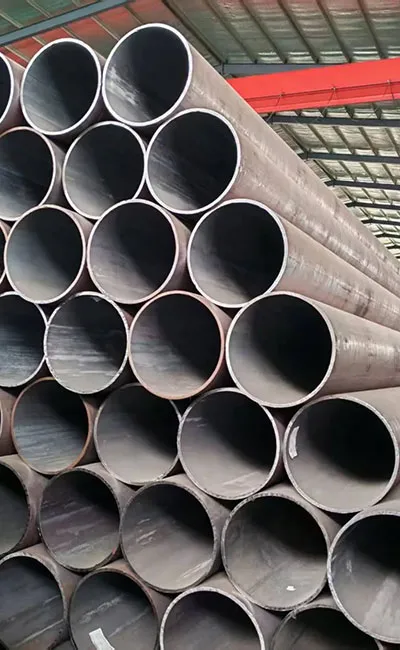
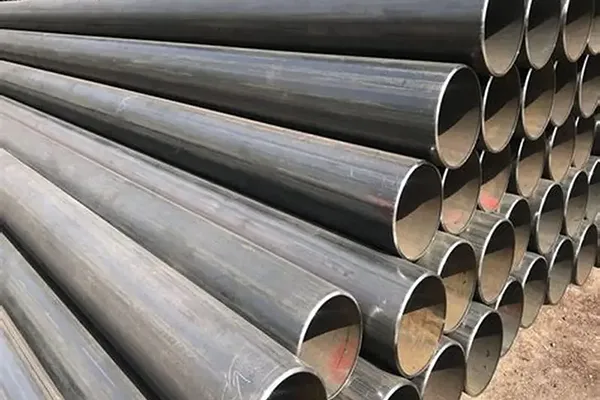
Reliable pipeline construction depends on more than simply supplying steel pipe. Material grade, pipe dimensions, manufacturing process, corrosion protection, inspection, and delivery coordination all need to match the project requirements. For the Tula–Salamanca project, Hunan Great Steel Pipe Co., Ltd. completed the supply of 9,800 meters of 16-inch API 5L X52 seamless carbon steel pipe with 3LPE coating. The delivery demonstrates how material selection, external corrosion protection, quality control, and export coordination work together in a large-scale pipeline supply project.
Project Shipment at a Glance
|
Item
|
Specification
|
|
Product
|
API 5L X52 Seamless Steel Pipe
|
|
Nominal Size
|
16 inch
|
|
Material
|
Carbon Steel
|
|
Grade
|
X52
|
|
Manufacturing Process
|
Seamless
|
|
External Coating
|
3LPE
|
|
Quantity
|
9,800 meters
|
|
Project
|
Tula–Salamanca
|
The combination of API 5L X52 carbon steel, seamless pipe construction, and 3LPE external coating was selected for a pipeline application requiring both structural performance and protection against external corrosion.
API 5L is a widely recognized specification for line pipe used in pipeline transportation systems. Within the specification, X52 identifies a particular strength grade.
For this shipment, the use of seamless pipe provides a pipe body manufactured without a longitudinal weld seam. The final suitability of the pipe, however, depends on the complete project specification, including dimensions, operating conditions, testing requirements, and applicable supplementary requirements.
This is an important point for pipeline procurement: pipe grade and manufacturing method should be evaluated together with the actual service conditions rather than selected independently.
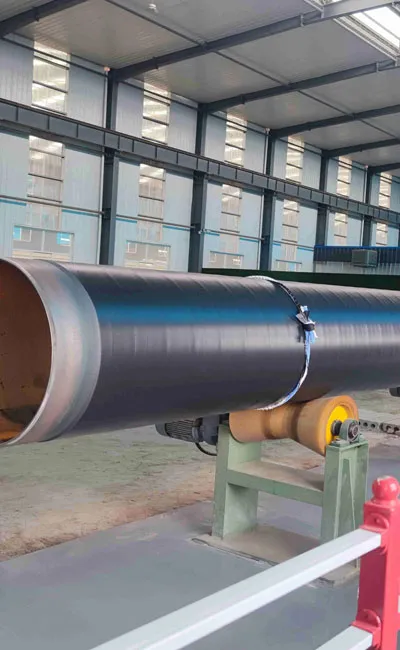
For pipeline systems, the steel pipe’s external surface can be exposed to moisture, soil, salts, and other corrosive conditions. A suitable external coating creates a protective barrier between the steel substrate and its surrounding environment. 3LPE, or three-layer polyethylene coating, combines three functional layers:
Fusion-Bonded Epoxy (FBE) → Adhesive Layer → Polyethylene Outer Layer.
The FBE layer provides corrosion protection and adhesion to the prepared steel surface. The adhesive layer bonds the inner and outer layers, while the polyethylene layer provides additional mechanical and environmental protection. The performance of the coating depends heavily on surface preparation, application conditions, coating thickness, curing, and final inspection. A high-quality coating system therefore starts well before the finished pipe leaves the production line.
For a coated pipeline product, quality control cannot stop at checking the finished dimensions.
The manufacturing and inspection process may cover:
-
Verification of raw material and steel grade
-
Dimensional inspection
-
Mechanical property testing
-
Weld-free seamless pipe body inspection
-
Surface condition inspection
-
Coating thickness measurement
-
Holiday or discontinuity detection
-
Visual inspection of the coated surface
-
Repair of coating damage where required
-
Final marking and traceability
The specific tests and acceptance criteria should follow the applicable API, coating specification, purchase order, and project inspection plan.
For an international pipeline shipment, documentation is equally important. Material certificates, inspection records, coating records, packing information, and shipping documents provide the traceability required throughout the procurement process.










 English
 Español
 русский язык
 Português