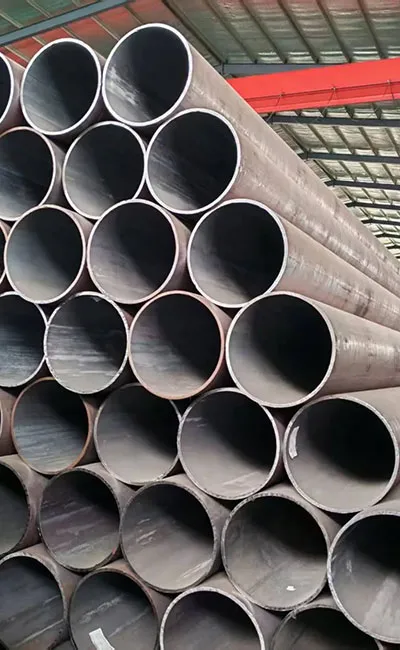

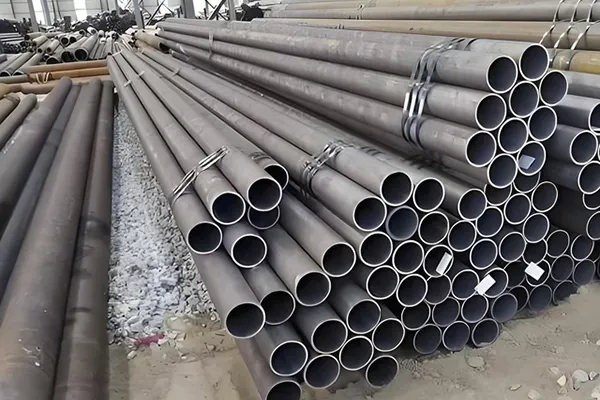
Carbon seamless steel pipe is widely used in energy, water, process, and industrial piping, but carbon steel can corrode when exposed to moisture, oxygen, salts, chemicals, or aggressive process fluids. The right protection method should therefore not be selected from a list of coatings alone. A more practical engineering approach is: Environment → Corrosion Risk → Protection Method → Inspection and Maintenance. For example, a buried pipeline may require external coating and cathodic protection, while a pipe carrying an aggressive process fluid may need internal protection. The current ASTM A106/A106M-26 specification, for instance, covers seamless carbon steel pipe for high-temperature service, but corrosion protection remains an application-specific engineering decision.
A common procurement mistake is to specify the coating first and assess the environment later. The protection strategy should work in the opposite direction: understand the environment first, identify the corrosion risk, then select the protection system.
External corrosion affects the outside surface and is particularly relevant to buried, submerged, marine, and outdoor piping. Internal corrosion occurs on the pipe's inner surface and is influenced by the transported medium. Water chemistry, acids, chlorides, dissolved gases, temperature, and flow conditions can all contribute. Therefore, external and internal corrosion should be assessed separately. A pipe with adequate external protection may still require an internal coating or corrosion-control strategy.
For buried or submerged piping, AMPP's NACE SP0169-2024 addresses external corrosion control and includes considerations for coatings and cathodic protection.
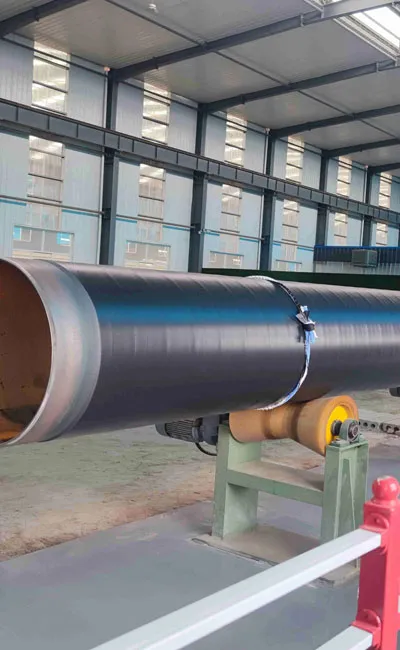
The epoxy provides adhesion and corrosion resistance, while the polyethylene layer provides additional mechanical and environmental protection. ISO 21809-1 specifies requirements for plant-applied three-layer polyethylene and polypropylene coatings on welded and seamless steel pipes for buried or submerged pipeline transportation systems in the petroleum and natural gas industries. The standard also recognizes compatibility with cathodic protection. 3LPE is therefore commonly considered where buried or submerged pipelines face both corrosion exposure and mechanical handling risks.
|
Factor |
3PE / 3LPE |
FBE |
|
External corrosion protection |
High |
High |
|
Mechanical protection |
Strong |
Application-dependent |
|
Buried pipelines |
Common |
Common |
|
Coating structure |
Multi-layer |
Fusion-bonded epoxy |
|
Key consideration |
Soil, impact, installation |
Adhesion, temperature, application |
The appropriate solution depends on the fluid, temperature, pressure, flow conditions, and expected corrosion mechanism.
The selection should follow the actual working environment:
|
Environment |
Main Risk |
Possible Protection |
|
Dry indoor |
Low atmospheric exposure |
Bare pipe or basic protection |
|
Outdoor |
Moisture, rain, UV |
External coating |
|
Buried |
Soil moisture and salts |
3LPE/FBE + CP where required |
|
Submerged |
Continuous water exposure |
Coating + CP |
|
Marine |
Chlorides and moisture |
High-performance coating + CP |
|
Aggressive internal fluid |
Internal corrosion |
Internal coating/inhibitor/material selection |








 English
 Español
 русский язык
 Português