Product News

Hunan Great Steel Pipe Co., Ltd
carbon seamless steel pipe,carbon seamless steel pipe manufacturing,carbon steel pipe quality control

How Is Carbon Seamless Steel Pipe Manufactured

Date: 2026-08-24
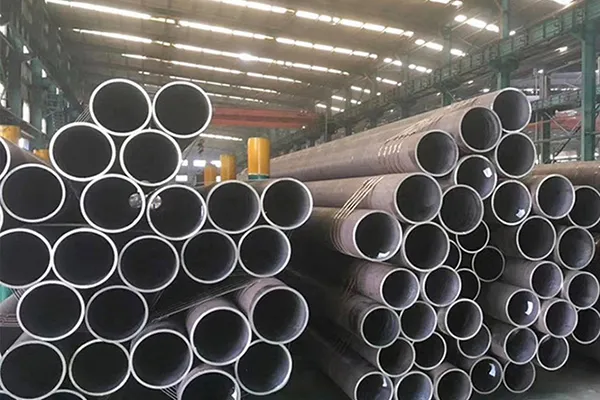
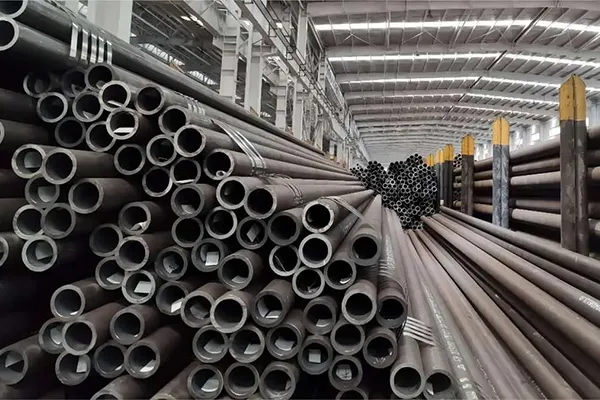
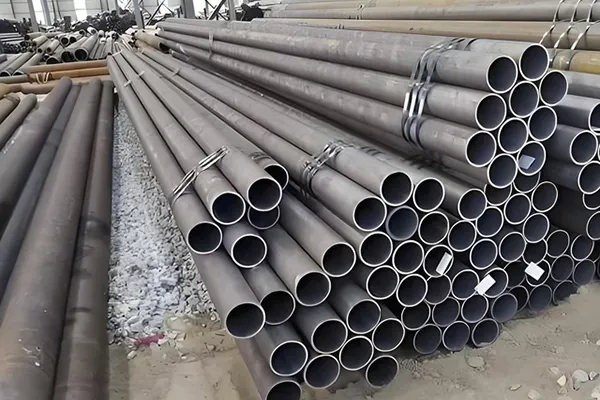
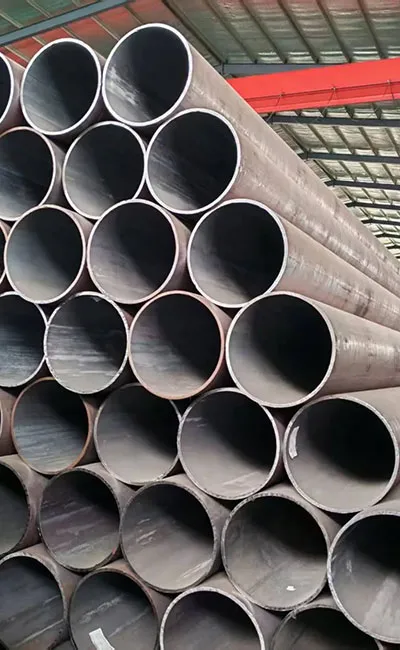
Carbon seamless steel pipe is manufactured from solid steel billet through a controlled series of heating, piercing, rolling, sizing, heat treatment, and inspection processes. Unlike welded pipe, there is no longitudinal weld seam joining the pipe body. For buyers, understanding this process helps explain why manufacturing control matters to the pipe's wall thickness, dimensional accuracy, mechanical properties, surface quality, and service performance. The exact production route may vary according to pipe size, steel grade, applicable standard, and mill configuration.

What Is Carbon Seamless Steel Pipe?

Carbon Steel

Carbon seamless steel pipe is primarily made from carbon steel containing controlled amounts of carbon, manganese, silicon, and other elements specified by the applicable grade. These elements influence strength, ductility, hardness, weldability, and service performance. For example, ASTM A106/A106M covers seamless carbon steel pipe for high-temperature service and specifies requirements for chemical composition, mechanical properties, testing, and dimensions.

Seamless Structure

The main characteristic of seamless pipe is that the pipe body does not have a longitudinal welded joint. Instead, a solid round billet is pierced to create a hollow shell, which is then elongated and sized through rolling operations. This manufacturing route produces a continuous pipe body.

Typical Applications

Carbon seamless steel pipe is commonly used in:
  • Oil and gas piping
  • Power generation
  • Petrochemical facilities
  • Boiler and high-temperature systems
  • Industrial process piping
  • Mechanical and structural applications
The appropriate grade and specification depend on the actual service conditions.

What Raw Materials Are Used?

Steel Billet

Production begins with a solid steel billet, normally with a round cross-section. The billet must meet the specified chemical composition and quality requirements before entering the pipe mill.

Heat Number

Each steelmaking batch is assigned a heat number. This number provides traceability between the finished pipe and its original steelmaking records. Maintaining heat-number identification throughout production helps manufacturers and buyers verify material consistency and documentation.

Chemical Composition

The chemical composition is checked against the applicable standard. Depending on the grade, elements such as carbon, manganese, silicon, phosphorus, and sulfur must remain within specified limits.

How Does the Seamless Pipe Production Process Work?

Billet Heating

The billet is heated to a controlled temperature suitable for hot deformation. Uniform heating is important because uneven temperature distribution can affect piercing and subsequent forming.

Piercing

Piercing transforms the solid billet into a hollow tube shell. The heated billet passes through a rotary piercing mill, where controlled deformation and a piercing plug create the internal opening. Solid Billet → Hollow Tube Shell

Rolling

The hollow shell is then processed through rolling equipment to reduce wall thickness, increase length, and improve dimensional uniformity. Rolling parameters have a direct influence on wall-thickness consistency and overall pipe geometry.

Sizing

Sizing mills adjust the outside diameter and improve dimensional accuracy after rolling. This stage helps bring the pipe closer to its specified OD and improves the consistency of the finished product.

Cooling

After forming, the pipe is cooled under controlled conditions. Cooling practice affects the resulting microstructure and can therefore influence mechanical properties. 


Why Is Heat Treatment Important?

Normalizing

Normalizing involves heating the pipe to a specified temperature followed by controlled cooling. Where required by the material specification, it can help refine the microstructure and achieve the required mechanical properties.

Annealing

Annealing uses a controlled heating and cooling cycle to modify the steel's microstructure and improve properties such as ductility and machinability. The applicable heat-treatment process depends on the steel grade and governing standard.

Mechanical Properties

After heat treatment, the pipe must meet the specified mechanical requirements, which may include:
  • Tensile strength
  • Yield strength
  • Elongation
  • Hardness where specified

How Are Dimensions Controlled?

OD

Outside diameter is measured to verify compliance with the specified dimensional tolerance.

WT

Wall thickness is particularly important for pressure-service applications. Measurements confirm that the pipe meets the specified thickness and tolerance.

Length

Finished length is checked against the purchase order, whether fixed length or another specified range is required.

Straightness

Straightness is inspected because excessive deviation can cause problems during fabrication, transportation, and installation.

How Is the Finished Pipe Inspected?

Final inspection combines visual, dimensional, mechanical, and integrity testing according to the applicable product standard and purchase order. Typical checks may include:
  • Surface inspection
  • OD and wall-thickness measurement
  • Length and straightness inspection
  • Chemical composition verification
  • Tensile testing
  • Hydrostatic testing
  • Nondestructive testing where specified
  • Marking and traceability review
For example, ASTM A106/A106M includes requirements related to mechanical testing, hydrostatic testing, and nondestructive electric testing. The purpose of final inspection is not simply to confirm that the pipe looks acceptable. It is to demonstrate that its material, dimensions, mechanical properties, and integrity meet the specified requirements.

FAQ

Q1: Is carbon seamless steel pipe stronger than welded steel pipe?
A1: Not automatically. Performance depends on the steel grade, dimensions, manufacturing standard, heat treatment, and application. Seamless construction eliminates the longitudinal weld, but it should not be treated as a universal measure of higher strength.

Q2: What is the main manufacturing process for seamless steel pipe?
A2: The basic hot-finished process includes billet heating, piercing, rolling, sizing, cooling, heat treatment where required, and final inspection. Specific equipment and processing routes vary by manufacturer and pipe specification.

Q3: Why is billet quality important for seamless pipe?
A3: The billet is the starting material for the entire pipe. Its chemical composition, cleanliness, heat number, and internal quality can affect the consistency and performance of the finished pipe.

Q4: What tests are commonly performed on carbon seamless steel pipe?
A4: Depending on the applicable standard, testing may include dimensional inspection, chemical analysis, tensile testing, hydrostatic testing, visual inspection, and nondestructive testing.

Q5: What information should buyers provide when ordering carbon seamless steel pipe?
A5: At minimum, buyers should specify the steel grade, OD, wall thickness, length, applicable standard, quantity, end finish, testing requirements, and required documentation. Service temperature, pressure, and application can also be important for material selection.

Conclusion

Carbon seamless steel pipe is manufactured through a controlled sequence: Steel Billet → Heating → Piercing → Rolling → Sizing → Cooling → Heat Treatment → Inspection. Every stage contributes to the final pipe's performance. For technical buyers, understanding this process provides a practical way to evaluate manufacturing capability, quality control, traceability, and inspection documentation. When requesting a quotation, providing a complete technical specification allows the manufacturer to establish the correct production and inspection requirements from the beginning.

Latest news list

  • 3PE anti-corrosion steel pipe,3PE coating selection,FBE coating,3LPE coating,3LPP coating
    When purchasing 3PE anti-corrosion steel pipe,buyers often focus on pipe diameter,wall thickness,steel grade,and price,However,the coating materials are equally important,A 3PE system is not simply “plastic around a steel pipe,” It is a multi-layer protection system in which each material performs a different function,
  • 3PE anti-corrosion steel pipe,3PE coated steel pipe,3PE steel pipe procurement,3PE coating selection
    Choosing the right 3PE anti-corrosion steel pipe starts with more than pipe size and price,For buried or submerged pipelines,buyers need to consider the base pipe,coating system,installation conditions,inspection requirements,and expected service life as one complete specification,
  • 3PE anti-corrosion steel pipe maintenance,3PE coated steel pipe,3PE pipeline maintenance
    A 3PE anti-corrosion steel pipe does not stop requiring attention once it has been installed and buried,The three-layer polyethylene coating is designed to isolate the steel from moisture,soil,and other corrosive conditions,but the coating can still be damaged during transportation,welding,backfilling,excavation,or pipeline operation,
  • 3PE anti-corrosion steel pipe quality control,3PE coated steel pipe inspection,3PE coating inspection
    Quality control is one of the most important factors affecting the performance of 3PE anti-corrosion steel pipe,A three-layer coating can provide effective external protection only when the steel surface,coating materials,application process,inspection,and subsequent handling are properly controlled,
  • 3PE vs 2PE steel pipe,3PE coated steel pipe,2PE coated steel pipe,3PE coating,2PE coating
    Selecting an external coating for buried steel pipe is not simply a matter of choosing more coating layers,The right system depends on soil conditions,operating requirements,installation methods,mechanical exposure,applicable standards,and the level of corrosion protection required,2PE and 3PE are both polyethylene-based external coating systems,but their structures are different,Understanding that difference helps EPC contractors,distributors,and pipeline operators make a more informed purchasing decision,

Find what you need ?

close
We use cookies and other tracking technologies to improve your browsing experience on our website, to show you personalized content and targeted ads, to analyze our website traffic, and to understand where our visitors are coming from.