When purchasing
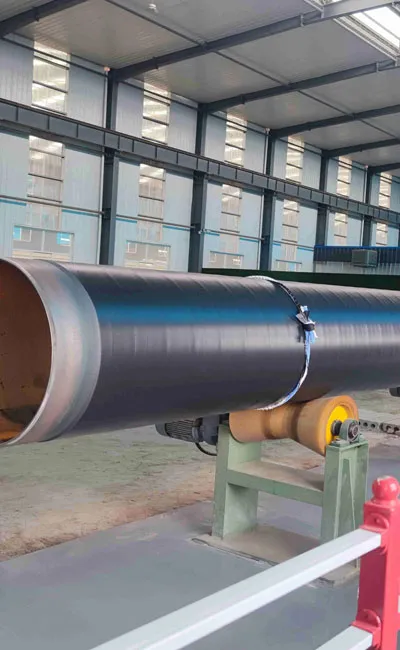
3PE anti-corrosion steel pipe, buyers often focus on pipe diameter, wall thickness, steel grade, and price. However, the coating materials are equally important. A 3PE system is not simply “plastic around a steel pipe.” It is a multi-layer protection system in which each material performs a different function. ISO 21809-1:2018 covers plant-applied three-layer polyethylene and polypropylene coatings for welded and seamless steel pipes used in buried or submerged pipeline systems. For procurement teams, the key question is therefore not only “Do we need 3PE?”, but also “Which coating materials and qualified system are appropriate for our service conditions?”
1. Understand the Three Layers of a 3PE System
A conventional 3PE coating consists of three functional layers:
FBE primer → adhesive layer → polyethylene outer layer. The FBE layer bonds directly to the prepared steel surface and provides the primary corrosion barrier. The adhesive layer connects the epoxy primer with the polyethylene outer layer. The outer PE layer provides mechanical protection, moisture resistance, and electrical insulation. This means buyers should evaluate the complete coating system, rather than selecting each material independently based only on price.
Fusion-bonded epoxy (FBE) is the first layer of a standard 3PE system. Its main functions are to:
-
Bond to the prepared steel surface
-
Provide corrosion resistance
-
Create the base for the adhesive layer
-
Maintain coating integrity under the specified service conditions
Buyers should ask suppliers to identify the FBE manufacturer, product grade, batch number, applicable technical requirements, and storage conditions. Depending on the project specification, inspection may also include properties such as coating thickness, adhesion, curing characteristics, and cathodic disbondment resistance. The important point is that FBE should be selected according to the qualified 3PE system and project requirements, rather than simply choosing a generic epoxy powder.
3. How Should the Adhesive Layer Be Selected?
The second layer is a copolymer adhesive, sometimes called the tie layer. Its role is easy to overlook, but it provides the bond between the FBE primer and the polyethylene outer layer. Poor compatibility, incorrect application temperature, or inadequate coverage can compromise the integrity of the entire coating system. Buyers should therefore confirm:
-
Adhesive material type
-
Compatibility with the selected FBE and PE
-
Required thickness
-
Application temperature
-
Manufacturer and batch traceability
-
Applicable testing requirements
The adhesive should be qualified as part of the coating system rather than treated as an interchangeable commodity.
4. What Type of Polyethylene Should Be Used?
The outer layer is normally polyethylene (PE), with HDPE commonly used in 3PE pipeline coating systems. It provides the mechanical shield around the inner corrosion-protection layers. When selecting PE, buyers should consider:
-
Operating temperature
-
Soil and groundwater conditions
-
Impact and abrasion exposure
-
Installation method
-
Required mechanical resistance
-
Low-temperature handling conditions
-
Applicable coating specification
For example, 3LPE is widely used for buried pipelines where the outer polyolefin layer needs to provide mechanical protection in addition to corrosion protection. The PE material should not be selected only according to its nominal thickness. Its material properties and compatibility with the adhesive and FBE layers are equally important.
5. Should Buyers Consider 3LPP Instead of 3LPE?
In some projects, 3LPP (three-layer polypropylene) may be considered as an alternative to 3LPE. The basic structure remains similar: FBE + adhesive + PP outer layer. The main difference is the outer polyolefin material. Polypropylene can be considered where higher temperature capability or specific mechanical requirements make it more appropriate. Therefore, the choice between 3LPE and 3LPP should be based on operating temperature, installation conditions, mechanical exposure, and the qualified coating system—not simply on which material has a higher specification.
A practical procurement decision should start with the operating environment.
|
Project condition
|
Key material consideration
|
|
Normal buried pipeline
|
PE/HDPE outer layer and standard 3PE system
|
|
Rocky or abrasive soil
|
Higher mechanical protection requirements
|
|
HDD installation
|
Impact, abrasion and pulling resistance
|
|
Higher operating temperature
|
Evaluate PE temperature limits or 3LPP
|
|
Marine/submerged service
|
Coating system compatibility and project specification
|
|
Long design life
|
Qualified materials, inspection and traceability
|
The actual requirements should always follow the governing coating standard and project specification. ISO 21809-1 provides the framework for plant-applied three-layer polyolefin coating systems, but project-specific requirements may be more stringent.
7. What Should Buyers Ask the Supplier?
Before placing an order, procurement teams should ask for clear evidence rather than accepting “3PE coated” as a complete specification. Confirm:
(1) What FBE product and grade will be used?
(2) Which adhesive material is compatible with the FBE and PE?
(3) What PE material and coating class will be applied?
(4) What are the required thicknesses for each layer?
(5) Which standard and project specification control the coating?
(6) How will coating thickness, adhesion, holidays, and other required properties be inspected?
(7) Can the supplier provide material batch and coating traceability?
These questions help buyers compare suppliers on technical capability rather than quotation price alone.
Conclusion
Choosing coating materials for 3PE anti-corrosion steel pipe is a system-selection decision. FBE provides the steel-to-coating interface and corrosion barrier, the copolymer adhesive connects the layers, and PE provides the external mechanical and environmental protection. For most procurement decisions, the safest approach is to specify the complete qualified coating system rather than purchasing FBE, adhesive, and PE materials independently. Before requesting a quotation, buyers should provide the pipe size, steel grade, service temperature, installation method, environmental conditions, applicable coating standard, inspection requirements, and expected service life. This gives the supplier enough information to recommend a coating material combination that is technically suitable—not simply the cheapest available option.










 English
 Español
 русский язык
 Português