Company News

Hunan Great Steel Pipe Co., Ltd
stainless steel heat exchanger tube,heat exchanger tube manufacturer,TP316L heat exchanger tube,seamless stainless steel tube,custom heat exchanger tube

Stainless Steel Heat Exchanger Tube Manufacturing and Delivery Case Study for Petrochemical Projects

Date: 2026-06-17
Why Are Stainless Steel Heat Exchanger Tubes Critical in Petrochemical Projects?
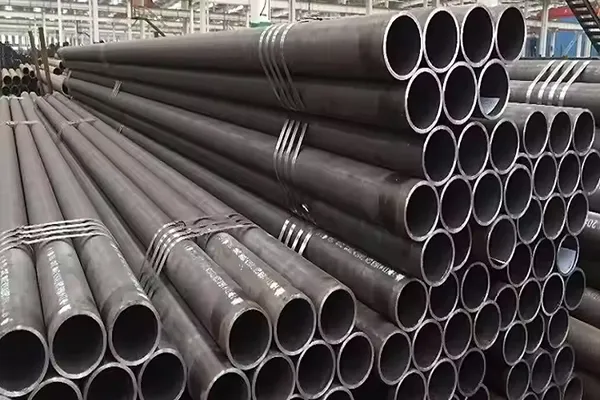
Stainless steel heat exchanger tubes are designed to transfer heat efficiently while resisting corrosion, pressure, and elevated operating temperatures. In petrochemical facilities, tube reliability directly influences equipment uptime, maintenance costs, process efficiency, and plant safety. The following project highlights how customized manufacturing, stringent quality control, and coordinated logistics supported the successful delivery of stainless steel heat exchanger tubes for a petrochemical heat exchanger system in Southeast Asia. This project illustrates how technical expertise, disciplined quality assurance, and coordinated logistics converge to deliver results that matter on the ground.

Project Specifications: What the Customer Required?
The customer, a European EPC contractor with a 20-year track record in petrochemical infrastructure, specified the following:
Product: Stainless Steel Heat Exchanger Tube, Cold Drawn Seamless
Material: ASTM A269 TP316L with enhanced corrosion resistance
Dimensions: 25.4 mm OD × 2.11 mm WT, custom lengths of 6,500 mm and 9,200 mm
Dimensional Tolerances: OD ±0.05 mm, WT ±5%—tighter than ASTM standard requirements
Surface Condition: Bright Annealed, Ra ≤ 0.8 μm
Testing: 100% Eddy Current Testing, Hydrostatic Testing to 28 MPa, PMI at each production stage
Documentation: EN 10204 Type 3.1 Material Test Certificate with third-party witness
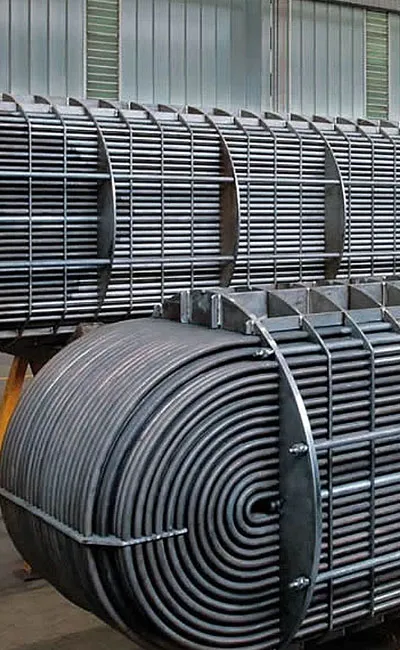
The customized length requirement was particularly critical. The customer's heat exchanger bundle design called for specific tube lengths to minimize welding joints and improve thermal transfer efficiency. Standard mill lengths would have required additional fabrication work on-site—an avoidable cost and schedule risk.

Engineering Review: Addressing Operating Conditions
Before production commenced, our engineering team conducted a 12-day technical review with the customer's project engineers. Three factors drove the final manufacturing approach:
Corrosion resistance under elevated temperatures. The 540°C operating temperature, combined with chloride exposure, required strict control of solution annealing parameters to optimize the passive oxide layer. We established a heat treatment protocol of 1,040°C ± 10°C with a controlled cooling rate to achieve the desired grain structure.
Wall thickness consistency for heat transfer efficiency. The customer's thermal modeling indicated that wall thickness variation beyond ±5% would reduce overall heat transfer coefficient by approximately 3%. Our cold drawing process was calibrated to maintain wall thickness uniformity within ±4% across the entire batch.
Fabrication performance. The tubes needed to withstand roll expansion and welding during bundle assembly. Surface cleanliness and dimensional stability were verified at multiple checkpoints to ensure trouble-free installation.

Manufacturing and Quality Control: What We Delivered?
Production followed a tightly controlled sequence:
Raw material verification. Coils from an approved mill underwent chemical composition analysis and PMI testing upon arrival. All material met the specified 316L chemistry with molybdenum content at 2.3%—above the 2.0% minimum—for enhanced pitting resistance.
Cold drawing and dimensional control. The stainless steel heat exchanger tubes were drawn through carbide dies with continuous laser micrometer monitoring. OD and wall thickness were recorded at 2-meter intervals throughout production. The final dimensional data package showed OD variation within ±0.03 mm and wall thickness within ±3.5%—exceeding the customer's requirements.
Solution annealing and bright annealing. Heat treatment was performed in a controlled atmosphere furnace with endothermic gas protection. The resulting bright surface condition met the specified Ra ≤ 0.8 μm, verified by profilometer measurements on samples from each production lot.

Non-destructive examination. Every stainless steel heat exchanger tube in the order underwent:
Eddy current testing with reference standards per ASTM E426
Hydrostatic pressure testing at 28 MPa, held for 10 seconds per tube
Visual inspection and dimensional verification against customer drawings
Surface roughness measurement using contact profilometry
All test records were compiled into individual tube traceability reports, cross-referenced by heat number and production lot.

Packaging and International Shipment
The tubes were packaged for ocean freight with the following protective measures:
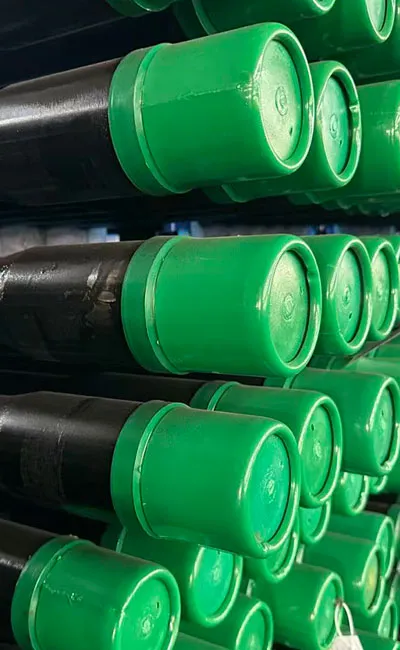
Plastic end caps on both ends
VCI paper wrapping and waterproof polyethylene covering
Seaworthy wooden crates with internal bracing
Bundle labels showing heat numbers, dimensions, and project reference codes
Each package was photographed before loading, and the images were shared with the customer for verification. Export documentation—including commercial invoices, packing lists, bill of lading, certificate of origin, and the complete test certificate package—was prepared in parallel and submitted to the customer's logistics team five days prior to vessel departure.

Delivery Performance
The order was loaded at Shanghai Port on schedule and arrived at the customer's job site in Batam, Indonesia, within the agreed 45-day window. The customer's receiving inspection confirmed that all stainless steel heat exchanger tubes met the specified dimensions, surface condition, and test requirements. No discrepancies were reported.
According to the customer's installation team, no tube-end modifications or dimensional corrections were required during assembly. The heat exchanger bundle installation proceeded smoothly, helping the project maintain its planned construction schedule.

Beyond the Order: What This Project Represents? 
This project was not exceptional in scale—42 metric tons is routine for our facility. What made it noteworthy was the alignment between engineering foresight, manufacturing discipline, and customer collaboration.
The customized length capability, the tighter-than-standard tolerances, the third-party witnessed testing, and the on-time delivery all reflect capabilities that industrial buyers increasingly expect from a reliable stainless steel heat exchanger tube supplier. In an environment where project delays can cost hundreds of thousands of dollars per day, these are not optional features—they are table stakes.

Supporting Heat Exchanger Projects Worldwide
Stainless steel heat exchanger tubes are widely used in refineries, chemical processing plants, power generation facilities, LNG terminals, and seawater desalination projects. At Hunan Great Steel Pipe, we supply tubes that meet ASTM, ASME, EN, and JIS standards, supported by in-house engineering review, comprehensive quality control, and export logistics coordination. Every order is managed as a project, not a transaction. From material selection and dimensional optimization to testing protocols and delivery scheduling, our objective is to provide heat exchanger tube solutions that perform reliably under the most demanding operating conditions—and arrive when they are needed. With extensive experience supplying stainless steel heat exchanger tubes to power generation, petrochemical, LNG, and industrial processing projects worldwide, Hunan Great Steel Pipe supports customers with material selection, engineering review, quality verification, and international project delivery services.

Latest news list

  • steel pipe supplier Central Asia,API line pipe,OCTG casing tubing,seamless steel pipe,structural hollow section,galvanized steel pipe,alloy steel pipe,industrial steel procurement
    Central Asia continues to be one of the most active regions for infrastructure development,energy investment,and industrial expansion,Countries such as Kazakhstan,Uzbekistan,Turkmenistan,Kyrgyzstan,and Tajikistan are investing heavily in oil and gas transportation,power generation,mining operations,water transmission systems,and urban construction projects,
  • Stainless Steel Heat Exchanger Tubes,Heat Exchanger Tube Supplier,ASTM A213 Tube,ASTM A249 Tube,Stainless Steel Tube Procurement,Heat Exchanger Tube Buying Guide
    Stainless steel heat exchanger tubes play a critical role in power generation,petrochemical processing,food manufacturing,marine engineering,HVAC systems,and many other industrial applications,Although they may represent only a small portion of the overall equipment investment,their quality has a direct impact on heat transfer efficiency,operational reliability,maintenance frequency,and lifecycle cost,
  • stainless steel heat exchanger tube failure,stainless steel heat exchanger tube pitting corrosion repair,stainless steel heat exchanger tube thermal fatigue cracking
    Stainless steel heat exchanger tubes are widely used in refineries,power plants,marine cooling systems,and chemical processing facilities,Grades such as 304,316,and duplex stainless steel are selected for their corrosion resistance and mechanical stability,yet in real operating environments,failures can still occur due to fouling,corrosion,thermal stress,or flow-induced damage,
  • Stainless Steel Heat Exchanger Tube,Heat Exchanger Tube Structure,Heat Exchanger Tube Design,Industrial Heat Exchanger Tubes
    Stainless steel heat exchanger tubes are essential components in modern heat transfer systems and are widely used in industries such as petrochemical processing,power generation,food and beverage manufacturing,pharmaceuticals,marine engineering,and HVAC applications,Their primary role is to transfer heat efficiently between fluids while maintaining reliable performance under varying temperatures,pressures,and operating conditions,
  • KIOGE 2026 exhibition supplier,Central Asia oil and gas pipeline supplier,Kazakhstan steel pipe
    Global maritime shipping instability and rising freight costs have greatly affected international steel trade in recent years,Many overseas orders are delayed or blocked due to complex logistics and regional uncertainties,To avoid market risks and create stable supply channels for global clients,we have adjusted our global trade strategy,We build overseas warehouse networks and set up a professional international procurement team to support steady order delivery,Focusing on long-term and stable development,we are actively following the Belt and Road Initiative and shifting our focus to Central Asian markets,These inland markets are less affected by sea shipping risks and have huge potential in energy and infrastructure construction,After long-term market cultivation,we have accumulated stable local client resources and rich project service experience in Central Asia,

Find what you need ?

close
We use cookies and other tracking technologies to improve your browsing experience on our website, to show you personalized content and targeted ads, to analyze our website traffic, and to understand where our visitors are coming from.