Coated vs. Uncoated Steel Pipe
|
Coated Steel Pipe
|
Uncoated Steel Pipe
|
|
Additional corrosion protection
|
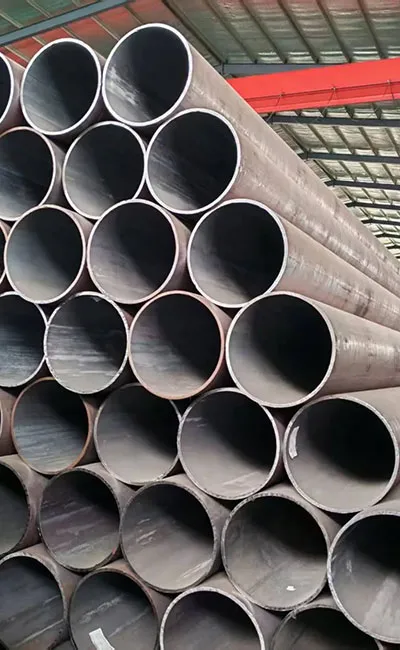
Bare steel surface
|
|
Suitable for demanding environments
|
Better suited to controlled environments
|
|
Higher initial processing cost
|
Lower initial processing cost
|
|
May reduce corrosion-related maintenance
|
Greater exposure to corrosion
|
Coating is not automatically necessary for every application. The decision should be based on the operating environment, expected service life, maintenance strategy, and project requirements.
How Is Coated Steel Pipe Manufactured?
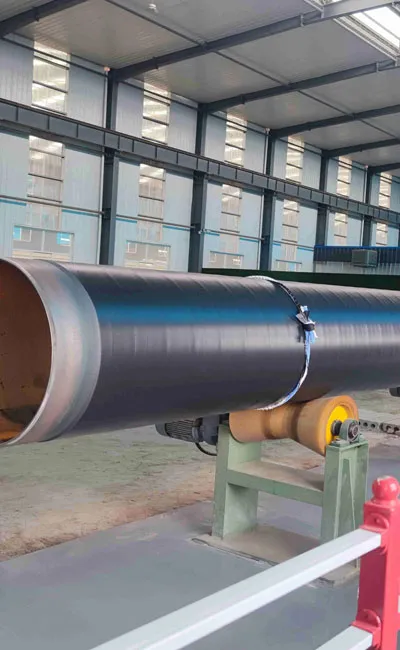
A typical process includes: Pipe manufacturing → inspection → surface preparation → coating application → curing → coating inspection → final inspection → packaging
Surface preparation is particularly important because oil, rust, mill scale, dust, and other contaminants can affect coating adhesion.
Quality inspection may include dimensional checks, visual inspection, coating thickness measurement, adhesion testing, and holiday testing when required by the project specification.
Where Is Coated Steel Pipe Used?
Coated steel pipe is commonly used in:
-
Oil and gas transmission pipelines
-
Water transmission and distribution
-
Underground infrastructure
-
Chemical processing facilities
-
Industrial utility systems
-
Marine and coastal applications
-
Fire protection systems
The coating system should be selected according to temperature, pressure, fluid characteristics, soil conditions, UV exposure, and mechanical requirements.
How Should Buyers Choose a Coated Steel Pipe?
Before ordering, buyers should confirm:
1.Base pipe material and grade
2.Outside diameter and wall thickness
3.Internal or external coating requirements
4.Coating type and specified thickness
5.Operating temperature and environment
6.Applicable standards
7.Inspection and testing requirements
8.Packaging and transportation conditions
A complete specification helps prevent coating mismatches and reduces problems during installation.
Practical Engineering Example
For an underground water transmission project, carbon steel pipe was selected because its mechanical properties and cost were suitable for the application. Because the pipe would remain in contact with moist soil after installation, an external corrosion protection system was specified. The coating was inspected before shipment to verify coverage and compliance with the project requirements. This illustrates an important principle in pipe selection: the base pipe and corrosion protection system should be considered together.
FAQ
Q1: Is coated steel pipe better than uncoated steel pipe?
A1: It depends on the application. Coated pipe is generally more appropriate where corrosion exposure is significant, while uncoated pipe may be sufficient in controlled environments.
Q2: Can coated steel pipe be used underground?
A2: Yes. Coated steel pipe is widely used underground when the coating system is suitable for soil conditions and installation requirements.
Q3: How long does coated steel pipe last?
A3: Service life varies with the base material, coating system, coating quality, operating environment, mechanical damage, and maintenance conditions. There is no single service-life value for all coated pipes.
Q4: Can the coating be customized?
A4: Yes. Coating type, thickness, internal or external application, inspection, and packaging can be specified according to project requirements.
Conclusion
Coated steel pipe combines the structural performance of steel with an additional layer of corrosion protection. Its effectiveness depends not only on the coating material but also on surface preparation, application quality, coating thickness, inspection, and suitability for the service environment.
Hunan Great Steel Pipe Co., Ltd. supplies coated steel pipe for industrial, energy, infrastructure, and international engineering projects. Our team supports customers with pipe selection, coating requirements, inspection documentation, customized specifications, and export logistics to help ensure the final product matches the project’s actual operating conditions.










 English
 Español
 русский язык
 Português