Product News

Hunan Great Steel Pipe Co., Ltd
coated vs uncoated steel pipe,coated steel pipe,uncoated steel pipe,steel pipe corrosion protection

Coated vs. Uncoated Steel Pipe: Which Is Right for Your Project?

Date: 2026-08-11

When selecting steel pipe for an industrial or infrastructure project, one of the first questions is whether the pipe should be supplied with a protective coating. Coated and uncoated steel pipes can both be suitable, but the right choice depends on the service environment, corrosion risk, design life, maintenance strategy, and project specification. A coated steel pipe has an additional protective layer that separates the steel surface from its surrounding environment. An uncoated pipe does not have this dedicated protective barrier and may rely on material selection, corrosion allowance, inhibitors, cathodic protection, controlled conditions, or coating applied later. The practical question is therefore not simply “Which is better?” It is “Which corrosion-control strategy is appropriate for this application?”


Coated vs. Uncoated Steel Pipe at a Glance

Factor

Coated Steel Pipe

Uncoated Steel Pipe

Corrosion protection

Additional barrier

Relies on other protection measures

Initial cost

Generally higher

Generally lower

Maintenance

Can be lower in corrosive environments

May require additional corrosion control

Surface protection

Coating protects the substrate

No dedicated external coating

Typical use

Buried, marine, water and industrial service

Controlled or low-corrosion environments

Lifecycle value

Often favorable where corrosion risk is high

Often favorable where corrosion risk is low

Actual performance depends on the steel grade, coating system, environment, installation method, and applicable specification.


What Is Coated Steel Pipe?

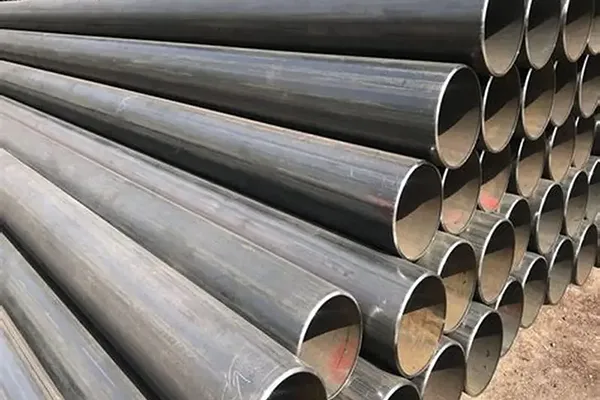
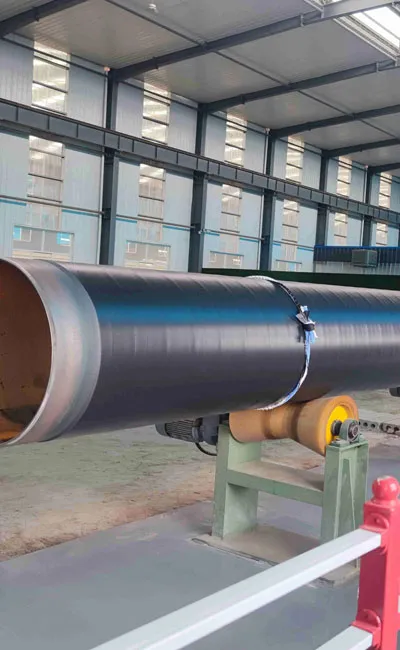
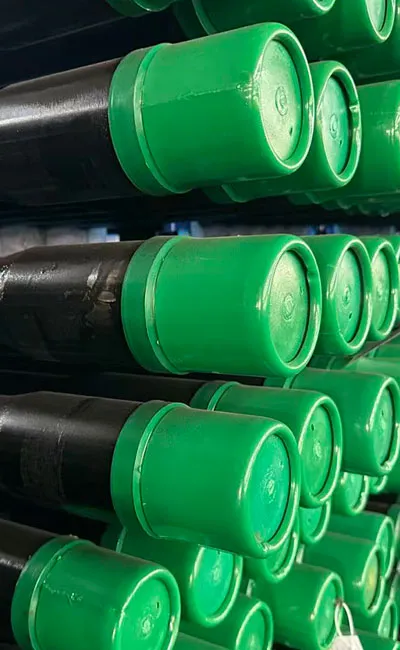
Coated steel pipe is supplied with a protective layer on the internal surface, external surface, or both, depending on the project. Common systems include:
  • 3PE or 3LPE
  • Fusion-bonded epoxy (FBE)
  • Epoxy coatings
  • Polyurethane systems
  • Hot-dip galvanizing
Protective coatings work primarily by separating the metal substrate from corrosive elements such as water, oxygen, and electrolytes. AMPP identifies protective coatings as an important corrosion-control method, while also emphasizing surface preparation, application, measurement, and inspection. However, coating selection should be based on the actual service environment. Soil conditions, moisture, chemicals, temperature, abrasion, UV exposure, and installation method can all affect coating performance.


What Is Uncoated Steel Pipe?

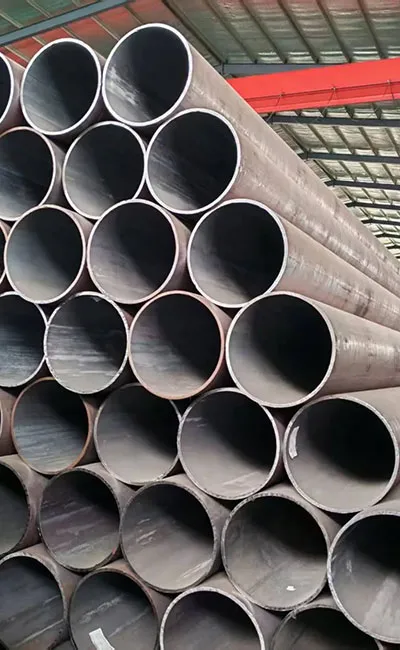
Uncoated steel pipe is supplied without a dedicated protective coating on the specified surface. That does not automatically make it a lower-quality product. In a dry indoor environment, for example, an additional coating may provide limited practical benefit. Uncoated pipe may also be appropriate when the project includes another corrosion-control method or when coating will be applied during a later fabrication or installation stage. The important consideration is whether the complete corrosion-control strategy is adequate for the expected service life.


Internal vs. External Corrosion: Check Both

One common mistake is to evaluate only the pipe’s external environment.
External corrosion can result from moisture, marine exposure, aggressive soil, chemicals, or atmospheric conditions.
Internal corrosion depends on what flows through the pipe. Water chemistry, dissolved gases, chemicals, temperature, flow conditions, and contaminants can influence internal corrosion risk.
A pipe may therefore require external protection while its internal surface remains uncoated, or it may require both internal and external protection. AMPP notes that both internal and external factors can contribute to pipeline failure, making corrosion control a system-level engineering issue rather than simply a coating decision.


Is Coated Steel Pipe Always More Cost-Effective?

Not necessarily. Uncoated pipe normally has a lower initial purchase price. However, if the pipe operates in a corrosive environment, the project may later incur costs for inspection, repainting, corrosion repair, replacement, or operational downtime. A more useful comparison is: Initial cost + installation + corrosion protection + maintenance + repair + replacement. For a long-service-life pipeline, investing in an appropriate coating system may reduce lifecycle costs. In contrast, coating a pipe that operates in a controlled, low-corrosion environment may add unnecessary expense. The most economical solution is the one that provides the required service life without unnecessary protection.

When Is Coated Steel Pipe a Better Choice?

Coated pipe is commonly considered for applications with significant corrosion exposure, including:
  • Underground pipelines
  • Water transmission systems
  • Marine and offshore facilities
  • Oil and gas pipelines
  • Chemical plants
  • Wastewater infrastructure
  • Outdoor industrial piping

For buried or submerged systems, coating should be considered together with installation conditions and other corrosion-control measures. In pipeline applications, coatings and cathodic protection are often used together rather than treating the coating as the only line of defense.


When Can Uncoated Steel Pipe Be Suitable?

Uncoated pipe can be a practical option when:
  • The environment has low corrosion exposure.
  • The pipe is installed indoors under controlled conditions.
  • Another corrosion-control method is already specified.
  • The pipe will be coated during a later project stage.
  • The project specification does not require a protective coating.

The decision should be based on engineering requirements rather than the assumption that every steel pipe needs the same level of corrosion protection.


5 Questions to Ask Before Choosing

Before placing an order, procurement and engineering teams should confirm:
1. What is the external environment?
Check soil, humidity, seawater, chemicals, UV exposure, and temperature.
2. What medium will the pipe carry?
Evaluate internal corrosion risks separately from external exposure.
3. What is the required service life?
A longer design life may justify greater upfront corrosion protection.
4. How will the pipe be installed?
Buried, submerged, and trenchless installation can expose coatings to impact and abrasion.
5. What does the project specification require?

Confirm coating type, thickness, inspection, testing, and applicable product standards before procurement.


Coated or Uncoated: A Practical Selection Checklist

Requirement

What Buyers Should Check

Service environment

Soil, water, humidity, chemicals, marine exposure

Internal medium

Fluid composition, temperature, corrosion risk

Coating

Type, location, thickness and application

Installation

Handling, burial, abrasion and impact

Inspection

Visual, thickness and specified coating tests

Corrosion control

Coating, cathodic protection or other measures

Service life

Required design and maintenance period

Standards

Applicable product and project specifications

Conclusion

Coated and uncoated steel pipes are not competing products with one universal winner. They are different options within a broader corrosion-control strategy.
Choose coated steel pipe when environmental exposure creates a meaningful corrosion risk and the additional protection provides sufficient lifecycle value.
Choose uncoated steel pipe when corrosion exposure is limited or another effective protection method is already incorporated into the project design.
The best decision considers the steel grade, pipe dimensions, internal medium, external environment, operating conditions, installation method, service life, inspection requirements, and total lifecycle cost. Hunan Great Steel Pipe Co., Ltd. supports customized steel pipe supply for industrial, energy, water, infrastructure, and international engineering projects. Share your steel grade, dimensions, application environment, coating requirements, and applicable standard with our technical team for a practical pipe and corrosion-protection solution.

Latest news list

  • how to inspect coated steel pipe,coated steel pipe inspection,coated steel pipe quality control
    A coated steel pipe should not be accepted simply because its surface looks smooth and uniform,Proper inspection needs to cover both the steel pipe and the protective coating system,from raw material verification through final packaging,For oil and gas pipelines,water transmission systems,industrial piping,and infrastructure projects,coating defects can expose steel to moisture and corrosive environments,A practical inspection process therefore checks the base pipe,surface preparation,coating application,thickness,continuity,documentation,and handling,
  • how to choose coated steel pipe,coated steel pipe quality,anti-corrosion steel pipe,coated steel pipe supplier
    Choosing a coated steel pipe is not simply a matter of selecting a coating name such as 3PE,FBE,epoxy,or galvanized,The quality of the finished product depends on the base pipe,surface preparation,coating system,application process,inspection,and handling,
  • coated steel pipe,coated steel pipe types,coated steel pipe applications,steel pipe coating
    Coated steel pipe is steel pipe with a protective layer applied to its external surface,internal surface,or both,The primary purpose is to reduce corrosion and protect the pipe from the environment or transported medium,
  • steel grating installation,how to install steel grating,galvanized steel grating,steel grating installation guide,industrial steel grating,steel grating manufacturer
    Steel grating is widely used for industrial platforms,walkways,drainage covers,mezzanines,offshore facilities,and equipment access areas because it combines high strength with excellent drainage and ventilation,However,even a well-manufactured grating panel may not perform as intended if it is installed incorrectly,
  • steel grating,galvanized steel grating,steel grating applications,steel grating manufacturer
    Steel grating has become one of the most widely specified flooring and access solutions for industrial,commercial,and infrastructure projects,From power plants and petrochemical facilities to wastewater treatment stations,offshore platforms,warehouses,and transportation hubs,steel grating is valued for its combination of strength,safety,ventilation,and long-term durability,

Find what you need ?

close
We use cookies and other tracking technologies to improve your browsing experience on our website, to show you personalized content and targeted ads, to analyze our website traffic, and to understand where our visitors are coming from.