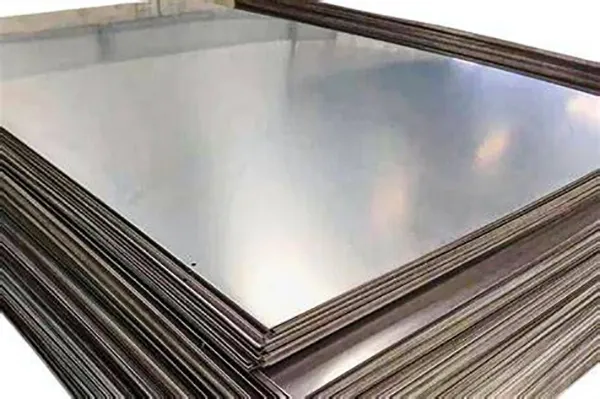
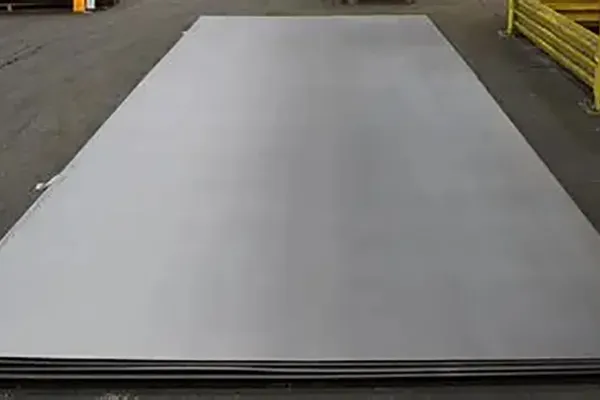
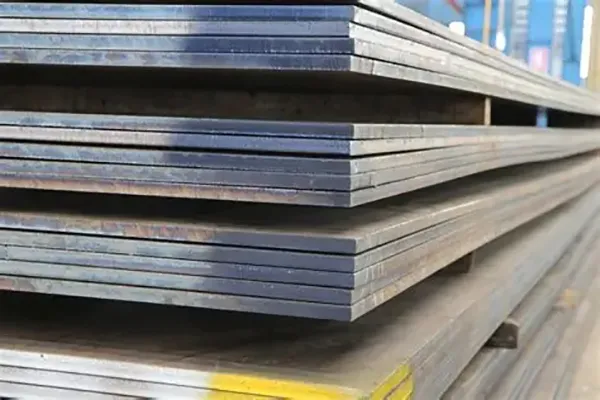
For structural frames, equipment bases, industrial platforms and many fabricated assemblies, hot-rolled plate may be suitable when it meets the design specification. Cold-rolled sheet is often considered for formed components and applications requiring a smoother surface or tighter dimensional control.
Before selecting a product, review the following:
-
Material grade and standard: Confirm the required grade and governing specification.
-
Thickness and dimensions: Check the specified thickness, width, length and dimensional tolerances.
-
Surface requirements: Determine whether mill scale removal, pickling, coating or another surface treatment is required.
-
Fabrication needs: Consider welding, bending, forming, machining and subsequent finishing.
-
Delivery condition: Confirm any requirements for annealing, skin passing or other processing conditions.
For pressure-retaining or safety-critical applications, the governing code and approved material specification must take priority over general comparisons.
5. Compare Total Procurement Cost
A meaningful price comparison requires equivalent specifications. Differences in grade, thickness, tolerances, surface condition, processing and order quantity can make apparently similar quotations difficult to compare. Consider downstream costs as well. A lower-priced product may require additional surface preparation or fabrication work. Conversely, paying for a smoother finish may add little value if the material will be heavily machined or the specification does not require that finish. For international project orders, also confirm material traceability, inspection requirements, documentation, export packing and delivery terms. Request the relevant material test certificates and agreed inspection records where required by the purchase specification. Do not assume that two products are equivalent simply because their dimensions are similar.
FAQs
Q1: Is hot-rolled steel plate always cheaper than cold-rolled steel plate?
A1: No. Pricing depends on grade, dimensions, processing, availability, quantity and market conditions. Compare products with equivalent specifications before making a decision.
Q2: Is cold-rolled steel plate always stronger?
A2: No. Cold working can increase strength and hardness, but final properties depend on the grade, processing route and any subsequent heat treatment.
Q3: Which has a better surface finish?
A3: Cold-rolled products commonly have a smoother surface than as-rolled hot-rolled products. However, the actual finish depends on further processing and the product specification.
Q4: Can hot-rolled and cold-rolled steel plate be substituted?
A4: Only after confirming compliance with the required grade, standard, dimensions, mechanical properties and application requirements. Substitution in a designed or safety-critical application may require formal engineering approval.
Conclusion
The choice between hot-rolled and cold-rolled steel plate should be based on the required product form, specification, fabrication process and final application—not on the assumption that one route is always superior. Clear technical requirements make quotations easier to compare and help reduce avoidable processing and procurement costs.










 English
 Español
 русский язык
 Português