Industry News

Hunan Great Steel Pipe Co., Ltd
buying honed tubes,honed tube buying guide,honed tube inspection,honed tube,honed tube supplier

How to Avoid Common Mistakes When Buying Honed Tubes

Date: 2026-07-24

Buying a honed tube is not simply a matter of comparing prices or matching dimensions. In hydraulic cylinder manufacturing, we have found that many premature cylinder failures are caused by selecting tubes that do not match the application's operating conditions or quality requirements. Although two tubes may look almost identical, differences in material quality, bore accuracy, manufacturing consistency, and inspection standards can significantly affect seal life and equipment reliability. For engineers and procurement teams, understanding what to evaluate before placing an order can reduce maintenance costs, minimize downtime, and improve the overall lifecycle of hydraulic systems. This guide highlights the most common purchasing mistakes and provides practical recommendations to help buyers make informed decisions.


Why Choosing the Right Honed Tube Matters

A honed tube forms the cylinder barrel of a hydraulic system and directly influences sealing performance, friction, leakage control, and service life. Replacing a failed hydraulic cylinder often costs far more than the initial savings achieved by purchasing a lower-priced tube. Before comparing quotations, buyers should first compare technical specifications, manufacturing capability, and quality documentation. A well-selected honed tube contributes to stable equipment performance and lower operating costs over time.

Mistake 1: Choosing Based on Price Alone

The lowest quotation does not necessarily represent the lowest lifecycle cost. Lower prices may result from using lower-grade raw materials, simplified machining processes, or reduced quality inspections. Potential risks include:
  • Inconsistent material properties
  • Loose dimensional tolerances
  • Poor bore consistency
  • Limited quality documentation
  • Greater variation between production batches
Rather than evaluating price alone, buyers should compare the complete technical specification and quality assurance process offered by each supplier.

Mistake 2: Selecting the Wrong Material

Material selection should always match the operating environment instead of focusing solely on pressure requirements.

Material Grade

Typical Applications

E355 (EN 10305-1)

High-pressure hydraulic cylinders

ST52 (DIN 2391)

General industrial hydraulic systems

SAE 1026 (ASTM A519)

Mobile equipment and agricultural machinery

304 Stainless Steel

Food processing and clean environments

316L Stainless Steel

Marine, offshore, and chemical applications

Carbon steel grades provide excellent strength for standard hydraulic systems, while stainless steel is better suited to corrosive environments where long-term durability is essential.


Mistake 3: Overlooking Bore Accuracy and Surface Finish

Even when a tube meets its specified dimensions, poor bore quality can shorten seal life and reduce hydraulic efficiency. Most hydraulic cylinder applications specify:
  • H8 bore tolerance in accordance with ISO 286-2
  • Surface roughness between Ra 0.2–0.8 μm, measured according to ISO 4287 and ISO 4288
A properly controlled cross-hatch pattern helps retain lubricating oil, reducing friction between the piston seal and the cylinder wall. Visual inspection alone cannot verify these characteristics. Reliable manufacturers measure bore dimensions using calibrated bore gauges and evaluate surface roughness with precision profilometers.

Mistake 4: Ignoring Inspection Reports

Inspection documentation provides objective evidence that the product meets specification requirements. Before purchasing, request:
  • EN 10204 3.1 Mill Test Certificate
  • Dimensional inspection report
  • Surface roughness report
  • Straightness inspection record
  • Ultrasonic or eddy current testing report (when specified)
  • Third-party inspection report (SGS, BV, or TÜV if required)
Complete documentation demonstrates that quality is controlled throughout production rather than verified only after manufacturing.

Mistake 5: Failing to Evaluate the Supplier

Product quality depends as much on the manufacturer as on the tube itself. A reliable honed tube supplier should offer:

Evaluation Item

Why It Matters

In-house honing equipment

Better process consistency

ISO 9001 quality management

Standardized production control

Precision inspection equipment

Reliable dimensional verification

Export experience

Better packaging and logistics

Technical engineering support

Application-based recommendations

Stable production capacity

Consistent quality across batches


Manufacturers that monitor machining parameters throughout production generally deliver more consistent results than those relying solely on final inspection.
Engineering Example

A hydraulic cylinder manufacturer supplying construction equipment selected low-cost honed tubes from multiple suppliers. Although all tubes met the specified inside diameter, the internal surface finish varied noticeably between production batches. Several cylinders developed premature seal wear after installation, resulting in unplanned maintenance. After switching to a supplier that provided verified roughness measurements, full material traceability, and documented quality control, cylinder performance became more consistent and maintenance intervals increased. The additional investment in quality reduced the overall operating cost of the equipment.

Before Comparing Prices, Compare Specifications

Before making a purchasing decision, verify the following:
  • Material grade matches the application
  • EN 10204 3.1 certificate available
  • Heat number traceability maintained
  • Required H7, H8, or H9 tolerance achieved
  • Surface roughness inspection report provided
  • Straightness verified
  • NDT completed when required
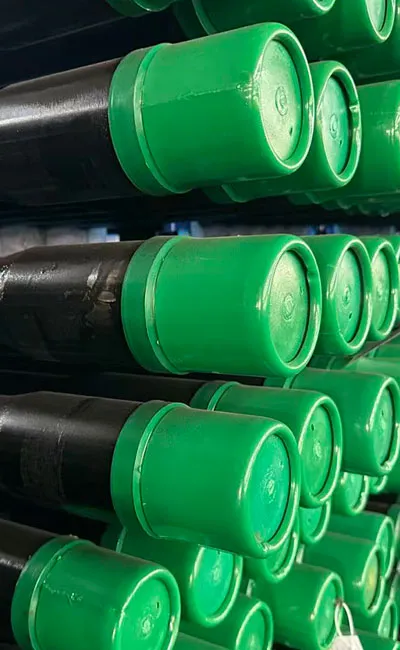
  • Export packaging includes rust protection and end caps
  • Technical support available before and after delivery
A detailed specification review often reveals differences that are not reflected in the quotation alone.

FAQ

Q1: Is a lower-priced honed tube always less reliable?
A1: Not necessarily. However, buyers should confirm that lower pricing does not result from reduced inspection, lower-grade materials, or inconsistent manufacturing processes.
Q2: Is a seamless tube always better than a DOM tube?
A2: Seamless tubes are generally preferred for high-pressure and heavy-duty hydraulic systems because of their excellent fatigue strength. DOM tubes provide outstanding dimensional consistency and are widely used in medium-pressure industrial applications.
Q3: What should I inspect when the tubes arrive?
A3: Check the packaging, protective end caps, rust prevention, identification labels, heat numbers, visible surface condition, and accompanying inspection documents before accepting delivery.
Q4: Which documents should suppliers provide?
A4: At a minimum, request an EN 10204 3.1 Mill Test Certificate, dimensional inspection report, and surface roughness report. Additional NDT or third-party inspection reports may be required for critical projects.
Q5: Can honed tubes be manufactured to custom specifications?
A5: Yes. Most manufacturers can produce customized inside diameters, outside diameters, wall thicknesses, lengths, tolerances, materials, and inspection requirements based on project specifications.

Conclusion

Avoiding costly purchasing mistakes begins with evaluating more than the quoted price. Material selection, bore accuracy, surface finish, inspection documentation, and supplier capability all influence the long-term performance of a hydraulic cylinder. Manufacturers that operate under ISO 9001 quality management systems, maintain full material traceability, and provide standardized inspection reports are generally better positioned to deliver consistent honed tube quality. By reviewing technical specifications, verifying quality documentation, and selecting suppliers with proven manufacturing expertise, buyers can reduce procurement risks, improve equipment reliability, and achieve lower lifecycle costs for hydraulic applications.

Latest news list

  • honed tube selection,honed tube applications,hydraulic cylinder honed tube,DOM honed tube,honed tube material
    Selecting a honed tube involves far more than matching the inside diameter and length specified on a drawing,In hydraulic cylinder manufacturing,we have found that many premature seal failures are not caused by machining defects but by selecting a tube that does not suit the actual operating environment,Working pressure,temperature,corrosion exposure,load cycles,and equipment type all influence long-term performance,
  • honed tube manufacturing,how are honed tubes made,honed tube production process,precision honed tube,hydraulic cylinder tube
    Honed tubes are precision steel tubes widely used as cylinder barrels in hydraulic and pneumatic systems,Although they look similar to ordinary steel tubes,their internal bore must meet strict requirements for dimensional accuracy,roundness,and surface finish to ensure reliable sealing and smooth piston movement,
  • How to identify honed tube quality,honed tube inspection,precision honed tube,hydraulic cylinder tube
    Selecting a honed tube involves much more than comparing prices,The quality of the internal bore directly influences the sealing performance,friction,efficiency,and service life of hydraulic cylinders,While two tubes may appear identical externally,differences in surface finish,dimensional accuracy,and manufacturing quality can significantly affect equipment reliability,For buyers,evaluating objective quality indicators is the most effective way to reduce procurement risks,This guide outlines seven practical inspection points that help distinguish high-quality honed tubes before placing an order,
  • honed tube quality control,honed tube inspection,honed tube manufacturing process,hydraulic cylinder tube quality
    Honed tubes serve as the working barrels of hydraulic cylinders and pneumatic systems,Their internal diameter,surface finish,and dimensional accuracy directly affect sealing performance,piston movement,friction control,and equipment service life,For this reason,honed tube quality cannot depend on final inspection alone,Reliable manufacturers establish a complete quality control system covering raw material selection,precision honing,dimensional inspection,surface measurement,cleaning,and packaging,This process ensures that each tube meets the requirements of demanding hydraulic applications,
  • Honed tube Central Asia,precision honed tube,honed tube manufacturer,honed tube Kazakhstan,honed tube Uzbekistan
    Central Asia is becoming an increasingly important market for industrial investment,supported by expanding infrastructure,mining,agriculture,manufacturing,and energy projects,As countries including Kazakhstan,Uzbekistan,Turkmenistan,Kyrgyzstan,and Tajikistan continue to modernize their industries,demand for hydraulic equipment is steadily increasing,

Find what you need ?

close
We use cookies and other tracking technologies to improve your browsing experience on our website, to show you personalized content and targeted ads, to analyze our website traffic, and to understand where our visitors are coming from.