Product News

Hunan Great Steel Pipe Co., Ltd
prevent buckling in hollow sections,square hollow section buckling,rectangular hollow section buckling,hollow section wall thickness

How to Prevent Buckling in Square and Rectangular Hollow Sections

Date: 2026-10-09
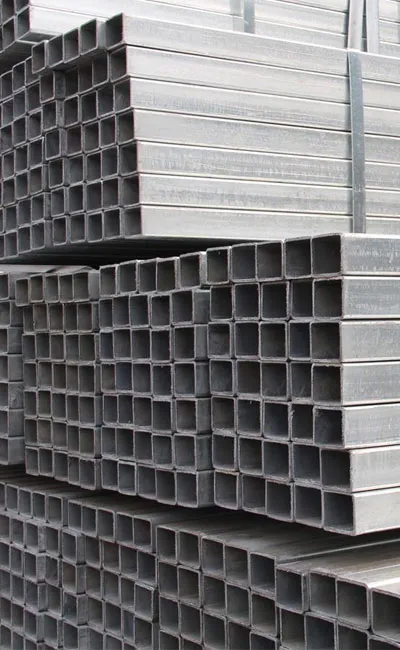
Square and rectangular hollow sections (SHS and RHS) are widely used in building frames, industrial structures, support systems, and infrastructure projects. Their structural performance depends not only on steel strength but also on section dimensions, member length, loading conditions, restraints, and connection details. Buckling occurs when a structural member or part of its cross-section becomes unstable under load. Preventing it starts with appropriate structural design, accurate product specifications, sound fabrication, and inspection throughout the service life.

1. Understand the Two Main Types of Buckling

Overall buckling occurs when a member under compression becomes unstable over its length. Member slenderness, effective length, end restraints, and loading conditions influence this behavior. Local buckling occurs when part of the cross-section wall becomes unstable. For square and rectangular hollow sections, the width-to-thickness relationship of the wall elements is an important design consideration. These failure modes require different checks. A section with sufficient material strength may still be unsuitable if its geometry or restraint conditions do not provide adequate stability.

2. Select the Correct Section Dimensions and Wall Thickness

Section selection should be based on the design loads and structural requirements rather than steel grade alone. Before specifying SHS or RHS, engineers should confirm:
  • Outside dimensions and wall thickness
  • Steel grade and specified mechanical properties
  • Member length and effective length
  • Axial compression, bending, and load eccentricity
  • Required section properties and design resistance
  • Applicable dimensional tolerances and product standards
Increasing wall thickness can improve some aspects of structural performance, but it does not automatically eliminate buckling. The complete member must be checked under the applicable design code. Product dimensions, material certificates, and inspection records should also be verified against the project specification.

3. Check Bracing, Supports, and Connection Design

Square and rectangular hollow sections rarely act in isolation. Their stability depends on how loads transfer through the surrounding structure. Bracing, end connections, intermediate restraints, and support conditions affect the effective length and behavior of a member. If the design assumes a particular restraint, the connection and bracing details must provide that restraint in practice. Engineers should also consider whether connections introduce eccentric loads or unexpected bending. During fabrication and installation, check alignment, weld quality, connection integrity, and the position of structural restraints. Do not assume that a member is adequately braced simply because it is connected to another structural component.

4. Control Fabrication and Installation Quality

Manufacturing and site handling can affect the geometry of hollow sections. Dents, local wall deformation, damaged corners, and dimensional deviations may require evaluation before a member is accepted for structural use. During incoming inspection and installation, check:
  • Outside dimensions and wall thickness
  • Straightness and visible deformation
  • Surface damage and corrosion
  • Welds and connection details
  • Compliance with the specified material grade and standard
Where defects exceed the project's acceptance criteria, the affected section should be assessed before use. Repairs or modifications should follow approved procedures rather than being improvised on site.

5. Prevent Corrosion and Monitor Structural Condition

Corrosion can reduce the effective steel thickness and affect the structural capacity of a hollow section. Outdoor structures deserve particular attention where water, moisture, industrial pollutants, or damaged coatings can expose the steel to corrosive conditions. Inspect areas around welds, connections, supports, and locations where water or debris may accumulate. Maintain the specified protective coating system and repair coating damage according to the approved procedure. If corrosion has caused measurable section loss, do not rely on visual appearance alone to determine whether the member remains safe. The extent of damage and its effect on structural capacity should be assessed by a qualified structural engineer.

6. Respond Correctly When Deformation Appears

Unexpected bending, local wall distortion, or movement may indicate excessive loading, inadequate restraint, impact damage, connection problems, or another change in structural conditions. A practical response is to:
  • Record the location and extent of the deformation.
  • Review the current loading and any changes in service conditions.
  • Inspect the connections, supports, bracing, and surrounding structure.
  • Assess corrosion, impact damage, and dimensional changes.
  • Obtain an engineering assessment before deciding on continued use, unloading, repair, reinforcement, or replacement.
Where structural safety may be affected, follow site safety procedures and restrict access or use as directed by the responsible personnel. Do not attempt to correct significant deformation simply by straightening or reinforcing the member without understanding the cause.

7. Use the Applicable Structural Design Standard

Buckling resistance should be evaluated using the structural design standard specified for the project. For applicable US structural steel building projects, ANSI/AISC 360 provides requirements for structural steel design and construction. Other projects may require Eurocodes or local standards. The applicable code, material specification, design assumptions, and project requirements should be confirmed by the responsible engineer. Product suppliers can help verify specified dimensions, grades, tolerances, and documentation, but product selection does not replace structural design calculations.

FAQ

Q1: Can thicker hollow sections prevent buckling?
A1: Greater wall thickness can improve certain aspects of member performance, but buckling also depends on member length, section geometry, loading, and restraint conditions. Structural checks remain necessary.
Q2: Does higher-strength steel eliminate buckling risk?
A2: No. Higher yield strength does not automatically prevent instability. Member slenderness, local wall behavior, and structural restraints must also be considered.
Q3: Can corrosion cause hollow sections to buckle?
A3: Corrosion can reduce wall thickness and structural resistance, potentially increasing the risk of failure. The remaining section should be assessed if significant material loss is found.
Q4: What should be done if a hollow section is visibly deformed?
A4: Document the damage, review the loading and support conditions, and arrange an engineering assessment where structural safety may be affected. Repair or replacement should follow an approved procedure.
Q5: Need Square or Rectangular Hollow Sections for a Structural Project?
A5: Reliable project supply begins with clear requirements for section dimensions, wall thickness, steel grade, applicable standards, tolerances, and inspection documentation.

Hunan Great Steel Pipe Co., Ltd. supports project-based steel product supply through specification review, sourcing and production coordination, inspection coordination, documentation, and export delivery. Share your section sizes, material requirements, quantities, and project specifications with our team to discuss your supply needs.

Latest news list

  • square steel pipe quality control,rectangular steel pipe inspection,hollow section quality control
    Quality control for square and rectangular steel pipes involves more than checking finished dimensions,For structural applications,material traceability,dimensional accuracy,surface condition,mechanical properties,and inspection records all contribute to product conformity,
  • hollow section corrosion protection,square steel pipe corrosion,rectangular steel pipe corrosion,hollow section protection,steel hollow section maintenance
    Square and rectangular hollow sections are widely used in structural frames,equipment supports,industrial platforms and fabricated steel structures,Their closed profiles provide an efficient combination of strength,stiffness and clean geometry,but carbon steel hollow sections can corrode when they are exposed to moisture,salts,chemicals or other aggressive conditions,
  • hollow section manufacturing,square steel pipe,rectangular steel pipe,hollow section production,hollow section quality control
    Square and rectangular hollow sections are widely used in structural frames,industrial equipment,construction projects and fabricated steel structures,Their appearance is simple,but producing a section with consistent dimensions,wall thickness,straightness and material performance requires control at several stages,
  • alloy steel pipe buying guide,buy alloy steel pipe,alloy steel pipe supplier,alloy steel pipe export
    Buying alloy steel pipe for an international project involves more than comparing prices per tonne,For EPC contractors,distributors and industrial buyers,procurement needs to connect technical specifications,quality control,inspection,documentation and logistics,A well-defined purchasing process helps reduce specification gaps,inspection delays and delivery problems before the pipe reaches the project site,
  • how to select alloy steel pipe,alloy steel pipe selection,alloy steel pipe buying guide,high temperature alloy steel pipe
    Selecting alloy steel pipe should start with the actual service conditions,not simply with a supplier's product catalog,In boiler,power generation and refinery applications,temperature,pressure,process medium and material properties all affect pipe selection,For example,ASTM A335,A335M-26 covers seamless ferritic alloy-steel pipe for high-temperature service,The standard states that selection depends on design,service conditions,mechanical properties and high-temperature characteristics,For buyers,a structured selection process helps prevent specification gaps before production begins,

Find what you need ?

close
We use cookies and other tracking technologies to improve your browsing experience on our website, to show you personalized content and targeted ads, to analyze our website traffic, and to understand where our visitors are coming from.