Product News

Hunan Great Steel Pipe Co., Ltd
square vs rectangular hollow section,SHS vs RHS,structural hollow section,hollow section selection,structural steel pipe

Square vs. Rectangular Hollow Section: Which Is Better for Your Project

Date: 2026-10-12

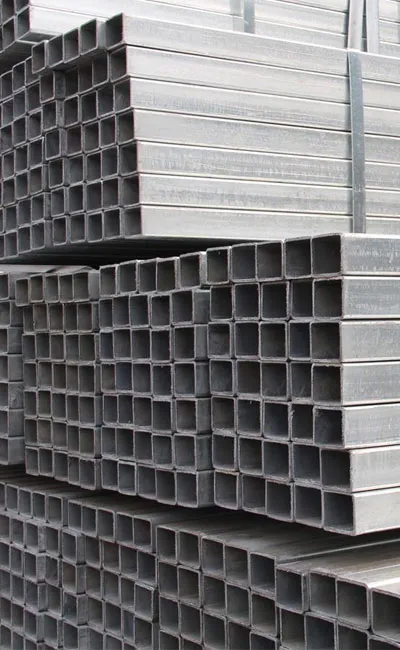
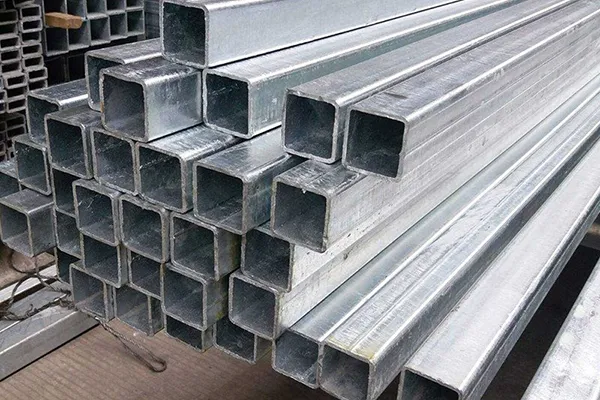
Square hollow sections (SHS) and rectangular hollow sections (RHS) are widely used in structural steelwork, equipment supports, industrial frames and fabricated assemblies. Both offer a closed-section profile, but their different geometries affect how they perform in a particular application. So, which is better for your project? The answer depends on the loading conditions, required section properties, available space, connection design and procurement requirements. Neither shape is universally superior.


1. When Should You Choose Square Hollow Sections?

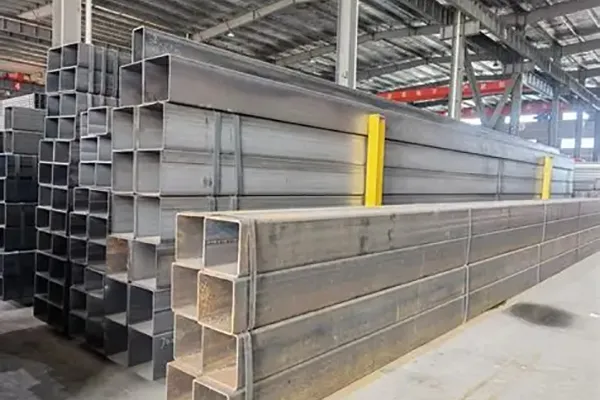
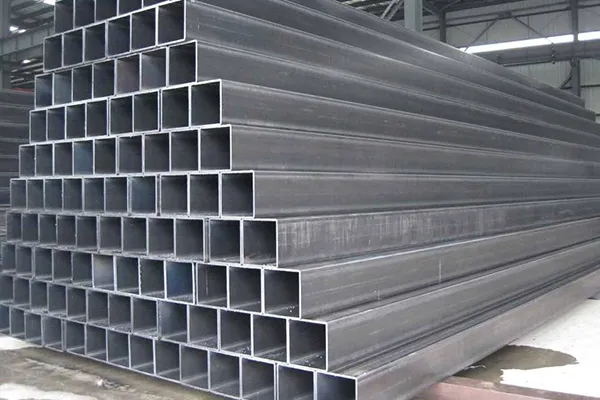
A square hollow section has equal outside width and height. Its geometry provides similar cross-sectional properties about the two principal axes, making it a practical option when a member may experience bending in more than one direction. Typical applications include:

  • Structural columns and support frames
  • Equipment and machinery frames
  • Architectural steelwork
  • General fabrication
  • Bracing and other structural members
SHS can be useful where a consistent profile is required on multiple sides or where the design calls for a compact, symmetrical section. However, a square shape alone does not guarantee sufficient strength or stability. Engineers still need to consider the section dimensions, wall thickness, steel grade, member length, end restraints and applied loads.

2. When Are Rectangular Hollow Sections More Suitable?

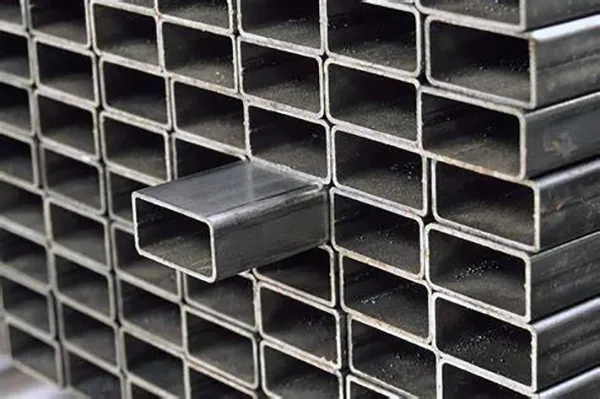
A rectangular hollow section has different outside width and height dimensions. This geometry allows designers to select a deeper section in one direction when the structural arrangement requires it. RHS is commonly considered for:
  • Beams and lintels
  • Structural frames
  • Industrial supports
  • Fabricated assemblies
  • Truss members and other engineered structures
For a member primarily subjected to bending about one axis, a suitably proportioned RHS may provide more bending stiffness or section modulus about that axis than a comparable square section. The actual advantage depends on the dimensions, wall thickness and comparison basis. Rectangular profiles can also fit spaces where a taller or wider section is preferred. Connection details and orientation should be considered early, especially when several members must be assembled on site.

3. What Factors Determine the Right Hollow Section?

Choosing between SHS and RHS requires more than comparing outside dimensions.

Loading direction and section properties: The direction and type of loading influence which section is suitable. Engineers should review the relevant second moment of area, section modulus and other design properties rather than assume that one shape offers better performance in every situation.

Wall thickness and steel grade: Two sections with the same outside dimensions can differ significantly in weight and structural performance if their wall thicknesses or material grades differ. The selected specification must satisfy the design requirements and applicable standard.

Member length and stability: Columns and compression members need to be checked for buckling and overall stability. The effective length, restraints, loading and cross-sectional properties all influence the result.

Connections and fabrication: End plates, bolted connections, weld access, cutting and assembly requirements can affect the practicality of a selected profile. A section that works in a calculation must also suit the intended fabrication and installation process.

Availability and delivery: For international projects, standard sizes may be easier to source than less common dimensions. If a project requires a large quantity or several size combinations, confirm availability, production lead time, inspection requirements and delivery arrangements before finalizing the purchase.


4. What Should Buyers Specify When Requesting a Quotation?

One common procurement mistake is to request a price using only the outside width and height. A useful RFQ should provide enough information for the supplier to identify the required product accurately. Include the following details where applicable:
  • Section type: SHS or RHS
  • Outside dimensions and wall thickness
  • Steel grade and product standard
  • Required length and quantity
  • Surface treatment or coating requirements
  • Inspection and testing requirements
  • Material certificates and documentation
  • Delivery destination and required schedule
If the project specification is still being finalized, clarify which details remain open and have the responsible engineer confirm the design requirements. A supplier can help review the supply scope, but final structural selection should be based on the project engineer’s calculations and applicable design code. For related guidance, see our articles on [how to choose hollow sections] and the [hollow section manufacturing process].

5. Making the Right Choice for International Projects

For overseas procurement, the most suitable hollow section is not necessarily the one with the lowest unit price. Availability, dimensional compliance, inspection arrangements, documentation and delivery timing can all affect the overall project cost. For repeat orders, confirm whether the specified dimensions can be supplied consistently. For customized requirements, establish the agreed product standard, acceptance criteria and inspection scope before order placement. At Hunan Great Steel Pipe Co., Ltd., project supply requirements can be reviewed in terms of section dimensions, material grade, applicable standards, inspection needs and export documentation. Sourcing coordination and factory inspection can be arranged according to the agreed order requirements. Planning a square or rectangular hollow section order? Send us your required dimensions, steel grade, standard, quantity and destination to discuss the supply scope and delivery requirements.

FAQ

Q1: Is square hollow section stronger than rectangular hollow section?
A1: Not universally. Strength and stiffness depend on the complete section dimensions, wall thickness, steel grade, loading direction, member length and support conditions. The appropriate section should be verified through structural design calculations.
Q2: Which hollow section is better for beams?
A2: RHS is often considered when greater section depth is useful for bending in a particular direction. The final choice depends on the load, span, support conditions, design code and available section properties.
Q3: Which hollow section is better for columns?
A3: Both SHS and RHS can be used as columns. Selection depends on axial load, bending, effective length, restraints, cross-sectional properties and buckling checks.
Q4: What information should I provide when buying SHS or RHS?
A4: Provide the section dimensions, wall thickness, steel grade, applicable standard, length, quantity, surface treatment, inspection requirements and delivery destination.
Q5: Can square and rectangular hollow sections be customized?
A5: Supply options depend on the required dimensions, material, standard, order quantity and available production routes. Confirm feasibility and lead time with the supplier before finalizing the project specification.

Latest news list

  • hollow sections in outdoor steel structures,outdoor hollow section applications,square and rectangular hollow sections,hollow section corrosion protection
    Square and rectangular hollow sections (SHS and RHS) are widely used in outdoor steel structures,including building frames,equipment supports,walkways,canopies,and industrial platforms,Their suitability depends not only on section dimensions and steel grade,but also on how the structure is detailed,protected,installed,and maintained,
  • square hollow section selection,rectangular hollow section selection,hollow section wall thickness,hollow section standards,hollow section supplier
    Choosing the right square or rectangular hollow section (SHS or RHS) starts with the project requirements,not simply the lowest price,Section shape,dimensions,wall thickness,steel grade,applicable standard,and delivery conditions all affect whether the supplied product is suitable for the intended application,
  • prevent buckling in hollow sections,square hollow section buckling,rectangular hollow section buckling,hollow section wall thickness
    Square and rectangular hollow sections (SHS and RHS) are widely used in building frames,industrial structures,support systems,and infrastructure projects,Their structural performance depends not only on steel strength but also on section dimensions,member length,loading conditions,restraints,and connection details,
  • square steel pipe quality control,rectangular steel pipe inspection,hollow section quality control
    Quality control for square and rectangular steel pipes involves more than checking finished dimensions,For structural applications,material traceability,dimensional accuracy,surface condition,mechanical properties,and inspection records all contribute to product conformity,
  • hollow section corrosion protection,square steel pipe corrosion,rectangular steel pipe corrosion,hollow section protection,steel hollow section maintenance
    Square and rectangular hollow sections are widely used in structural frames,equipment supports,industrial platforms and fabricated steel structures,Their closed profiles provide an efficient combination of strength,stiffness and clean geometry,but carbon steel hollow sections can corrode when they are exposed to moisture,salts,chemicals or other aggressive conditions,

Find what you need ?

close
We use cookies and other tracking technologies to improve your browsing experience on our website, to show you personalized content and targeted ads, to analyze our website traffic, and to understand where our visitors are coming from.