Product News

Hunan Great Steel Pipe Co., Ltd
steel grating,steel grating applications,steel grating types,galvanized steel grating,stainless steel grating

Steel Grating Applications by Industry: How to Choose the Right Type for Your Project

Date: 2026-07-03

Steel grating is a load-bearing panel of parallel bearing bars connected by cross bars. It provides strength, drainage, ventilation, and slip resistance. Different industries require different grating structures. Load, corrosion, drainage, safety, and maintenance determine the correct selection. Choosing the right type improves service life and reduces lifecycle cost.


Why Steel Grating Selection Matters

Steel grating is designed to perform under different mechanical and environmental conditions. Selecting the wrong product can lead to premature corrosion, excessive deflection, increased maintenance, or reduced workplace safety. Before specifying steel grating, engineers typically evaluate several factors:
  • Expected load and traffic conditions
  • Exposure to moisture, chemicals, or salt spray
  • Slip resistance requirements
  • Drainage and ventilation needs
  • Maintenance accessibility
  • Project lifecycle cost
An engineering-based selection process generally delivers better long-term value than choosing solely on initial purchase price.

Common Types of Steel Grating

Welded Steel Grating

Welded steel grating is manufactured by resistance welding bearing bars and cross bars into a rigid structure. Its high strength and stable load distribution make it the most widely used option for industrial facilities. Typical applications include factory flooring, equipment platforms, maintenance walkways, and utility structures where heavy static or dynamic loads are expected.

Press-Locked Steel Grating

Press-locked grating is produced by mechanically inserting cross bars into pre-slotted bearing bars without welding. The result is a clean appearance and accurate dimensions. It is commonly selected for commercial buildings, pedestrian bridges, public spaces, and architectural projects where both structural performance and appearance are important.

Swage-Locked Steel Grating

Swage-locked grating uses hydraulic pressure to permanently secure cross bars within the bearing bars, producing a uniform and durable panel. Its dimensional consistency makes it suitable for marine facilities, food processing plants, and other environments where corrosion resistance and easy cleaning are priorities.

Serrated Steel Grating

Serrated bearing bars provide additional traction on the walking surface. This type is recommended for outdoor installations, oil and gas facilities, and industrial environments where water, oil, or ice may increase the risk of slipping.

Stainless Steel Grating

Unlike galvanized products, stainless steel grating provides corrosion resistance through the material itself rather than a protective coating. Grades such as 304L and 316L are widely used in chemical processing, marine engineering, pharmaceutical manufacturing, and food production where hygiene and corrosion resistance are essential.

Steel Grating Applications by Industry

Different industries place different demands on steel grating performance.
  • Oil and Gas: Heavy-duty welded galvanized grating is commonly used for drilling platforms, refineries, and maintenance walkways because it combines structural strength with corrosion protection in outdoor environments.
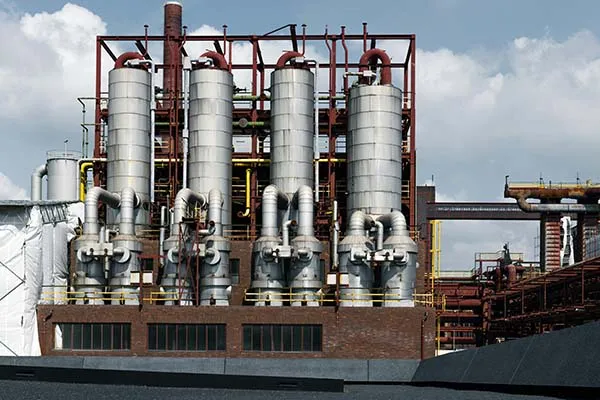
  • Chemical Processing: Stainless steel grating is often selected where corrosive chemicals or aggressive cleaning agents are present. Material selection should consider both the process medium and maintenance requirements.
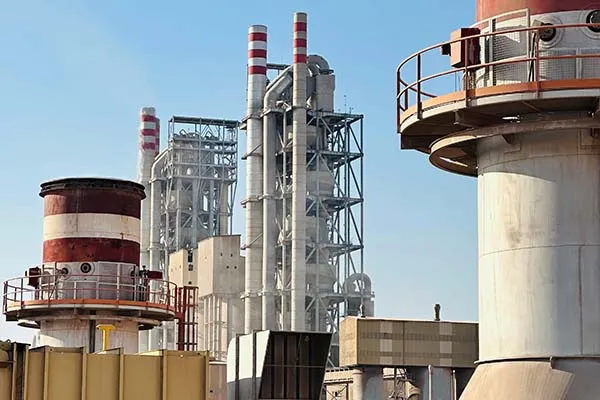
  • Power Generation: Welded galvanized grating is widely used for boiler platforms, cooling systems, and maintenance access areas where reliable load capacity and long-term durability are required.
  • Water Treatment: Galvanized or stainless steel grating provides effective drainage while resisting corrosion caused by continuous moisture exposure.
  • Marine and Offshore: Projects exposed to seawater or salt spray typically require enhanced corrosion resistance. Depending on operating conditions and maintenance strategy, either stainless steel or hot-dip galvanized grating may be appropriate.
  • Food Processing: Stainless steel press-locked or swage-locked grating offers smooth surfaces that simplify cleaning and support hygienic production environments.
  • Commercial Buildings: Press-locked steel or aluminum grating is frequently used for pedestrian bridges, architectural flooring, and fire escape platforms where appearance and dimensional precision are important.

How to Choose Steel Grating

Selecting the appropriate grating begins with understanding the application. Consider the operating environment, expected load, slip resistance requirements, drainage performance, maintenance schedule, and project budget. These factors should be evaluated together rather than independently. In many industrial projects, lifecycle cost provides a more meaningful basis for comparison than initial material cost alone.

Quality Inspection and Standards

Reliable steel grating manufacturers implement quality control throughout production to ensure consistent performance. Typical inspection procedures include:
  • Raw material verification
  • Dimensional inspection
  • Weld quality inspection
  • Galvanizing thickness measurement
  • Surface quality inspection
  • Packaging and identification verification
Where required, products should comply with recognized standards such as ASTM A36, ASTM A123, ISO 1461, EN ISO 1461, and quality management systems certified to ISO 9001.

FAQ

Q1: Which steel grating is best for outdoor applications?
A1: Hot-dip galvanized steel grating is widely used outdoors because it provides effective corrosion protection under normal atmospheric conditions.
Q2: When should stainless steel grating be selected?
A2: Stainless steel is generally preferred for environments involving chemicals, frequent washdowns, marine exposure, or strict hygiene requirements.
Q3: Is serrated grating always necessary?
A3: Not necessarily. Serrated surfaces are most beneficial where slip resistance is a priority, such as wet or oily working environments.

Conclusion

Steel grating selection is an engineering decision rather than simply choosing a product type. Different industries require different combinations of load capacity, corrosion resistance, drainage performance, and maintenance strategy. By evaluating operating conditions, applicable standards, and lifecycle requirements before procurement, engineers and project owners can select steel grating systems that provide reliable performance, improved workplace safety, and long-term value throughout the service life of the project.
  • Prev : Steel Grating
  • Next : No matching information found
  • Tags : steel grating , steel grating applications , steel grating types , galvanized steel grating , stainless steel grating

Latest news list

  • steel grating,galvanized steel grating,galvanized grating,steel bar grating,steel grating for sale,galvanized bar grating
    Steel grating is a high-strength,load-bearing steel product designed to provide safe walking surfaces,effective drainage,and reliable structural support in industrial and commercial environments,Manufactured by welding or pressure-locking bearing bars and cross bars,steel grating offers excellent load capacity,slip resistance,ventilation,and long-term durability,
  • finned tube heat exchanger,high-frequency welded finned tube,laser welded finned tube,finned steel tube,HFW finned tube
    In industrial heat exchange systems,finned steel tubes play a critical role in improving thermal efficiency and energy utilization,Among the commonly used manufacturing processes,high-frequency welded finned steel tubes and laser-welded finned steel tubes represent two widely adopted engineering solutions,
  • finned steel tube,finned tube heat exchanger,heat exchanger tube failure,finned tube problems,industrial heat exchanger tubes
    Finned steel tubes are widely used in heat exchangers,boilers,air coolers,and waste heat recovery systems,Once installed in operating equipment,they are expected to work continuously under thermal stress,airflow,vibration,and sometimes corrosive conditions,
  • finned steel tube,finned tube heat exchanger,welded finned tube,extruded finned tube,G type finned tube,L type finned tube,KL type finned tube
    Finned steel tubes are widely used in heat exchangers where improving thermal efficiency,reducing energy loss,and ensuring long-term operational stability are critical,In industrial systems such as boilers,air-cooled heat exchangers,and waste heat recovery units,performance is not determined by the base material alone,Instead,it depends on the structural design of the finned tube,including fin geometry,bonding method,and overall manufacturing quality,
  • finned steel tube,finned tube maintenance,finned steel tube maintenance guide,finned tube cleaning,finned tube corrosion protection
    Finned steel tubes are designed to deliver efficient heat transfer for many years,but their long-term performance depends on more than manufacturing quality,Once installed,operating conditions,cleaning methods,and routine maintenance have a direct impact on thermal efficiency and equipment reliability,In many industrial heat exchangers,declining performance is caused by fouling,corrosion,or improper maintenance rather than defects in the finned tubes themselves,

Find what you need ?

close
We use cookies and other tracking technologies to improve your browsing experience on our website, to show you personalized content and targeted ads, to analyze our website traffic, and to understand where our visitors are coming from.