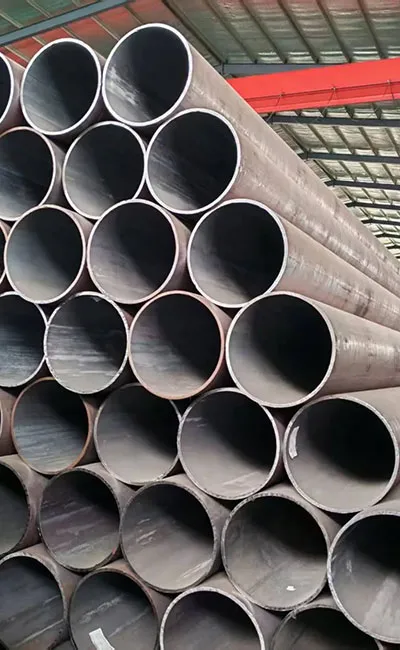
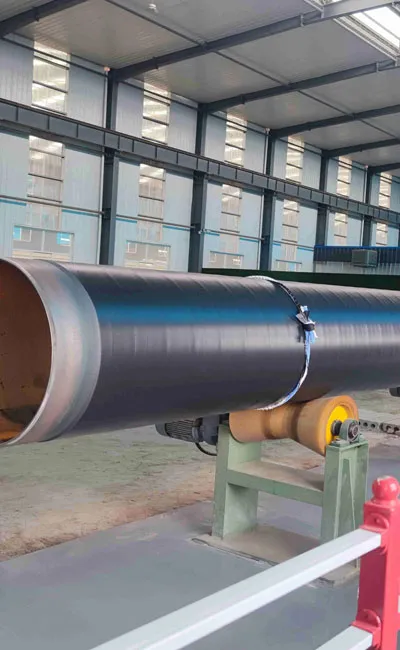
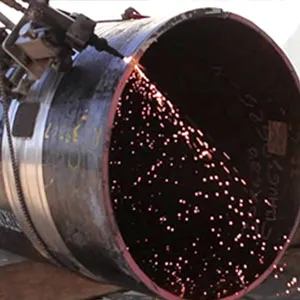
3PE anti-corrosion steel pipe is steel pipe protected by a three-layer polyethylene coating system designed to reduce external corrosion and mechanical damage. “3PE” refers to three functional layers: fusion-bonded epoxy (FBE), a copolymer adhesive, and an outer polyethylene (PE) layer. Unlike a single-layer coating, 3PE combines different materials so that each layer performs a specific role. This makes the system widely used for buried and submerged pipeline applications where the external steel surface must remain protected over long service periods. ISO 21809-1:2018 specifies requirements for plant-applied three-layer polyethylene and polypropylene external coatings for welded and seamless steel pipe used in petroleum and natural gas pipeline transportation systems. The 2018 edition remains published, while a new edition is currently under development.
What Are the Three Layers of 3PE Coating?
A typical 3PE system consists of:
|
Layer
|
Main Function
|
|
FBE
|
Corrosion protection and adhesion to steel
|
|
Copolymer adhesive
|
Bonds FBE to polyethylene
|
|
Polyethylene
|
Mechanical and environmental protection
|
1. Fusion-Bonded Epoxy Layer
The FBE primer is applied directly to properly prepared steel. It provides the primary corrosion barrier and creates adhesion between the steel substrate and the remaining coating layers.
This makes surface preparation an important part of the coating process. Contaminants, rust, mill scale, or an unsuitable surface profile can affect adhesion and coating performance. AMPP identifies surface preparation, application conditions, and inspection as important elements of pipeline coating work.
2. Copolymer Adhesive Layer
The adhesive layer connects the FBE primer with the PE outer layer. Its purpose is to maintain bonding between the two different materials so that the coating functions as an integrated system.
3. Polyethylene Outer Layer
The PE layer provides additional protection against moisture, soil exposure, abrasion, and mechanical damage. This is particularly useful when coated pipe is transported, lifted, lowered into a trench, and surrounded by backfill.
How Does 3PE Protect Steel Pipe?
Steel can corrode when its surface is exposed to moisture, oxygen, salts, and other corrosive agents. A properly applied 3PE system creates a physical barrier between the steel substrate and the external environment. The protection mechanism can be simplified as:
Steel substrate → FBE corrosion barrier → adhesive bonding → PE mechanical protection. Each layer therefore addresses a different risk. For buried pipelines, this protection needs to be considered before installation. Once a pipeline is covered by soil, accessing the external steel surface for inspection or repair can require excavation, additional labor, and operational disruption. ISO 21809-1:2018 also notes that pipes coated in accordance with the standard are considered suitable for further protection by cathodic protection.
3PE vs. 2PE: What Is the Difference?
The main difference is the coating structure. A typical 2PE system uses an adhesive layer and polyethylene outer layer, while 3PE adds an FBE primer directly onto the prepared steel surface. The additional epoxy layer provides a dedicated corrosion-protection layer and supports adhesion to the steel substrate. This is one reason 3PE may be specified when a project requires a more comprehensive multilayer external coating system. However, 3PE should not automatically be considered better for every project. The choice between 2PE and 3PE should be based on the service environment, operating temperature, installation conditions, required coating performance, and project specification.
Buried steel pipe can be exposed to soil moisture, salts, abrasion, mechanical movement, and damage during handling or installation. The key practical issue is accessibility. After burial, repairing the external pipe surface is considerably more difficult than correcting a defect before installation.
3PE addresses two important requirements:
-
FBE provides corrosion protection and adhesion.
-
PE provides additional mechanical and environmental protection.
For pipeline systems, however, coating is only one part of corrosion control. Depending on the design, cathodic protection, field-joint coating, inspection, and corrosion monitoring may also be required. ISO 21809-1 specifically recognizes the compatibility of its coated pipe with cathodic protection.
3PE quality should be controlled throughout the manufacturing process rather than judged only by the final appearance. Typical inspection stages include:
-
Steel surface preparation
-
Surface cleanliness and profile
-
FBE application
-
Adhesive and PE application
-
Coating thickness
-
Adhesion
-
Holiday or discontinuity detection
-
Visual inspection
-
Coating repair
-
Final documentation and traceability
The supply chain after coating is equally important.
Factory coating → transportation → storage → lifting → field welding → installation
A coating that passes factory inspection can still be damaged by improper lifting, rough handling, storage conditions, or field installation. Field-welded joints also require dedicated coating treatment because the factory-applied coating must be interrupted during welding. AMPP identifies field joint coating as a critical stage of pipeline protection and highlights surface preparation, overlap, application conditions, and inspection. From a manufacturing perspective, this means coating requirements should be reviewed together with pipe dimensions, handling conditions, field-joint requirements, and installation method—not treated as a separate item on the purchase order.










 English
 Español
 русский язык
 Português