Company News

Hunan Great Steel Pipe Co., Ltd
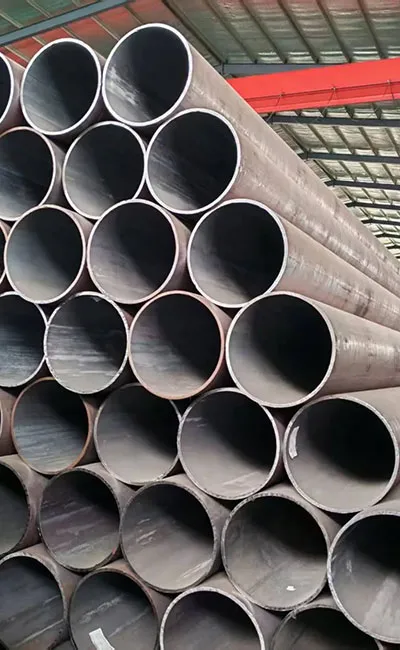
carbon seamless steel pipe for high temperature service,high temperature carbon steel pipe,ASTM A106 Grade B pipe

How Should Carbon Seamless Steel Pipe Be Selected for High-Temperature Service

Date: 2026-08-27

Selecting carbon seamless steel pipe for high-temperature service is not simply a matter of choosing a pipe with a high tensile strength. As temperature increases, the material's allowable stress, dimensional stability, oxidation behavior, and long-term performance can change. A more reliable selection process is: Design Temperature → Pressure → Material Grade → Wall Thickness → Heat Treatment → Standard → Inspection. ASTM A106/A106M-26 specifically covers seamless carbon steel pipe for high-temperature service, while ASTM A335/A335M-26 covers seamless ferritic alloy-steel pipe intended for high-temperature applications. 


1. Why Does Temperature Matter?

Temperature should be considered together with pressure and service duration. A pipe that performs adequately at moderate temperature may have a different allowable stress at elevated temperature. Before procurement, buyers should confirm:
  • Normal operating temperature 
  • Maximum and design temperature 
  • Operating and design pressure 
  • Temperature cycling 
  • Expected service life 
  • Internal fluid and environment 

High-temperature service should therefore be defined by the project design conditions and applicable code, rather than by one universal temperature limit.


2. How Does High Temperature Affect Carbon Steel?

As temperature rises, carbon steel can experience reduced strength, thermal expansion, oxidation, and changes in long-term material behavior. For prolonged exposure, creep and metallurgical stability may become more important than short-term tensile strength. ASTM A106/A106M-26 also specifically notes that possible graphitization should be considered for high-temperature service. This is why material selection should consider the complete operating envelope rather than room-temperature mechanical properties alone.


3. How Should Material Grade Be Selected?

ASTM A106 Grade B is a commonly specified carbon steel grade for seamless high-temperature pipe. However, it should not automatically be treated as suitable for every high-temperature application. Buyers should evaluate:
  • Chemical composition 
  • Mechanical properties 
  • Design temperature 
  • Design pressure 
  • Weldability 
  • Service environment 
  • Required service life 

ASTM A106/A106M-26 establishes requirements for seamless carbon steel pipe intended for high-temperature service and includes requirements covering chemical composition and mechanical testing. The correct question is not simply “Is Grade B a high-temperature pipe?” but “Does the selected grade meet the design requirements at the actual service temperature and pressure?”


4. How Does Wall Thickness Affect Performance?

Wall thickness directly affects pressure resistance and the amount of metal available to tolerate corrosion or other deterioration. A practical selection should consider: OD + Wall Thickness + Design Pressure + Design Temperature + Corrosion Allowance. Wall thickness should not be selected simply by choosing a standard schedule. The required thickness should come from the applicable design calculation, including allowable stress, pressure, temperature, corrosion allowance, manufacturing tolerance, and code requirements. ASTM A106/A106M-26 references nominal wall thicknesses associated with ASME B36.10M, while the final design thickness remains an engineering decision. More thickness is not automatically better. Excessive wall thickness can increase weight, cost, and fabrication requirements without solving an underlying material-selection problem.

5. Why Is Heat Treatment Important?

Heat treatment affects the microstructure and mechanical properties of steel pipe. For high-temperature service, buyers should verify that the required heat-treatment condition complies with the selected material specification. The important question is not simply whether a pipe has been “heat treated.” The treatment must be appropriate for the grade, manufacturing route, and applicable specification. Where required, buyers should request heat-treatment records and confirm that the supplied pipe meets the specified mechanical and chemical requirements.


6. What Standards Should Buyers Consider?

The applicable standard should match both the material and the intended service. ASTM A106/A106M-26 covers seamless carbon steel pipe for high-temperature service. When carbon steel is no longer appropriate for the required temperature and service conditions, ASTM A335/A335M-26 provides specifications for seamless ferritic alloy-steel pipe intended for high-temperature service. For process piping, the design code must also be considered. ASME B31.3 covers materials, design, fabrication, assembly, examination, inspection, and testing for process piping systems. 
Therefore, buyers should confirm the material specification and governing design code together.


7. What Inspection Is Required?

Inspection should be defined before production rather than added after the pipe is manufactured. Depending on the specification and project requirements, inspection may include:
  • Chemical composition 
  • Tensile properties 
  • Yield strength 
  • Hardness where specified 
  • OD and wall thickness 
  • Visual and surface inspection 
  • Hydrostatic testing 
  • NDT where required 
  • Heat-treatment records 
  • Heat-number traceability 
ASTM A106/A106M-26 includes requirements for tensile, bending, flattening, hydrostatic, and nondestructive electric testing. For critical projects, third-party inspection and additional testing can be specified in the purchase order.


8. When Is Alloy Steel a Better Choice?

Carbon steel is not automatically the best option simply because it can operate at an elevated temperature. When temperature, pressure, exposure time, or service conditions become more demanding, alloy steel may provide more appropriate high-temperature performance. ASTM A335/A335M-26 covers several ferritic alloy-steel grades and states that selection depends on design, service conditions, mechanical properties, and high-temperature characteristics. The transition from carbon steel to alloy steel should therefore be based on design calculations and long-term service requirements, not on temperature alone.

9. High-Temperature Pipe Selection Checklist

Checkpoint

What Buyers Should Confirm

Design temperature

Normal, maximum and design temperature

Pressure

Operating and design pressure

Material

Grade and chemical composition

Dimensions

OD, WT and length

Wall thickness

Pressure requirement and corrosion allowance

Heat treatment

Required condition and records

Standard

ASTM / ASME / project specification

Inspection

Mechanical, dimensional and NDT requirements

Traceability

Heat number and MTC

Service life

Continuous exposure and temperature cycles

FAQ

Q1: Is ASTM A106 Grade B suitable for high-temperature service?
A1: It is a commonly specified carbon-steel grade covered by ASTM A106/A106M for high-temperature service. However, suitability for a particular application depends on design temperature, pressure, service conditions, and the governing design code. 
Q2: Is thicker pipe always better for high-temperature service?
A2: No. Wall thickness must be determined from pressure, temperature, allowable stress, corrosion allowance, manufacturing tolerance, and applicable design requirements.
Q3: Can carbon steel be used for continuous high-temperature service?
A3: It can be suitable for specific applications when the selected grade, allowable stress, thickness, and design code support the intended service conditions. Continuous exposure should be evaluated separately from short-term temperature excursions.
Q4: When should buyers consider alloy steel?
A4: Alloy steel should be evaluated when temperature, pressure, service duration, or other operating conditions exceed the practical capability of the selected carbon-steel grade.


10. Conclusion

Selecting carbon seamless steel pipe for high-temperature service should begin with the complete design condition, not simply the material name. Buyers should evaluate temperature, pressure, material grade, wall thickness, heat treatment, applicable standards, inspection, and service life as one system. For applications within its scope, ASTM A106/A106M can provide an appropriate specification for seamless carbon steel pipe in high-temperature service. When service conditions become more demanding, alloy-steel alternatives should be evaluated rather than extending carbon steel beyond its suitable design basis. 

Latest news list

  • carbon seamless steel pipe,carbon seamless steel pipe buying guide,buy carbon seamless steel pipe
    Buying carbon seamless steel pipe should start with the project specification,not the supplier's price list,A pipe may look competitive but still create problems if the steel grade,dimensions,testing,traceability,or documentation do not match the actual requirement,For international buyers,procurement also involves production lead time,export packing,transportation,and stock availability,A practical pre-purchase check should therefore cover the pipe itself,the supplier,and the complete delivery process,
  • carbon seamless steel pipe failure,seamless steel pipe failure prevention,carbon steel pipe failure
    Carbon seamless steel pipe is widely used in industrial,energy,process,and infrastructure systems,Its seamless construction removes longitudinal weld-related defects as one potential failure mechanism,but it does not eliminate corrosion,cracking,fatigue,overpressure,or service-related deterioration,In practice,preventing pipe failure requires more than checking the pipe itself,A useful engineering approach is: Problem → Possible Cause → Inspection → Corrective Action,This approach helps maintenance teams identify the mechanism behind deterioration instead of simply replacing damaged pipe,For in-service metallic piping within its scope,API 570 covers inspection,rating,repair,and alteration practices,
  • carbon seamless steel pipe,carbon seamless pipe,seamless steel pipe,carbon seamless steel pipe supplier
    Choosing the right carbon seamless steel pipe is not simply a matter of comparing prices per ton,The pipe must match the application,operating conditions,dimensions,material grade,manufacturing standard,inspection requirements,and project documentation,For international buyers,supplier capability and delivery reliability also matter,A lower purchase price can lose its advantage if the material is incorrect,inspection fails,documentation is incomplete,or delivery is delayed,A practical selection process should therefore start with the application and work backward to the pipe specification,
  • carbon seamless steel pipe maintenance,carbon steel pipe maintenance,seamless pipe inspection
    Carbon seamless steel pipe can provide long service in industrial piping systems,but its condition changes after installation,Corrosion,wall thinning,vibration,leaking connections,damaged coatings,and changes in operating conditions can gradually reduce piping integrity,Good maintenance is therefore not simply a matter of repairing a pipe after a leak occurs,It is a planned process of inspection,thickness monitoring,corrosion control,operating-condition review,and documented follow-up,API 570,for example,addresses the in-service inspection,rating,repair,and alteration of metallic piping systems,
  • carbon seamless steel pipe quality control,carbon seamless steel pipe inspection,steel pipe quality control
    Quality control for carbon seamless steel pipe does not begin with the final inspection,It starts with the steel billet and continues through chemical analysis,manufacturing control,dimensional inspection,nondestructive testing,mechanical testing,hydrostatic testing,and final documentation,

Find what you need ?

close
We use cookies and other tracking technologies to improve your browsing experience on our website, to show you personalized content and targeted ads, to analyze our website traffic, and to understand where our visitors are coming from.