Selecting the right coating for steel pipe is not simply a matter of choosing the thickest or most expensive material. In practice, coating selection means choosing a complete protection system that matches the pipe’s service environment, operating temperature, installation conditions, corrosion risk, and applicable project specification. For coated steel pipe used in oil and gas pipelines, water transmission, industrial facilities, and buried infrastructure, the coating system can directly affect corrosion protection, handling performance, maintenance requirements, and service life. Common options include fusion-bonded epoxy (FBE), three-layer polyethylene (3LPE), three-layer polypropylene (3LPP), and liquid epoxy systems.
1. Start With the Service Environment
The first question should be: Where will the coated steel pipe be installed and what will it be exposed to? A buried pipeline may face soil moisture, salts, cathodic-protection requirements, and mechanical damage during installation. An above-ground pipe may instead require resistance to UV exposure, weather, chemicals, or temperature cycling. For buried or submerged oil and gas pipelines, ISO 21809-1 specifies requirements for plant-applied three-layer polyethylene and polypropylene coatings on welded and seamless steel pipe. The standard is also intended for pipelines that may use cathodic protection. For steel water pipelines, AWWA currently lists C210-24 for liquid-epoxy coatings and linings and C213-22 for fusion-bonded epoxy coatings and linings.
2. Which Coating System Fits the Application?
|
Coating System
|
Typical Applications
|
Main Consideration
|
|
FBE
|
Oil & gas, water, buried pipelines
|
Adhesion, corrosion protection, impact requirements
|
|
3LPE
|
Buried transmission pipelines
|
Corrosion and mechanical protection
|
|
3LPP
|
Higher-temperature pipeline applications
|
Temperature and system qualification
|
|
Liquid Epoxy
|
Water pipe, field coating and repair
|
Surface preparation and curing
|
Fusion-bonded epoxy (FBE) forms a protective epoxy layer directly on prepared steel. It is widely used for pipeline coating and can also serve as the epoxy component of multilayer systems. For water pipelines, AWWA C213-22 covers fusion-bonded epoxy coatings and linings for steel water pipe and fittings. FBE can be a practical choice when strong adhesion and a continuous corrosion barrier are required. However, impact resistance, operating temperature, pipe handling, and field joint requirements should also be reviewed before specifying the system.
3LPE: Protection for Buried Pipelines
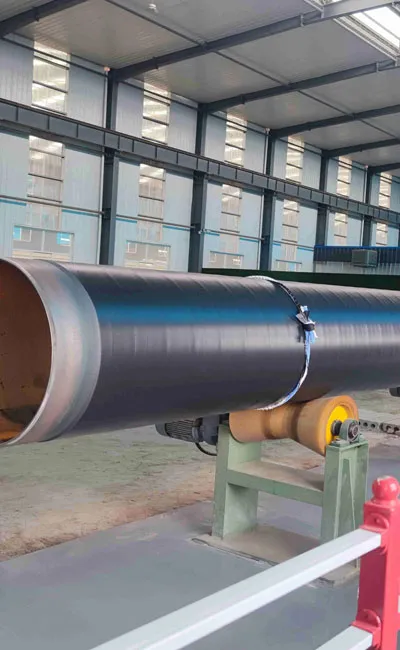
Three-layer polyethylene (3LPE) combines an epoxy layer, adhesive layer, and polyethylene outer layer. Each layer performs a different function: the epoxy contributes corrosion protection and adhesion, while the outer polyethylene provides additional mechanical and environmental protection. This makes 3LPE a common consideration for buried transmission pipelines where coating damage during transportation, installation, or backfilling must be controlled. ISO 21809-1 specifically addresses plant-applied three-layer PE and PP external coatings for pipeline transportation systems.
3LPP: When Temperature Requirements Become More Important
Three-layer polypropylene (3LPP) follows a similar multilayer concept but uses polypropylene as the outer layer. The choice between 3LPE and 3LPP should not be based on material names alone. Operating temperature, mechanical requirements, environmental exposure, coating qualification, and the project specification should all be considered. Where higher temperature capability is required, 3LPP may be considered if the selected coating system has been qualified for the intended service conditions.
Liquid epoxy systems can be applied in shop or field conditions and are used for steel water pipe, fittings, welded joints, connections, and repairs. AWWA C210-24 covers shop- and field-applied liquid-epoxy coatings and linings for steel water pipe and fittings installed underground or underwater under normal construction conditions. This makes liquid epoxy useful when field application, repair, or a specific internal or external lining system is required.










 English
 Español
 русский язык
 Português