Product News

Hunan Great Steel Pipe Co., Ltd
stainless steel heat exchanger tubes,heat exchanger tube maintenance,extend heat exchanger tube life,heat exchanger tube corrosion prevention,heat exchanger tube fouling control

How to Extend the Service Life of Stainless Steel Heat Exchanger Tubes

Date: 2026-06-18

Stainless steel heat exchanger tubes are widely used in power generation, petrochemical processing, desalination, marine engineering, and industrial heat-transfer systems. Under proper operating conditions, these tubes can often provide 15–25 years or more of reliable service. However, premature tube failure caused by fouling, corrosion, erosion, or inadequate maintenance can significantly increase operating costs and reduce system efficiency. The good news is that most tube failures are preventable. By implementing proper maintenance strategies and selecting suitable materials, operators can extend service life, improve heat-transfer performance, and reduce unexpected downtime.


Why Do Stainless Steel Heat Exchanger Tubes Fail?

The lifespan of a stainless steel heat exchanger tube is influenced by several factors, including operating conditions, water quality, fluid velocity, and maintenance practices. The most common failure mechanisms include fouling, corrosion, erosion-corrosion, and mechanical degradation. The table below summarizes the primary causes of tube failure and recommended preventive measures.

Failure Mechanism

Typical Cause

Recommended Solution

Fouling

Scale, biological growth, deposits

Water treatment and regular CIP cleaning

Corrosion

Chlorides, chemicals, oxygen exposure

Proper material selection and monitoring

Stress Corrosion Cracking (SCC)

Chloride-rich environments

Use corrosion-resistant alloy grades

Erosion-Corrosion

High fluid velocity and suspended solids

Flow control and inlet protection

Mechanical Wear

Long-term operation and vibration

Periodic inspection and predictive maintenance


1. Control Water Chemistry and Prevent Fouling

Fouling is one of the leading causes of reduced heat exchanger performance. Mineral scale, biological films, and process deposits can create an insulating layer on the tube surface, restricting heat transfer and increasing energy consumption. Effective fouling prevention begins with proper water treatment. Maintaining stable water chemistry, monitoring total dissolved solids, controlling pH levels, and installing filtration systems can significantly reduce deposit formation. For systems experiencing scaling, Clean-In-Place (CIP) cleaning programs can remove deposits without dismantling equipment. Many facilities schedule cleaning based on pressure-drop monitoring and thermal performance trends rather than fixed intervals, helping maintain optimal heat-transfer efficiency while reducing maintenance costs.


2. Select the Right Stainless Steel Grade

Material selection plays a critical role in extending tube service life. Different operating environments require different levels of corrosion resistance. For general industrial applications, 304 stainless steel often provides sufficient corrosion resistance. In cooling-water systems and mildly corrosive environments, 316L is commonly preferred due to its enhanced resistance to chloride attack. For seawater, desalination, and high-chloride applications, higher-performance materials such as Duplex 2205, Super Duplex 2507, 254SMO, or titanium may offer superior long-term reliability. Selecting the appropriate material based on process conditions can significantly reduce the risk of pitting corrosion, stress corrosion cracking, and premature tube replacement.


3. Minimize Erosion-Corrosion Damage

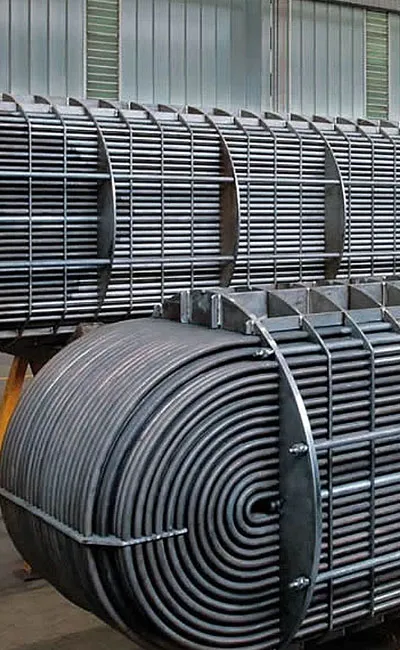
Erosion-corrosion typically occurs at tube entrances, U-bends, and areas where fluid velocity is excessively high. Suspended particles and turbulent flow can gradually remove the protective passive layer on stainless steel surfaces, accelerating material loss.
To minimize erosion-related damage, operators should:
Maintain fluid velocity within recommended design limits.
Install inlet sleeves or impingement protection where necessary.
Remove suspended solids through effective filtration systems.
Regularly inspect high-wear areas for early signs of wall thinning.

These measures help preserve tube integrity and reduce the likelihood of unexpected failures.


4. Implement Predictive Maintenance Programs

Traditional maintenance often relies on fixed inspection schedules. Predictive maintenance takes a more proactive approach by monitoring equipment condition and identifying potential issues before failure occurs.
Common inspection methods include:
Eddy Current Testing (ECT)
Ultrasonic Thickness Testing (UT)
Visual Inspection
Hydrostatic Testing
Corrosion Monitoring

By tracking wall thickness, corrosion rates, and heat-transfer performance, operators can optimize maintenance schedules and reduce unplanned shutdowns.


5. Follow Industry Inspection Standards

Compliance with recognized inspection standards helps ensure long-term reliability and operational safety. Many facilities follow standards and inspection practices associated with pressure equipment maintenance, including periodic non-destructive examination (NDE), performance evaluation, and integrity assessments. Regular inspections allow maintenance teams to identify developing issues before they affect production efficiency or equipment safety.


6. Work with Experienced Tube Manufacturers

The quality of the stainless steel heat exchanger tube itself has a direct impact on service life. Reliable manufacturers implement strict quality-control procedures throughout the production process.
When selecting a supplier, consider whether they can provide:
Mill Test Certificates (MTC)
Chemical Composition Reports
Mechanical Property Testing
Eddy Current Testing
Hydrostatic Testing
PMI Inspection (when required)
Traceable Quality Documentation
High-quality stainless steel heat exchanger tubes manufactured to recognized international standards help reduce operational risk and improve long-term performance.

FAQ

Q1: How long do stainless steel heat exchanger tubes last?
A1: Under proper operating conditions and maintenance programs, stainless steel heat exchanger tubes can often provide 15–25 years or more of service life.
Q2: Which stainless steel grade is best for seawater applications?
A2: Duplex 2205, Super Duplex 2507, 254SMO, and titanium are commonly selected for seawater and high-chloride environments because of their excellent corrosion resistance.
Q3: How often should stainless steel heat exchanger tubes be cleaned?
A3: Cleaning frequency depends on water quality, operating conditions, and fouling rates. Many facilities schedule cleaning based on performance monitoring and inspection results.
Q4: What causes stainless steel heat exchanger tube failure?

A4: Common causes include fouling, pitting corrosion, stress corrosion cracking, erosion-corrosion, vibration damage, and insufficient maintenance.
Conclusion

Extending the service life of stainless steel heat exchanger tubes is not a single action but a continuous cycle of material compatibility verification, water chemistry control, and predictive condition monitoring. By prioritizing fouling prevention, selecting proven corrosion-resistant grades like 316L or Duplex for aggressive media, and adhering to regular NDE inspections, operators can consistently achieve 20+ years of reliable operation while minimizing total lifecycle costs.

Latest news list

  • global steel sourcing,steel procurement strategy,global supply chain solutions,steel sourcing services,international steel trade,steel procurement risk management
    The global steel market is becoming increasingly complex,Rising freight costs,changing tariff policies,regional trade restrictions,and geopolitical uncertainties have created new challenges for international buyers,For many importers,distributors,EPC contractors,and industrial manufacturers,maintaining a stable and cost-effective steel supply chain is no longer as straightforward as it was a decade ago,In today's business environment,relying on a single sourcing region can expose projects to unexpected risks,including supply disruptions,longer lead times,fluctuating costs,and changing trade regulations,As a result,global sourcing has become an important strategy for companies seeking greater supply-chain resilience and procurement flexibility
  • stainless steel heat exchanger tube,heat exchanger tube corrosion,heat exchanger tube inspection,heat exchanger tube reliability,high temperature heat exchanger tube
    Heat exchanger tubes operating in petrochemical plants,refineries,LNG facilities,and desalination systems are exposed to some of the most demanding service conditions in industrial applications,Heat exchanger tubes in industrial process systems routinely encounter conditions that push material performance to its limits,Chloride-bearing cooling water,cyclic thermal loading,high-velocity particulate erosion,and sustained elevated temperatures create compound degradation mechanisms that standard specifications rarely address in isolation,Stainless steel heat exchanger tubes—while inherently corrosion-resistant—require deliberate engineering measures when deployed in severe service environments,Material selection alone cannot compensate for inadequate design,improper fabrication,or insufficient operational monitoring,A systems-level approach integrating material science,manufacturing precision,and lifecycle management determines whether tubing delivers its design service life or fails prematurely under field stress,
  • stainless steel heat exchanger tube,heat exchanger tube manufacturer,TP316L heat exchanger tube,seamless stainless steel tube,custom heat exchanger tube
    Why Are Stainless Steel Heat Exchanger Tubes Critical in Petrochemical Projects? Stainless steel heat exchanger tubes are designed to transfer heat efficiently while resisting corrosion,pressure,and elevated operating temperatures,In petrochemical facilities,tube reliability directly influences equipment uptime,maintenance costs,process efficiency,and plant safety,The following project highlights how customized manufacturing,stringent quality control,and coordinated logistics supported the successful delivery of stainless steel heat exchanger tubes for a petrochemical heat exchanger system in Southeast Asia,This project illustrates how technical expertise,disciplined quality assurance,and coordinated logistics converge to deliver results that matter on the ground,
  • steel pipe supplier Central Asia,API line pipe,OCTG casing tubing,seamless steel pipe,structural hollow section,galvanized steel pipe,alloy steel pipe,industrial steel procurement
    Central Asia continues to be one of the most active regions for infrastructure development,energy investment,and industrial expansion,Countries such as Kazakhstan,Uzbekistan,Turkmenistan,Kyrgyzstan,and Tajikistan are investing heavily in oil and gas transportation,power generation,mining operations,water transmission systems,and urban construction projects,
  • Stainless Steel Heat Exchanger Tubes,Heat Exchanger Tube Supplier,ASTM A213 Tube,ASTM A249 Tube,Stainless Steel Tube Procurement,Heat Exchanger Tube Buying Guide
    Stainless steel heat exchanger tubes play a critical role in power generation,petrochemical processing,food manufacturing,marine engineering,HVAC systems,and many other industrial applications,Although they may represent only a small portion of the overall equipment investment,their quality has a direct impact on heat transfer efficiency,operational reliability,maintenance frequency,and lifecycle cost,

Find what you need ?

close
We use cookies and other tracking technologies to improve your browsing experience on our website, to show you personalized content and targeted ads, to analyze our website traffic, and to understand where our visitors are coming from.