Product News

Hunan Great Steel Pipe Co., Ltd
stainless steel heat exchanger tube,heat exchanger tube corrosion,heat exchanger tube inspection,heat exchanger tube reliability,high temperature heat exchanger tube

Stainless Steel Heat Exchanger Tubes in Severe Service Conditions: Corrosion Control and Reliability

Date: 2026-06-17
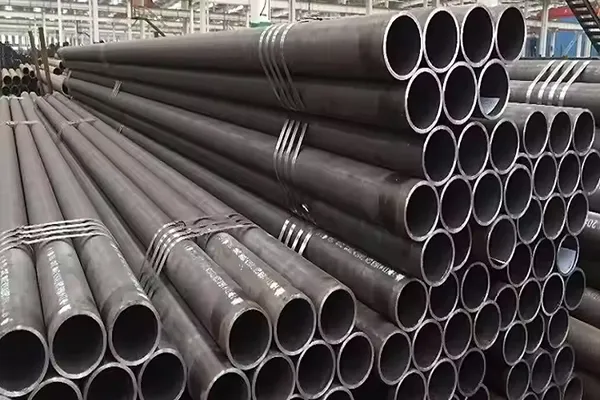
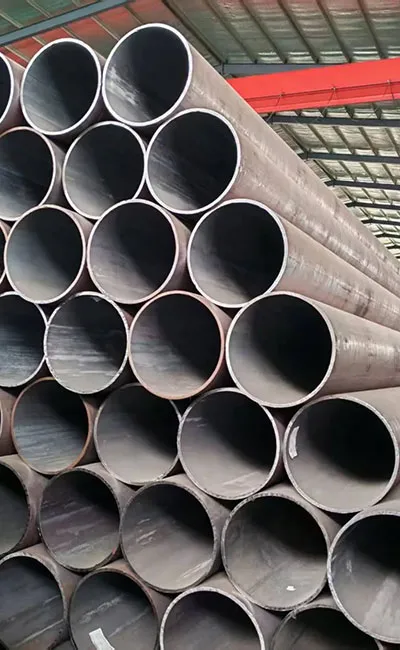
Stainless steel heat exchanger tubes operating in petrochemical plants, refineries, LNG facilities, and desalination systems are exposed to some of the most demanding service conditions in industrial applications. Stainless steel heat exchanger tubes in industrial process systems routinely encounter conditions that push material performance to its limits. Chloride-bearing cooling water, cyclic thermal loading, high-velocity particulate erosion, and sustained elevated temperatures create compound degradation mechanisms that standard specifications rarely address in isolation. Stainless steel heat exchanger tubes—while inherently corrosion-resistant—require deliberate engineering measures when deployed in severe service environments. Material selection alone cannot compensate for inadequate design, improper fabrication, or insufficient operational monitoring. A systems-level approach integrating material science, manufacturing precision, and lifecycle management determines whether tubing delivers its design service life or fails prematurely under field stress.

Material Grade Selection for Aggressive Media. 
The austenitic stainless steel family spans a broad performance spectrum. Grade 304/304L offers adequate resistance in mildly corrosive environments, but severe chloride exposure, acidic process streams, or high-temperature oxidation demand higher-alloy formulations.
For seawater cooling systems and brine environments, super-austenitic grades such as 904L or 6Mo alloys (UNS S31254) provide substantially improved pitting and crevice corrosion resistance. In sulfuric acid service or environments with combined oxidizing-reducing characteristics, duplex stainless steels (2205, 2507) deliver superior strength and localized corrosion resistance at reduced wall thickness.
Material selection must account for not only the primary process fluid but also upset conditions, startup chemistry, and cleaning chemical exposure. Conservative grade specification upfront prevents costly stainless steel heat exchanger tube bundle replacement downstream.

Wall Thickness & Corrosion Allowance Engineering.
Severe service applications demand wall thickness calculations that incorporate realistic corrosion allowance rather than nominal textbook values. Erosion-corrosion at stainless steel heat exchanger tube inlet regions, where turbulent flow impinges on tube ends, often dictates localized wall thickness increases or the application of hard-facing overlays.
For high-temperature steam service, creep rupture considerations govern minimum wall thickness over the design life. ASME Section VIII and TEMA standards provide calculation frameworks, but field-specific adjustments based on historical performance data from comparable installations refine these benchmarks.
Manufacturing tolerance control becomes critical when wall thickness margins narrow. Cold-drawn seamless production with continuous ultrasonic wall thickness monitoring ensures uniform material distribution and eliminates thin-wall regions that would serve as failure initiation sites.

Surface Integrity and Fabrication Quality.
Stainless steel heat exchanger tube surface condition directly influences corrosion initiation behavior. Scratches, embedded iron particles from handling tools, or residual scale from heat treatment create galvanic cells and stress concentration points that accelerate localized attack under aggressive conditions.
Bright annealed surface finishes, followed by passivation treatment, establish a robust chromium oxide film. For the most demanding applications, electropolishing further enhances surface smoothness and oxide film stability, reducing microbial adhesion in biofouling-prone environments and improving cleanability in pharmaceutical or food-grade service.
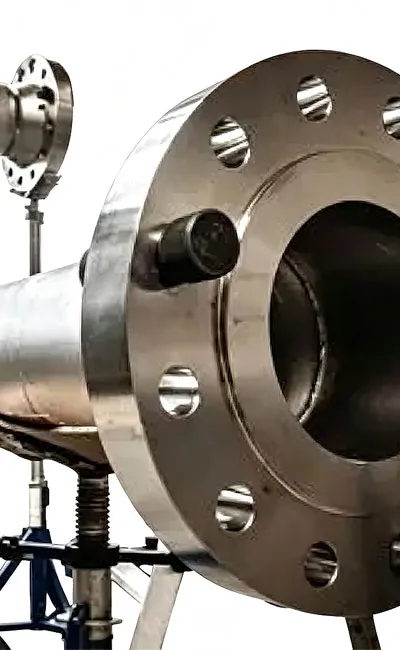
Fabrication practices during bundle assembly—expansion method, welding sequence, stress relief protocols—must preserve base material integrity. Improper tube-to-tubesheet expansion generates residual stresses that promote stress corrosion cracking in chloride environments.

Non-Destructive Testing for Defect Elimination.
Standard hydrostatic testing verifies pressure containment but does not detect subsurface defects that propagate under cyclic thermal stress. For severe service applications, eddy current testing with rotating probe technology identifies circumferential cracks, pitting, and wall loss patterns across the full stainless steel heat exchanger tube length.
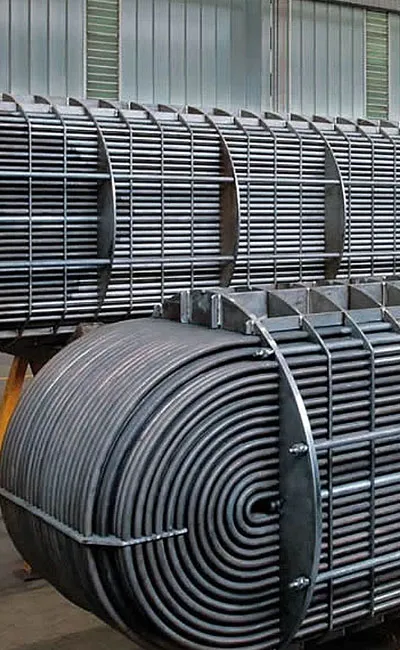
Ultrasonic testing of stainless steel heat exchanger tube ends detects inlet erosion zones before they progress to through-wall penetration. Radiographic examination of welded joints in U-bend or return header configurations ensures fusion integrity in high-stress regions.
These inspection protocols, performed at manufacturing and pre-commissioning stages, establish baseline condition documentation that supports subsequent in-service monitoring programs.

Operational Monitoring and Preventive Maintenance.
Even optimally specified and manufactured tubing requires operational discipline. Cooling water chemistry control—pH stabilization, biocide dosing, inhibitor injection—mitigates the very mechanisms that attack stainless steel heat exchanger tube surfaces. Periodic eddy current inspection during scheduled outages tracks degradation progression and enables selective stainless steel heat exchanger tube plugging or replacement before catastrophic bundle failure.
Thermal cycling management, avoiding rapid temperature transients that induce thermal fatigue, extends stainless steel heat exchanger tube life in start-stop service. Maintaining minimum flow velocities prevents sediment deposition and under-deposit corrosion while avoiding excessive velocity that accelerates erosion.

Stainless steel heat exchanger tubes are widely used in:
• Petrochemical Plants
• Refineries
• LNG Facilities
• Desalination Plants
• Power Stations
• Chemical Processing Units
• Offshore Platforms

Conclusion
Stainless steel heat exchanger tubes in severe service demand an integrated engineering approach: appropriate material grade selection, conservative wall thickness design, meticulous surface quality control, comprehensive non-destructive testing, and disciplined operational management. Each layer reinforces the others, creating a defense-in-depth strategy that maximizes service life and minimizes unplanned outage risk.

In recent petrochemical and desalination projects supplied by Hunan Great Steel Pipe, stainless steel heat exchanger tubes were specified for chloride-rich environments where pitting corrosion and thermal fatigue were major design concerns. With extensive experience supplying stainless steel heat exchanger tubes for petrochemical, power generation, desalination, and offshore projects worldwide, Hunan Great Steel Pipe supports customers with material selection, manufacturing, testing, and project delivery solutions.

Latest news list

  • stainless steel heat exchanger tube,heat exchanger tube manufacturer,TP316L heat exchanger tube,seamless stainless steel tube,custom heat exchanger tube
    Why Are Stainless Steel Heat Exchanger Tubes Critical in Petrochemical Projects? Stainless steel heat exchanger tubes are designed to transfer heat efficiently while resisting corrosion,pressure,and elevated operating temperatures,In petrochemical facilities,tube reliability directly influences equipment uptime,maintenance costs,process efficiency,and plant safety,The following project highlights how customized manufacturing,stringent quality control,and coordinated logistics supported the successful delivery of stainless steel heat exchanger tubes for a petrochemical heat exchanger system in Southeast Asia,This project illustrates how technical expertise,disciplined quality assurance,and coordinated logistics converge to deliver results that matter on the ground,
  • steel pipe supplier Central Asia,API line pipe,OCTG casing tubing,seamless steel pipe,structural hollow section,galvanized steel pipe,alloy steel pipe,industrial steel procurement
    Central Asia continues to be one of the most active regions for infrastructure development,energy investment,and industrial expansion,Countries such as Kazakhstan,Uzbekistan,Turkmenistan,Kyrgyzstan,and Tajikistan are investing heavily in oil and gas transportation,power generation,mining operations,water transmission systems,and urban construction projects,
  • Stainless Steel Heat Exchanger Tubes,Heat Exchanger Tube Supplier,ASTM A213 Tube,ASTM A249 Tube,Stainless Steel Tube Procurement,Heat Exchanger Tube Buying Guide
    Stainless steel heat exchanger tubes play a critical role in power generation,petrochemical processing,food manufacturing,marine engineering,HVAC systems,and many other industrial applications,Although they may represent only a small portion of the overall equipment investment,their quality has a direct impact on heat transfer efficiency,operational reliability,maintenance frequency,and lifecycle cost,
  • stainless steel heat exchanger tube failure,stainless steel heat exchanger tube pitting corrosion repair,stainless steel heat exchanger tube thermal fatigue cracking
    Stainless steel heat exchanger tubes are widely used in refineries,power plants,marine cooling systems,and chemical processing facilities,Grades such as 304,316,and duplex stainless steel are selected for their corrosion resistance and mechanical stability,yet in real operating environments,failures can still occur due to fouling,corrosion,thermal stress,or flow-induced damage,
  • Stainless Steel Heat Exchanger Tube,Heat Exchanger Tube Structure,Heat Exchanger Tube Design,Industrial Heat Exchanger Tubes
    Stainless steel heat exchanger tubes are essential components in modern heat transfer systems and are widely used in industries such as petrochemical processing,power generation,food and beverage manufacturing,pharmaceuticals,marine engineering,and HVAC applications,Their primary role is to transfer heat efficiently between fluids while maintaining reliable performance under varying temperatures,pressures,and operating conditions,

Find what you need ?

close
We use cookies and other tracking technologies to improve your browsing experience on our website, to show you personalized content and targeted ads, to analyze our website traffic, and to understand where our visitors are coming from.