Product News

Hunan Great Steel Pipe Co., Ltd
stainless welded steel pipe maintenance,stainless steel pipe maintenance guide,stainless piping inspection

How to Maintain Stainless Welded Steel Pipe in Industrial Piping Systems

Date: 2026-09-23
Stainless welded steel pipe provides good corrosion resistance in many industrial applications, but stainless steel piping should not be treated as maintenance-free. Process fluids, deposits, contamination, mechanical stress, temperature changes and operating conditions can all affect piping performance. A practical maintenance program helps identify deterioration before it develops into leakage, unplanned shutdowns or costly replacement work.

1. Establish a Routine Inspection Schedule

Inspection frequency should reflect the actual service conditions and importance of the piping system. Process piping exposed to aggressive chemicals or high temperatures may require closer monitoring than a low-risk utility line. Routine inspections can include accessible pipe surfaces, welded areas, supports, connections and insulation. The inspection plan should be based on the piping design, service environment, applicable codes and the site's maintenance requirements rather than using one fixed interval for every system.

2. Look for Early Warning Signs

Maintenance personnel should pay attention to changes that may indicate developing problems. Common warning signs include:
  • Surface staining or discoloration
  • Localized corrosion
  • Leakage
  • Deposits or scaling
  • Unexpected vibration
  • Damaged supports
  • Insulation damage
  • Cracks or visible surface defects
  • Discoloration around welded areas
These conditions do not automatically mean that the pipe has failed. They should, however, trigger further investigation when they are unusual or progressively worsening.

3. Keep Stainless Steel Surfaces Clean

Deposits and contaminants can create localized environments that increase corrosion risk. Cleaning methods should be compatible with the stainless grade, surface condition and process requirements. Maintenance work should also avoid introducing carbon-steel particles or other contaminants onto stainless surfaces. Tools, abrasives and cleaning chemicals should therefore be selected with the material and application in mind. Cleaning should not simply remove visible staining. If deposits or corrosion repeatedly return, the underlying cause should be investigated.

4. Inspect Welded Areas

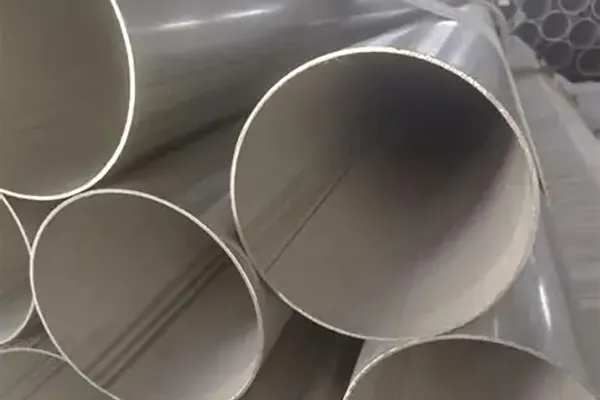
The longitudinal welded area should be included in inspection programs where it is accessible. Maintenance teams should look for:
  • Abnormal discoloration
  • Surface cracking
  • Leakage
  • Localized corrosion
  • Mechanical damage
If an abnormal condition is found near a weld, the affected area should be assessed before deciding whether cleaning, repair, additional inspection or replacement is appropriate. For welded stainless products, the applicable product specification determines the required manufacturing and testing controls. ASTM A778/A778M, for example, addresses welded unannealed austenitic stainless tubular products and includes requirements for welded joints, testing and examination.

5. Monitor Operating Conditions

Changes in operating conditions can accelerate piping deterioration even when the original pipe specification was suitable. Operators should monitor:
  • Operating temperature
  • Pressure fluctuations
  • Chemical concentration
  • Flow conditions
  • Unexpected vibration
  • Repeated thermal cycling
  • Deposits or changes in process chemistry
A maintenance program is more effective when inspection results are reviewed together with process data. A sudden change in corrosion rate or leakage, for example, may indicate a change in operating conditions rather than a simple material defect.

6. Investigate Repeated Problems

Replacing a damaged section without identifying why it failed may only solve the immediate symptom. Repeated problems should be investigated for possible causes such as:
  • Incorrect material selection
  • Aggressive process chemistry
  • Excessive temperature
  • Poor drainage
  • Mechanical vibration
  • External contamination
  • Installation stress
  • Deposits or stagnant conditions
A root-cause approach can help reduce repeated repair costs and improve long-term system reliability.

7. Use Risk-Based Inspection for Critical Systems

Not every pipe section requires the same level of inspection. For critical process lines, maintenance teams can identify areas where leakage or failure could significantly affect production, safety or environmental control. Depending on the service and applicable requirements, inspection may include visual examination, wall-thickness measurement, leak checks or other nondestructive examination methods. The objective is to use inspection methods that can identify the deterioration mechanisms relevant to the specific piping system.

8. Plan Replacement Before Emergency Failure

For critical piping systems, maintenance teams should identify sections that may require replacement during a planned shutdown. Having the correct replacement pipe available in advance can reduce downtime. This is particularly relevant when the required stainless grade, size, wall thickness or standard has a long production lead time. For recurring maintenance requirements, supplier stock or regional inventory may also be considered as part of the procurement strategy. Hunan Great Steel Pipe supplies stainless welded steel pipe for international customers and supports specification confirmation, quality control, inspection coordination and export delivery for project and replacement requirements.

FAQ

Q1: How often should stainless welded steel pipe be inspected?
A1: There is no universal inspection interval. Frequency should reflect service conditions, piping criticality, applicable requirements and the site's maintenance program.
Q2: Does stainless welded steel pipe require cleaning?
A2: Yes. Cleaning may be necessary when deposits, contaminants or process residues affect the surface. The cleaning method should be compatible with the stainless grade and application.
Q3: What should be checked during stainless pipe maintenance?
A3: Common inspection points include pipe surfaces, welded areas, supports, connections, insulation, leakage, deposits, vibration and signs of localized corrosion.
Q4: What should be done if corrosion is found?
A4: The type and cause of deterioration should be investigated first. Depending on the condition, cleaning, monitoring, repair or replacement may be appropriate.
Q5: Can maintenance extend stainless steel pipe service life?
A5: Proper maintenance can help identify deterioration early and reduce avoidable damage, but service life also depends on material selection, operating conditions, fabrication quality, installation and the corrosion environment.

Latest news list

  • stainless welded steel pipe buying guide,stainless steel pipe export supplier,stainless steel pipe procurement
    Buying stainless welded steel pipe for an overseas project involves more than comparing product prices,The final procurement result can also depend on specification accuracy,inspection,documentation,packing,transportation and delivery timing,For EPC contractors,distributors and international project buyers,a complete purchasing process should connect the technical specification with the supply and logistics plan,
  • stainless welded steel pipe chemical industry,stainless steel process piping,stainless steel pipe failure prevention
    Chemical processing plants can expose piping systems to corrosive chemicals,elevated temperatures,pressure changes,deposits and repeated cleaning cycles,Stainless welded steel pipe can perform reliably in many of these environments,but material selection and fabrication must match the actual process conditions,Preventing piping problems starts before installation,The chemical service,pipe specification,weld quality,surface condition and operating conditions should all be considered as part of the system design,
  • how to choose stainless welded steel pipe,stainless welded pipe buying guide,stainless steel pipe selection
    Choosing stainless welded steel pipe for an industrial project involves more than selecting a grade and size,The pipe must match the service conditions,applicable standard,dimensional requirements,inspection level and delivery requirements,A clear specification at the purchasing stage can help avoid material mismatches,additional inspection costs and installation problems later,
  • stainless welded steel pipe water system,stainless welded pipe process piping,stainless steel process pipe
    Water,process fluids and industrial utilities can expose piping systems to corrosion,temperature changes,pressure and chemical contamination,Stainless welded steel pipe can provide a practical solution when the material grade,dimensions,weld quality and surface condition are matched to the actual service conditions,The key is not simply choosing stainless steel,Pipe selection should consider the fluid,operating temperature,pressure,corrosion environment,applicable standard and project requirements,
  • stainless welded steel pipe quality control,stainless welded pipe inspection,welded stainless steel pipe testing
    Quality control for stainless welded steel pipe should begin with the incoming material and continue through forming,welding,sizing,finishing and final inspection,For project procurement,checking only the finished pipe is not enough,A reliable inspection process should confirm that the supplied pipe matches the agreed material grade,dimensions,manufacturing requirements,testing requirements and documentation,The exact inspection plan depends on the applicable product standard and purchase specification,For example,ASTM A312 covers straight-seam welded austenitic stainless steel pipe and specifies requirements for chemical composition,mechanical properties and applicable testing,

Find what you need ?

close
We use cookies and other tracking technologies to improve your browsing experience on our website, to show you personalized content and targeted ads, to analyze our website traffic, and to understand where our visitors are coming from.